Thérèse Raquin is not a happy sort of production. This musical adaptation of Émile Zola's 1867 novel transports you to the dank darkness of the Passage du Pont Neuf in 19th century Paris, and reveals the inner workings of a secretly miserable family. There are no jazz bands or catchy melodies here.
The title character is a young woman, anaesthetised into silent numbness by the repetitive banality of her life in the family's tiny haberdasher's shop. Taken in by her aunt as a child when her Algerian mother died, Thérèse was then married off to her first cousin, her aunt's sickly son Camille, when she reached a suitable age. Now, she is being suffocated by the potency of her mother-in-law's love for him and her dismal life as a shopgirl.
The movement incorporated into the show complements the score and the plot
In a somewhat uneven cast, Julie Atherton's portrayal of Thérèse stands out by a mile: she barely moves, let alone speaks or sings, for the first few numbers, so strong is her weariness with life. When she finally lets out a sound, it is all the more shocking because Atherton has so thoroughly convinced us she can't speak at all.
The provocation for Thérèse's awakening is the affair she embarks on with her husband's childhood friend, Laurent. Their torrid passions make for a risky enterprise: he plays truant from the clerks' office where he works with her husband to creep back to the shop where they make love - her mother-in-law not far off in the next room. It is here that Craig Adams' score really comes into its own, the jagged, soaring melody augmenting the danger and brutality of Thérèse and Laurent's entanglement.
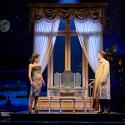
At first, all is well. Thérèse's apparent happiness makes her naive, childish husband happy. They have friends round for dominoes every Thursday night - one of the best musical numbers accompanies this ritual (pictured below) - and their mother presides over it all, delighting in her son's contentment. Madame Raquin is the anchor of this adaptation, and it is thus a shame that Tara Hugo's vocal performance isn't quite as compelling as some of the others, since much of the exposition falls to her. Nona Shepphard's adaptation is very well-constructed. The trio of "river women" who lurk always in the shadows at the edge of the stage are a very effective chorus, giving the show momentum and adding to the discordant harmonies in the songs. The movement Sheppard incorporates complements the score and the plot; in fact, in this case the tight confines of the Finborough space are an advantage, lending the one major fight scene a kind of balletic control that hints at the characters' barely-concealed rage.
Eventually, tragedy strikes in earnest. Camille is drowned during a boat trip on the Seine with his wife and his wife's lover (whether it was pre-meditated murder, and who carried it out, is left deliberately ambiguous). Once the apparent obstacle to their love is removed, Thérèse and Laurent discover that it was the transgressive nature of their relationship that made it work. With Camille out the way, they are haunted by his blueish face wherever they turn, and cannot recapture the passion they previously had for each other. It's a tale that has been told onstage throughout its history - Zola adapted it himself in 1873, and the National Theatre staged a much-lauded version of his play starring Ben Daniels in 2006. Unfortunately, this new attempt is a little too tentative to really reveal the story's utter depravity and despair.