I’ve always written alone. As a novelist, that’s what you do. Sit around in your pyjamas composing sentences that come almost entirely from your own imagination. It’s difficult sometimes to conjure the self-discipline required to complete a draft in a satisfactory period of time, but it is always safe. The first draft is supposed to be dross. Nobody’s going to see it. My first play was written that way, too. I wrote three drafts of Tonypandemonium in my spare room over two years, occasionally allowing the then artistic director at National Theatre Wales to read them and offer suggestions before eventually unearthing the courage to sit through a read-through and match it to a director.
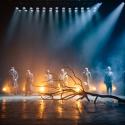
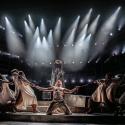
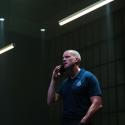
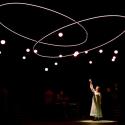
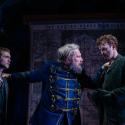
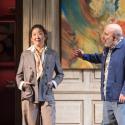
I knew that working with Common Wealth on my second play with National Theatre Wales would be a different experience. As a company Common Wealth are not necessarily interested in traditional storytelling but in creating unexpected experiences in theatre. Their work is absolutely contemporary, based in the present moment, and employs verbatim. It is almost the complete reverse of the way I’d ordinarily construct a narrative. We started with research, interviewing people based around the play’s subject: steelworkers, union representatives and community members. What was said in their testimonies would be the starting point, the inspiration and the story. When we had enough material we sat down and devised every scene together. (Pictured below: Sam Coates, from the cast of We're Still Here. Photo by Jon Pountney & Elfen / National Theatre Wales)
 What we do have in common is politics and a social class. Common Wealth are unapologetically political, their ideas rooted in socialism. The politics in my own work are a little more reserved. “Politics with a small p” is how people describe it. My early fiction is about the effects of Thatcherism on the working-class communities of the South Wales valleys, told with much hindsight and possibly without ever mentioning Thatcher. My latest collection of stories Cosmic Latte revolves around a loose theme of the benefits of immigration, a somewhat gentle protest against the anti-immigration argument that was gaining momentum in the years preceding the Brexit vote.
Left to my own devices a play about the 2016 job losses and pension crisis at Port Talbot steelworks would have focused quite heavily on the history of the plant. My father grew up on the Sandfields Estate in Port Talbot and worked there, along with his father and a couple of his brothers, when I was a toddler in the Eighties. Tracing the plant’s trajectory through the past three decades and via its various owners (one-time employer of 18,000 workers; currently of 4,000) reveals a rough picture of how life has changed dramatically for the working classes in the UK throughout my lifetime: there was a time when union membership was at its peak, when the local council provided adequate housing, when working families could live comfortably on the wage of one breadwinner. A time when men could retire in good health with a generous pension to look forward to.
But what our research showed us was that the youngest members of the workforce and of our potential audience had no memory or experience of that way of life. They couldn’t be angry at losing something they never knew they’d had. But they were angry at what was happening to them presently. That meant tackling the subject with much more urgency than I’ve ever considered necessary before. Tata’s decisions to put the plant up for sale, to put the sale on hold, and eventually its offer of a deal should workers vote to accept pension reform, all occurred during the time I was working on the script.
It was a brand new way of working: constantly keeping my ear to the ground, constantly thinking on my feet, cutting, updating, rethinking. There was no real first, second or third draft, rather one long blueprint that continuously developed, continuously breathed, continuously advanced. It wasn’t by any stretch of the imagination a comfortable way to work, but of course some level of discomfort is inevitable when you wish to learn and grow.
- We're Still Here by Rachel Trezise is at Byass Works, Old Dock Road, Port Talbot from 15 to 30 September
- Read more First Person articles on theartsdesk