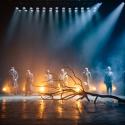
A bare interior with tarnished walls, a single bed, and an oxygen tube. The stage seems to have been set for a Beckett play, but the figure who comes to inhabit this dejected enclosure for 90 minutes is grounded in a far different world.
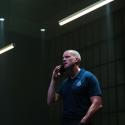
Powerful multitudes collide and combine in Ivo van Hove’s adaptation of Who Killed My Father, the acclaimed French writer Édouard Louis’s autobiographical work from 2018. The Belgian director entrusts the monologue to the Dutch actor Hans Kesting, from the Internationaal Theatre Amsterdam ensemble, whose most recent London appearance was in Age of Rage. Kesting delivers Louis’s text – adjusted slightly for performance – in English and with a ferocious directness, a galvanising clarity. While he primarily portrays Louis himself, speaking in his voice, he also embodies a range of characters featured in this dissection of his past, especially his father, whose absent figure Louis keeps addressing for much of the piece.
Running through Louis’s poignant but confrontational monologue are reflections on intergenerational trauma, homophobia, social inequality, and crises of masculinity. Looking back on and trying to come to terms with his fraught relationship with his father, Louis slowly leads us to a space of socio-political critique: the final section of the piece offers a compelling indictment of the degradation and humiliation meted out by the French ruling class to those they deem inferior – the disabled, the unemployed, the downtrodden. The lack of a question mark in the play’s title is not for nothing: Louis does know and name those who contributed to the “murder” of his father, who was injured in an industrial accident and had his condition deteriorate over the years through insufficient welfare provisions. For him, his father’s lived experience qualifies as a scorching demonstration of how politics, merely an aesthetic concern for the well-off, is actually a question of life or death for the working classes.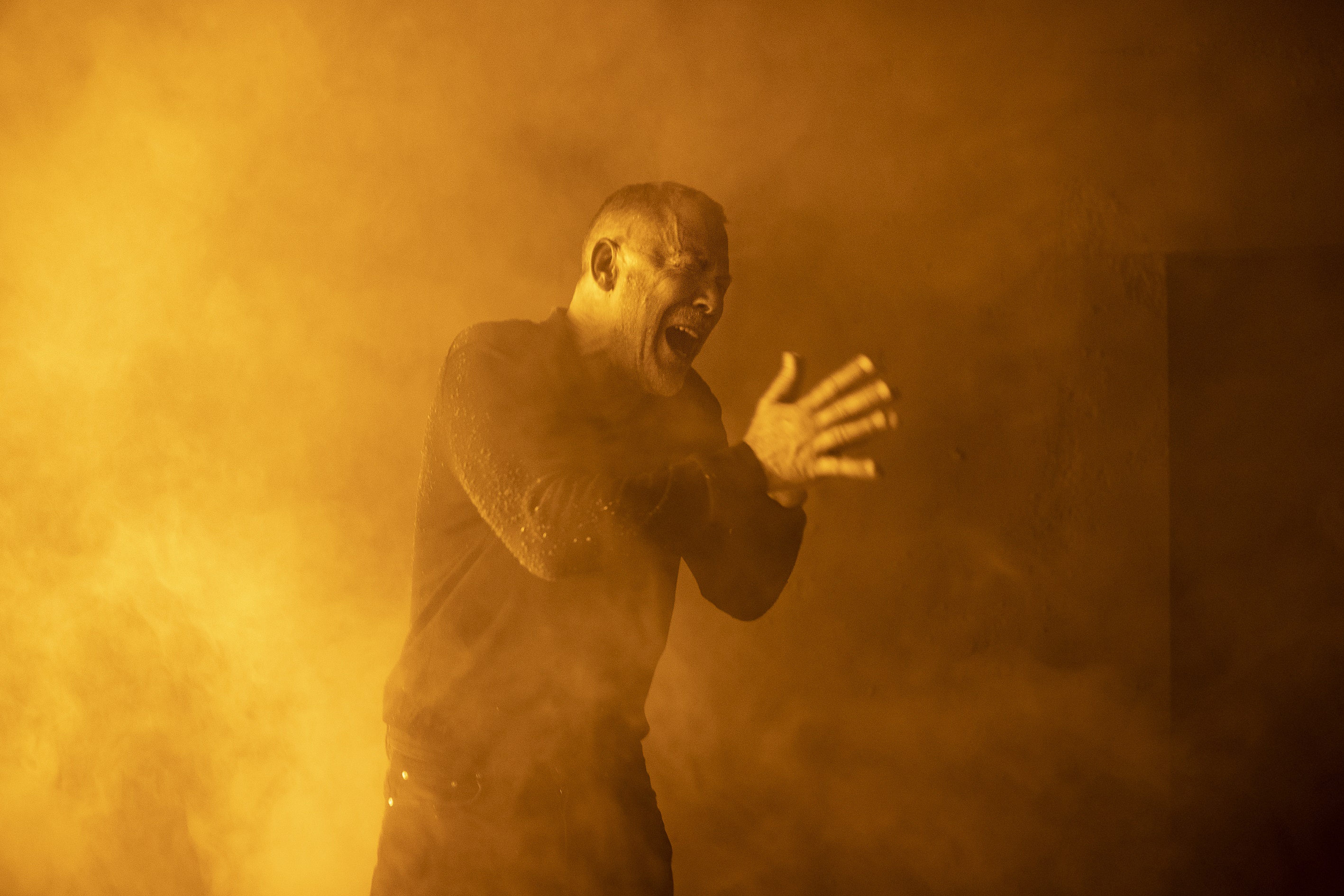 Kesting captures the sinuous turns of Louis’s prose with commanding agility. His shifts among characters are at once playful and gentle, and there is a patience to his performance that brings out the best in the source material. The forcefulness with which every one of his words lands is sustained by an undercurrent of pain. When he channels Louis’s ailing father, for example, he puts his hands inside his sweater and evokes the man’s overstretched belly. His insistent smoking and violent coughing fits betray a sense of obstinacy, the offshoots of which are conveyed in detail during the monologue. But beneath this hardened shell lies a complex, and complexly loving, figure. Kesting’s performance is particularly strong in those moments when he quickly vacillates between the father and son, locating in that back-and-forth an affectionate, if jagged, dynamic.
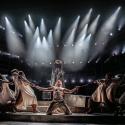
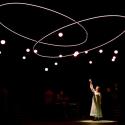
Van Hove’s staging takes care to render the monologue duly dynamic without diluting its contemplative and searching tenor. Its key references to pop culture, such as Aqua’s song “Barbie Girl” and Titanic, blossom into charged moments of singing and dancing that enrich Louis’s words. Jan Versweyveld’s scenic and lighting design accentuates the winding path of the monologue: a single door and two windows are used to great effect, as are shafts of light that change direction and bathe Kesting’s figure in atmospheres ranging from the quietly mystical to the clinically grim. George Dhauw’s eclectic soundscape – thumping beats one moment, Celine Dion the next – effectively sets the tone for each section.
This is a rare adaptation that makes a successful case for the value-add of theatrical interpretation. Kesting’s majestic performance endows Louis’s matter-of-fact prose style with a lustre that enhances our immersion in the world of his upbringing. In Kesting's hands, the very experience of performance comes across as a mode of forging sympathy, of acquiring understanding. The more Kesting’s Louis inhabits his father’s broken body and psyche, it seems, the greater is his fury at those who failed to see his inalienable humanity. His resentment against his father is outdone by his resentment against those who killed him. The unmistakeable political register of his outcry is ultimately amplified by the political energies of theatre itself. “What we need is a revolution,” his father says in closing. Indeed, the theatre may be as good a place to start one as any.