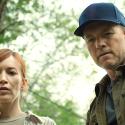
It’s no surprise that 30 years on, the individuals most closely connected to the world’s biggest art heist are showing their age. Anne Hawley was a young woman just months into her directorship of the Isabella Stewart Gardner Museum in Boston when thieves made off with 13 works of art, including a Chinese vase and drawings by Degas, a Vermeer and Rembrandt’s only seascape.
Speaking to the press soon afterwards, Hawley (main picture) was visibly shellshocked, desperation and disbelief mingled painfully in her comment that “I have to operate under the assumption that we are going to get these returned, because we are a world class museum”. The strain of the initial shock, and the ensuing cycle of hopes raised and then dashed, has surely worked itself into every fibre of her being.
And then there’s Rick Abath, the security guard who, by accident or design, let the thieves into the museum in the small hours of 18 March 1990, when all of Boston was, it seems, blind drunk in honour of St Patrick. Interviewed as part of a new four-part documentary series on Netflix, the music school drop-out and self-proclaimed hippy still has long hair, but it can’t disguise the haunted look of a man beset by anxiety.  Reconstructions, interviews and historic footage trawl through the evidence then and now, though as one of the most heavily pondered of unsolved crimes, there’s little new to add to the story. Even so, it loses nothing in the retelling, and the accumulating weight of time passing gives the story renewed force. The sight of the empty frames piled on the gallery floor (pictured above), and the knowledge of what has been lost is still horrifying, and the nagging questions don’t go away. Why did Abath open the outside door 10 minutes before the thieves arrived wearing police uniforms? Why were the thieves so sure that the police weren’t coming that they took a leisurely 81 minutes to carry out the robbery? Why did the thieves remove Rembrandt’s tiny etched self-portrait from its frame, rather than taking the whole thing? And why did the thieves take some priceless works, but ignore others, in favour of less valuable pieces?
The idea of a “Dr No” character, ordering the theft to furnish some subterranean art collection was quickly dismissed, and the heist was instead attributed to either the Irish or Italian mob, for whom stolen art could serve as collateral in drugs and arms trafficking, but also as leverage in negotiations for the release of imprisoned gang members.
Time, aggravated by the high death rates that plague the criminal classes, has allowed suspects and evidence to slip away. The notable exception is Myles Connor (pictured below), a now somewhat arthritic art thief who, creaking joints notwithstanding, has nimbly avoided life imprisonment: despite his candid admissions of violence and thievery, he is currently enjoying retirement in bucolic tranquillity. As Boston’s premier art thief, Connor looked like the most likely culprit, except for one snag: on 18 March 1990, he was some way through a 10 year stretch for drug trafficking. And his supposed accomplice Bobby Donati, who some say masterminded the Gardner heist, is hardly in a position to spill the beans since he was found murdered in the boot of his Cadillac a year after the robbery.
Death and disappearance has continued to scupper progress, and earlier this year the renowned investigator Charles Hill, who had traced the missing art to Northern Ireland died of natural causes, a matter of months after his underworld informant went missing.
Though the second episode gets bogged down in the shortcomings of the Gardner’s security arrangements, this series is well told and probably definitive, helped along by contributions from Boston Globe journalists Shelley Murphy and Kevin Cullen, for whom, like so many others, the Gardner heist has had a life-changing impact. The empty frames that keep vigil at the Gardner museum are testament to the ongoing injury inflicted not just to the museum, but to our shared cultural legacy. But they also express hope for the paintings' return, and if this series proves anything it is that there are plenty of people still looking.