There’s a lot of breathless frontloading in television documentaries. The headlines promising shock and awe coming up are posted in the opening edit as a way of hooking in the remote-wielding viewer. Very often as presenters stump around history’s muddy digs or leaf through dusty old tomes, the revelations vouchsafed turn out to be a bit iffy, a bit yeah but no but so what? The hyperventilation is often a precursory guarantee of bathos. You’d be better off reading the book. So Andrew Graham-Dixon had to draw on an extra reserve of superlatives to sell Secrets of the Mona Lisa.
“These revelations will change everything we thought we knew,” he promised. We were about to learn of “an extraordinary moment in the history of etc…” which was “quite simply one of the stories of the century.” And he with his elegant new hairdo and splendid owl-like specs had been given nothing less than “exclusive access”. This better be good, you thought.
The story involves the discrepancies between the painting described by the Renaissance’s proto-historian Giorgio Vasari and the artefact known in the Louvre as La Gioconde. Graham-Dixon, by way of the Leonardo codex in Windsor Castle, went off to Florence to find the real Lisa del Giocondo, wife of a crafty businessman who lived opposite Leonardo’s notary father. “But this is all new!” he exclaimed as a Florentine historian showed him her old front door.
Deducing that there were in fact two separate versions of the Mona Lisa, he leapt on a plane to visit potential precursors in the possession of (a) a nameless Singaporean consortium and (b) a clandestine St Petersburg oligarch. It was with great dollops of schadenfreude, given the ostentatious secrecy with which both canvases are kept, that one greeted the undeniable revelation that neither painting was by Leonardo at all. In your face, investors.
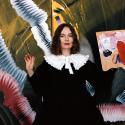
 Eventually he fetched up in Paris, where a rogue autodidactic physicist called Pascal Cotte (pictured) has been drilling down into the hidden story of the painting, layer by cellular layer, with the help of his own multi-spectral camera. It would spoil the plot to say more about what he found, other than to reveal that under the inscrutable Mona Lisa the world knows and includes in its selfies, a second ghostly figure has been loitering for four centuries.
Graham-Dixon’s job was, in essence, that of a reporter piggy-backing the research of others who have been working on the story for years. What he brought, beyond slightly eggy conversations flitting between Italian and English, was the salesman’s boundless enthusiasm, characterised by those adlibbed italicisations of his, that seductive one-on-one intimacy with the camera. And here and there he contributed his own speculative scholarship, editorialising science’s dry analysis to submit a television essay that justified its breathless build-up.
It's a fun story, and another myth to add to the accreted layers of speculation and theory. Martin Kemp, the Renaissance eminence whom Graham-Dixon interviewed at the start, has since expressed scepticism. The Louvre, a final caption added, had no comment. This story will run and run.