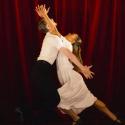
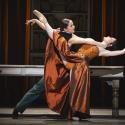
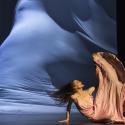
When Sadler's Wells 10th Flamenco Festival opens tomorrow night with thudding heels, swirling skirts and wailing voices, some will sit there begging to know what the wailing is about. Dancers like Eva Yerbabuena and Israel Galván, singers like Estrella Morente, reach us deep in some inexpressible place with their performance, but their passion is driven by the evocative poetry of a powerful oral tradition going back some three centuries.
Concise, marvellously economical in rhythm and rhyme, flamenco lyrics are usually as intense as they sound, odes to sexual passion, death and a life on the run, the bullfights thinly veiled symbols of state repression of the gypsies, and with picturesque verbal conceits. Here are some of the great flamenco songs.
Siguiriya (a sombre dance usually performed by men):
Cuando yo me muera, te pío un encargo, Que con las trenzas de tu pelo negro me marren las manos.
When I come to die I ask of you one favour, That with the braids of your black hair they tie my hands.
Another siguiriya for a different kind of bad luck:
Reniego de mi sino, reniego de ti, Como reniego de la horita en que te conosí.
I curse my fate, I curse you, As I curse the hour In which I knew you.
Tango (A cante chico, a light-hearted, more florid verbal development):
Péinate tú con mis peines, Que mis peines son de azúca; Quien con mis peines se peine, Hasta los deos se chupa.
Comb your hair with my comb, For my comb is made of sugar; Whoever combs his hair with my comb, Will suck his fingers.
Below, Estrella Morente sings a tango:
En lo alto del Cerro de Palomares, En lo alto la Sierra de Palomares, Unos dicen que nones y otros que pares, y otros que pares
En el espejo del agua Me miro y me peino el pelo, Unos dicen que nones y otros que pares, y otros que pares
Ay, no te arrimes a los zarzales - Los zarzales tienen púas Y rompen los delantales
Fatigas, fatiguillas dobles pasa, pasaría aquel Que tiene el agua en los labios y no la puede beber
En lo alto del Cerro de Palomares, En lo alto la Sierra de Palomares, Unos dicen que nones y otros que pares, y otros que pares
At the top of Palomares Mountain, high in the Palomares sierra, Some say single, and others say a pair
In the mirror of the water I look and I comb my hair, Some say single, and others say a pair
Ay, don't go close to the bramble patches, Brambles have prickles and tear your apron
Problems, double problems come to one who has water between their lips but can't drink it
At the top of Palomares Mountain, high in the Palomares sierra, Some say single, and others say a pair.
Playera (The bullfight motif recurs in many thrilling poems of the "dark song" genre, cante jondo):
Una noche e trueno yo pensé morí, Como tenía una sombra negra ensima de mí.
One stormy night I thought I would die Because a black shadow hung over me.
Soleá (a dark love song, usually a female solo):
Er querre es cuesta arriba, y el orvidar, cuesta abajo; Quiero subir cuesta arriba aunque me cueste trabajo.
To love is all uphill, and to forget is all downhill; I want to go uphill although it cost me dearly.
Below, the great La Nina de los Peines sings a lorqueña (a type of soleá) by her friend, the poet Federico García Lorca:
La niña de los peines tuvo que desgarrar su voz, Porque sabia que la estaba oyendo Gente exquisita.
The girl of the combs had to wear out her voice, Because she knew refined people were listening.
Carcelera (another cante jondo, a jail song characterised by the hoarse vocal quality called voz afillá):
Veinticinco calabozos Tiene la cárcel de Utrera. Veinticuatro he recorrido Y el más oscuro me queda.
The prison in Utrera has twenty-five cells. I have been in twenty-four, and the darkest is to come.
El Chozas sings a carcelera:
- The performers in the Sadler's Wells Flamenco Festival, between 15-27 March, are dancers Eva Yerbabuena (15 & 16) and Farruquito (17), singer Estrella Morente (18), dancer Rocío Molina (19), guitarist Tomatito (20), Ballet Flamenco de Andalucia (21-23), dancer Israel Galván (24) and a Gala Flamenca (25-27)
- Many song lyrics can be found in Flamenco! by Gwynne Edwards and Ken Haas (Thames and Hudson, 2000) - find it on Amazon