It’s hard to think of anyone even half as persistent as William Forsythe in changing the conversation around ballet. The American choreographer first came to notice with what became the defining dancework of the late 1980s.
In the Middle, Somewhat Elevated tugged ballet off-kilter and weaponised the pointe shoe to render it lean, mean and dangerous, especially when Sylvie Guillem was wearing it. From then on, Forsythe’s rule-breaking gathered pace until the stuff he was making for his own company looked dysmorphic, limbs wrenched into painful angles, music swapped for spoken text. Now 75, he’s back with an entirely different shtick, setting formal ballet steps to pop music. The result, far from difficult or odd, is pure, joyous entertainment.
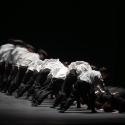
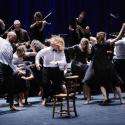
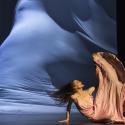
English National Ballet may have been late to the Forsythe party, but it has been making up for lost time, commissioning new works and dipping into the back catalogue. The three pieces presented in The Forsythe Programme, currently showing at Sadler’s Wells, span more than 30 years, and each benefits from the presence of the others. This is an evening that has everything: brains, beauty and bravura. Dominating the first half is Herman Schmerman, a 12-minute quintet from the early 1990s set to a sprightly electronic score. The title means nothing at all – like the dance itself (pictured below), it’s just playing with the language. Classical technique features strongly – there’s so much action on the vertical that at times the stage seems filled with popping corks – with the emphasis on energy and speed, every entry from the wings made on the run. In their cherry red swimsuits and bare legs, the women’s muscles are proudly on display. And when those same women stab the floor percussively with their toecaps, it’s clear they are the men’s dynamic equal. The opener, more contemplative, is a retread of Rearray, originally created for the ballet legends Sylvie Guillem and Nicolas Le Riche. Expanded into a trio, and more soberly dressed (Guillem famously performed this work in a sheer black top that revealed her bra-less breasts), the focus is thrown onto the composition. Blackouts define segments of uneven length, now with electronic music, now with no music at all except the exhalation of the dancers as they swish their limbs like fencing blades. Willowy Sangeun Lee is the female lead, her legs even longer than Guillem’s, her attitude just as chilly. Forsythe’s dances of this period were all about dismantling the inbuilt codes of performance, including the one about charming the audience. Meanwhile Lee's two suitors, Henry Dowden and Rentaro Nakaaki, keep a low profile, whether supplying discreet support for her imperious balances, or tying themselves together in knots.
After the interval, there’s a distinct shift in temperature. Playlist EP is what everyone is waiting for: a fresh iteration of Forsythe’s effusive foray onto the disco floor, singable, jiggle-in-your-seat numbers by Lion Babe, Khalid, Barry White, Natalie Cole et al propelling phalanxes of dancers across the stage, grinning from ear to ear. The more louche the sounds and the more funky the beat, the more tightly classical the steps, give or take the odd hip swerve. It’s a fabulous combination, and it raises the roof, not least when, after a scorchingly sexy duet to “Sha La La Means I Love You”, 36 dancers suddenly fill the stage in a blaze of shiny kingfisher blue and fuchsia windmilling in sync to “This Will Be (An Everlasting Love)”. Love, in that moment, is indeed what we feel.