It’s 50 years since the first, damning reviews of Kenneth MacMillan’s ballet Manon declared it to be too long and lumbered with terrible music. One of them also said that the title role was an appalling waste of the ballerina who, in the title role, was reduced to “a nasty little diamond-digger”.
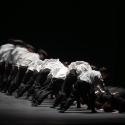
Roll on half a century and that teenage seductress is up there with Juliet, Giselle, Aurora and Odette-Odile – the most coveted as well as the most technically challenging roles in the canon – while the ballet has become a global money-spinner. A fast-moving love story set in an early 18th century Paris crackling with sex and cynicism, crime and social injustice, it offers plenty of parallels with today’s world. And then there’s MacMillan’s choreography, the like of which – in terms of examining human existence in all its contradictions – has no equal. At the end of certain pas de deux you feel you have been party to a private conversation. In others, the athleticism is such that you doubt what you saw. Francesca Hayward, leading the opening night cast, brings remarkable depth to the role, having added new detail to the character she presented on the ballet’s last revival in 2018. Some dancers play Manon as an innocent abroad as she steps from the carriage that was meant to have conveyed her to a convent. Hayward (pictured above, and main picture with Marcelino Sambé) plays her from the start as a knowing minx, full of gleeful lust for life and action. After politely fending off the advances of a ghastly old gent at the inn, she has no qualms about lifting his wallet. It’s only her due for having enlivened his day.
To a great extent MacMillan’s choreography fills in the blanks of each character, their feelings and motivations, even their reaction to their surroundings. When Manon walks on her tippy-toe pointes, it tells us not only what a dainty morsel she is, how prettily self-aware, but also that she is avoiding the dung on the street. Likewise, it’s not hard to believe why she falls so hard for the student Des Grieux (Marcelino Sambé) when he pays court to her in a series of extreme balancing poses that, while expressing the most sincere reverence, also display every sinew of his shapely legs and buttocks.
Des Grieux is, it transpires, the only man in the story to show respect for women. Too bad Manon also has an eye for the main chance, and when Monsieur GM (a grimly hawkish Gary Avis) arrives offering what amounts to half the current stock of Louis Vuitton, she barely hesitates, casting only the most cursory glance over her shoulder at the bed that’s still warm from her love-making with Des Grieux. What stops MacMillan’s ballet from being offensive for its voyeurism is the way it constantly reminds us of the brutality of life in the 1720s. The set designs by the late Nico Georgiadis are at pains to show us how few choices women had. Born poor, the rotted rags that background almost every scene – whether in plain sight or peeping from behind gorgeous drapes – would remain your reality unless you had something to sell. Pimped by her morally scabrous brother (Alexander Campbell, horribly believable in the role) Manon appears to have an uncommon awareness of her high price, which may be another reason why early audiences turned away. Ballet heroines had previously been princesses, priestesses, or otherwise pure of heart. Manon is all too flawed, and brazen with it. Her comeuppance – deportation on a disease-ridden prison ship to die in a fetid Louisiana swamp – was perhaps not harsh punishment enough.
The historic criticism of the musical score is more puzzling, 50 years on. Granted, this is a patchwork job, a stitching together of disparate bits of music by Jules Massenet, the French composer who died in 1912 with an opera called Manon to his name but certainly no ballet. Perversely, in the minds of his critics at the time, MacMillan chose not to use any of the famous melodies from the opera in favour of excerpts from more obscure orchestral works, songs and piano pieces by Massenet. That decision is now evidently applauded by the orchestra of the Royal Opera House and conductor Koen Kessels, who give its glorious contrasts all the heft and tenderness they deserve. A thorough revision of the orchestration some 12 years ago makes it brilliantly effective today, with some sections big and muscular in the tradition of Berlioz and Meyerbeer, while others are perfumed and gossamer. It’s that masculine-feminine variousness that makes Massenet’s music such a perfect match for the Abbé Prevost’s story.
One last good reason for seeing this revival – and it’ll be coming to a cinema near you early next month – is that they don’t make them like this any more. For better or worse, MacMillan was artistic director of the Royal Ballet at the time he created Manon, and was thus compelled to use the entire company. So this is 20th century dance storytelling on the grandest scale. It’s also hard to find design and costumes as richly executed today, with the depth of texture and detail that makes every stage picture come alive. The early 1970s are recognised as a golden era for the Royal Ballet. The company is enjoying another strong period right now but it lacks the funds to make ballets like this.