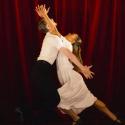
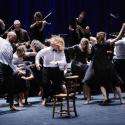
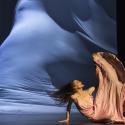
Gustavia was more burlesque performance than dance, very European, black-humoured, using scant material with expert pizazz and stage personality, and I imagine, more painfully amusing for women than for men - or maybe it just felt funnier because of what was happening on TV. La Ribot and Monnier, one auburn, the other platinum blonde, seemed both symbiotic and yet programmed for mutual destruction. Tripping around in high heels, bare legs and tiny black leotards among treacherous torrents of black cloth totally covering the stage, lit with abattoir neon, they drew on classic silent movie slapstick, Laurel and Hardy, the Marx Brothers, but also keenly targeting the grey area where indulged vapours cross into masochistic mental disorders.
Gustavia's two halves can't live without each other, can't live with each other, but she's also determined to manipulate the audience with the tactics common to small girls, diving footballers and spurned premiers - whimpers, wails, sobs and one eye beadily open for sympathy. The two clustered at a microphone, trying to out-weep each other to win our laughter, and sabotaging each other on their one chair. The crybabies gave way to a more unsettling slapstick as they stumbled about on the sabotaging rucks of the flooring, as if blind in the half-light, while La Ribot kept accidentally thwhacking Monnier on the head with her black plank, wheeling about out of control. Monnier would crash down in a broken little pile of white limbs, then get up again - thwhack, down, up, thwhack. It hurt to watch.
Lit as if in an underground garage, the thing was made still more disorienting by the deafening noise of a rainstorm, or a helicopter, or else a deathly silence with only the alarming sound of a drip of water somewhere on the stage. The most disturbing thing was not just that Monnier never seemed to learn, and La Ribot never seemed to be aware of what she was doing, but that gales of laughter kept shaking the audience, over and over, and that the women prolonged this one-sided violence until everyone was uncomfortable.
Then we lightened up again with La Ribot’s deadpan existential monologue to the audience, “Let the artists die - let them all die - I shall die”, spoken increasingly crossly as she noticed dishevelled little Monnier tangled up in the curtains with her foot stuck in a bucket, distracting our attention. Then down into bitter absurdity again with an obsessive compulsive disorder routine involving pulling trousers legs up and down, filled simultaneously with pratfalls, spreadeagles and sprawls, terribly undignified and apt for post-election antics.
For their rousing conclusion they climbed up on stools side by side and tried to outshout each other like kids in increasingly insane sentences describing “a woman”, in the style from I’m Sorry I Haven’t a Clue where people alternate words with subversive intent. “A woman is literally a hen”, was one nice result. “A woman is doing sexual tourism in Afghanistan” was another. Finally, “A woman is in the dark”, said Monnier, which pretty much described everyone. But it was damned entertaining, in current circumstances.
- Check out what's on at the Southbank Centre this season
- Gustavia will also be performed in Lille, Modena and Bergen this year according to Mathilde Monnier's website