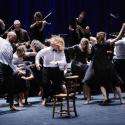
Tree of Codes is a work made from a work made from a work. Based on Jonathan Safran Foer's book-form art piece, which is itself based on Bruno Schulz's The Street of Crocodiles, Wayne McGregor has fashioned a choreographic creation using a triptych of his own.
One third is choreography, but there are two other equal parts in Olafur Eliasson's light sculpture art and Jamie xx's musical composition. The three work together in harmony, meshing and bonding to create a perfect whole.
There's a powerful opener with total theatre blackout and pounding electro-dance rhythms as dancers flit like electrical impulses before becoming immediately embedded with mirror sculptures that distil arm movements in a tunnel of reflection. The stage opens into a full mirror which at times reflect the audience, or seems cracked and fragmented, or transparent, allowing multiple views of the stage.
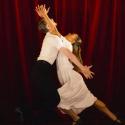
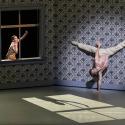
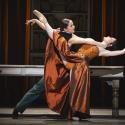
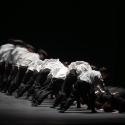
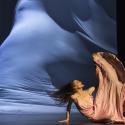
 Dancers from McGregor's company join forces with artists from the Paris Opera Ballet to perform the famous fusion of classical and contemporary ballet. Their movements are elongated and precise, sinewy and clear-cut, stretching outwards in duets and trios like pieces of stretchy chewing gum, pulled, twisted and manipulated. There are human moments amidst the abstraction of shapes and patterns; glimpses, embraces and yielding lifts, but the intention seems to be set at a higher level than guessing games about their stories.
Eliasson's mirrors – opening half moons, huge circles, neon light bars – create an alternate dimension to the dancers' long angular pliés, quick high-kicks and arabesques. A spotlight travels over the audience like a beam of revealing light, then later traverses huge circular structures like moons orbiting an otherworldly planet. The music differentiates noticeably per section, sometimes rhythmic and bouncy like the Penguin Cafe Orchestra, sometimes ambient and ethereal like London Grammar alongside piano sections or an electronic synth pulse.
You might have seen McGregor's work before, or heard Jamie xx, or seen Eliasson's work in a gallery, and the three as stand-alones might not excite you or provide anything new. But it's the combination of the three stimuli of visual, aural and physical in such pure collaboration with such an intense guide of ideas that makes Tree of Codes so thrilling to witness and so fascinating to recall.