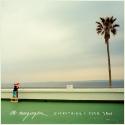
Ólöf Arnalds' voice carries the all-Icelandic 'Spíra'

The Icelandic singer-songwriter acknowledges that one’s own traditions can be enough

share this article

Ólöf Arnalds’ ‘Spíra’: emotion is central to what is expressed

The voice is fluting, translucent. The melodies it carries are linear yet sinuous, their rise and fall akin to undulating terrain. The instrumentation – acoustic guitar, bass guitar, some keyboards – is unobtrusive. Spíra is about the voice. It is also timeless – sounding as if it were recorded at any point in the last 60 years.

However, getting to grips with what is being sung is less straightforward as the lyrics of Spíra are in Icelandic – a demonstration of the bond of trust between non-Anglophone songwriters and listeners who are not from their home territory or do not speak their language. On one hand, the songwriter wants what they’ve recorded or are performing to be accepted on its own merits, irrespective of any language barrier. On the other, listeners have to accept that what’s expressed is worth spending time with.

With Spíra, Ólöf’s fifth album, this is especially pertinent as her last two – Palme (released in 2014) and Sudden Elevation (2013) – were entirely in English. Before this, 2010’s Innundir skinni featured a few English-language songs. Only Við og við, her 2007 debut album, was entirely in Icelandic. Spíra, then, can be seen as a form of reset; an acknowledgment that one’s own traditions can be enough.

Musically, Spíra overtly nods to the folk derived. The spartan nature of how the songs are presented is akin to the early Anne Briggs or Vashti’s first album. In Iceland, some of Spilverk þjóðanna’s more sparse recordings may be a parallel.

Subject-wise, Spíra – which translates as “sprout” – tackles relationships with the environment: “Úfinn sjór” (Rough Waters) is about embracing the Icelandic winter. Metaphor is used to express personal circumstances: “Stein fyrir stein” (Stone by Stone) is about Ólöf’s uncle, who took care of her and her sister after their father died; “Vorkoma” (The Coming of Spring) celebrates her friendship with the writer Guðrún Eva Mínervudóttir; “Tár í morgunsárið” (Tears at Dawn) is about the spiritual gap left by renouncing Catholicism; the title track explores the emotions raised by her son moving between her home and that of his father, from whom she is divorced

Ultimately though, for the non-speaker of Icelandic, Spíra is about the voice. Nonetheless – even without understanding the language – it is clear that emotion is central to what is expressed.

@kierontyler.bsky.social

Singing in Icelandic implies that listeners who do not speak the language have to accept that what’s expressed is worth spending time with

rating

4

share this article

Support the future of arts journalism

Subscribe to theartsdesk.com

Thanks so much for choosing genuinely independent arts journalism theartsdesk’s mission has never been more important – in an age of relentless algorithmic recommendation, sponsored content and unreliable AI, the expertise and discernment of individual critics deeply embedded in their specialist areas is absolutely vital.

If you want more of that in your life, why not subscribe now?

If you do this before the 31st August, you’ll be able to keep at this “founders rate” for life: your subs will never increase! You can choose to subscribe annually for just £40 simply click here
or monthly for £5 per month simply click here.

Not ready to subscribe?

If you want to support with a little extra or aren’t ready to subscribe just yet, there’s also the option to give direct to our crowdfunder to support our imminent redesign and exciting expansion with new features and collaborations Simply contribute here: https://gofund.me/c3f6033d.

However you choose to be involved, you can proudly say that you are picking the right side in the battle for truth and humanity in the modern information landscape. And we will be very glad to have you on board!

more new music

Surrealism, social observation and more muscular sound from the Leeds quartet
A powerful personal outpouring of joy and pain - with a great beat
The London quartet have taken to playing large venues with ease, as this career-spanning set showed
The Lebanese-French musician's father was behind a unique musical innovation
The Philadelphia punk rockers continue to impress
A partial account of how Brit-punk absorbed an aspect of reggae
The Fez Festival Of World Sacred Music and the Fes Gathering bring the world together
Bristol band aren't happy but offer up the occasional sing-along
A new album is unveiled and old tunes are played for the last time