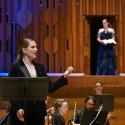
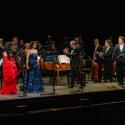
A beloved regular of concert hall, radio and recording, the music of Vivaldi has more or less failed to find its way into the contemporary opera house. If we are to believe his own claims, the composer died with over 90 operas to his credit – double the output of even the extraordinarily prolific Handel – making the omission all the more striking. And suspicious. In a field in which "lost" gems are resurrected every day, a measure of cynicism must inevitably accompany so apparently rich a furrow that so many have left untouched. Applying themselves with characteristic energy, Giovanni Antonini and Il Giardino Armonico last night made a compelling case for the defence in their concert performance of Vivaldi’s very first opera – Ottone in villa.
Jolting the audience firmly out of default baroque Handel mode, the overture was pure Vivaldi; a sparring match between two solo violins set up a dynamic tension within the orchestra that persisted through much of the work, supplementing the otherwise rather spare orchestration. Those craving Handelian depth of colour might be disappointed by Vivaldi’s rather more limited palette, yet reframe your gaze and there was much interest is to be found in the filigree details of melody and phrase structure that add texture to the music’s glossy surface.
Il Giardino Armonico combine a lightness of touch with a seriousness of intent that is reliably and overwhelmingly persuasive. Faced with Vivaldi’s joyously naïve score, they chose wisely to highlight its dynamism and energy, concealing for the most part its larger structural weaknesses in a pacy performance that left the audience little opportunity for scrutinising the material too closely.
Unfortunately the dramatic skeleton has some rather obvious deformities that even the most elegantly draped music cannot fully hide. Exploring the promising story of Rome’s Emperor Claudius and his wandering-eyed wife Messalina (thinly disguised as Emperor Ottone and his mistress Cleonilla), the convoluted story fails to gain any real momentum, exposing its singers in some painfully static encounters.
With a recording of the opera shortly to be released, the full cast were present to reprise their roles. Regular collaborator Sonia Prina returned as the gullible Ottone, bringing her trademark punchy richness to his consistently low register, and enjoying some rare moments of comedy. The articulation of her coloratura was as reliable as it was relentless – as she sang about a storm-tossed sea one could sympathise all too readily with her plight – and while technically impressive, I would gladly have sacrificed clarity for a more sustained line.
Both Veronica Cangemi and Roberta Invernizzi (as Cleonilla and rejected girl-dressed-as-boy Tullia) were technically solid, with Cangemi in particular demonstrating a real flair in the characterisation of her recitative, yet both proved a little too copy-bound to be truly exciting. Hard to judge correctly, the dynamics of concert-performed opera are always difficult, and on this occasion many of the singers appeared to underestimate the compensatory drama required from the rather stolid material.
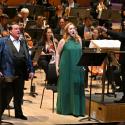
Terrifyingly young and yet to make her official stage debut, the unlikely hero(ine) of the evening was Russian soprano Julia Lezhneva as Caio, Messalina’s rejected lover. With the advantage all the opera’s best tunes (including the Act One showstopper "Gelosia, tu già rendi l’alma mia"), she proved herself the possessor of a dynamic and flexible voice, capable of balancing the pyrotechnics of coloratura with some daringly simple pianissimo singing which held the filled Barbican hall in absolute silence. Serious stardom can only be a few years away.
Long championed on CD by the likes of Magdalena Kožená, Cecilia Bartoli and Philippe Jaroussky, Vivaldi's operas contain some genuinely thrilling arias. Framed as single entities, their technical brilliance and easy charm are seen at their best. Placed in a line-up of identikit da capo arias however, and their rather predictable format is glaringly exposed. With a terrific band and technically accomplished singers, Ottone in villa will be an exciting CD. In concert however, denied the very necessary options of pause and skip, it’s just too much of a good thing.
Il Giardino Armonico combine a lightness of touch with a seriousness of intent that is reliably and overwhelmingly persuasive. Faced with Vivaldi’s joyously naïve score, they chose wisely to highlight its dynamism and energy, concealing for the most part its larger structural weaknesses in a pacy performance that left the audience little opportunity for scrutinising the material too closely.
Unfortunately the dramatic skeleton has some rather obvious deformities that even the most elegantly draped music cannot fully hide. Exploring the promising story of Rome’s Emperor Claudius and his wandering-eyed wife Messalina (thinly disguised as Emperor Ottone and his mistress Cleonilla), the convoluted story fails to gain any real momentum, exposing its singers in some painfully static encounters.
With a recording of the opera shortly to be released, the full cast were present to reprise their roles. Regular collaborator Sonia Prina returned as the gullible Ottone, bringing her trademark punchy richness to his consistently low register, and enjoying some rare moments of comedy. The articulation of her coloratura was as reliable as it was relentless – as she sang about a storm-tossed sea one could sympathise all too readily with her plight – and while technically impressive, I would gladly have sacrificed clarity for a more sustained line.
Both Veronica Cangemi and Roberta Invernizzi (as Cleonilla and rejected girl-dressed-as-boy Tullia) were technically solid, with Cangemi in particular demonstrating a real flair in the characterisation of her recitative, yet both proved a little too copy-bound to be truly exciting. Hard to judge correctly, the dynamics of concert-performed opera are always difficult, and on this occasion many of the singers appeared to underestimate the compensatory drama required from the rather stolid material.
Terrifyingly young and yet to make her official stage debut, the unlikely hero(ine) of the evening was Russian soprano Julia Lezhneva as Caio, Messalina’s rejected lover. With the advantage all the opera’s best tunes (including the Act One showstopper "Gelosia, tu già rendi l’alma mia"), she proved herself the possessor of a dynamic and flexible voice, capable of balancing the pyrotechnics of coloratura with some daringly simple pianissimo singing which held the filled Barbican hall in absolute silence. Serious stardom can only be a few years away.
Long championed on CD by the likes of Magdalena Kožená, Cecilia Bartoli and Philippe Jaroussky, Vivaldi's operas contain some genuinely thrilling arias. Framed as single entities, their technical brilliance and easy charm are seen at their best. Placed in a line-up of identikit da capo arias however, and their rather predictable format is glaringly exposed. With a terrific band and technically accomplished singers, Ottone in villa will be an exciting CD. In concert however, denied the very necessary options of pause and skip, it’s just too much of a good thing.
- See the rest of the Barbican 2010 season
- See more Vivaldi at the Lufthansa Festival of Baroque Music
- Find Il Giardino Armonico recordings on Amazon