There’s only one thing harder than trying to get to Kings Place to see a semi-staged Dido and Aeneas on the day of Arsenal’s victory parade through north London, and that’s trying to get home again afterwards. It took me longer to get from the venue to sitting on a tube than it did for Dido to go from being a happy singleton to tragically dead. As I battled closed stations and a wall of red shirts and a ticking clock, I experienced something of Dido’s despair, and felt similarly cursed.
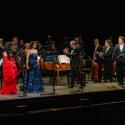
But it was worth the trip, for a beautifully played and sung performance of Purcell’s groundbreaking opera, part of I Fagiolini’s 40th birthday residency at Kings Place. It had, as well as the expected tragedy, moments of humour that are the trademark of the group’s founder and leader, Robert Hollingworth. As well as a very fine musician and scholar, he is also something of a stand-up comedian manqué: at the start, as the delayed audience dribbled in, he held the stage and filled time with the presence and timing of club compère, his material gleefully lavatorial. After four decades fronting the group Hollingworth has a delightfully devil-may-care attitude, as exemplified by the title of their anniversary programme We’re Not Dead Yet. Within this show, neatly semi-staged with no set and minimal costume, there were nods to Hollingworth’s Monty Python heroes in the witches removing their joke-shop noses to catch their breath, and in the tribute to the Fish Slapping Dance at the end of the sailors’ scene.
But the drama wasn’t just onstage: the billed Dido Julia Doyle was indisposed and replaced at the last minute by Katie Bray, who stepped off a plane and headed straight for a dress-rehearsal. Hers is a spectacular voice but bigger in its dimensions than the others in the cast, and this slightly threw the balance. But hats off to her, there was nothing in the performance that indicated she was a late substitute, and her take on the famous lament in the final scene was powerful. The defiant repeats of “Remember me” preceded a gradual descent to the ground, in both the musical and physical senses.
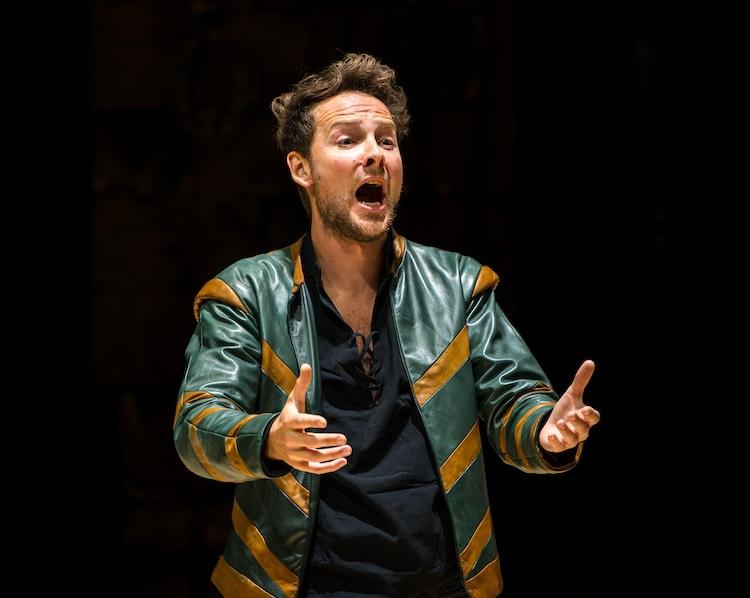
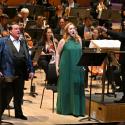
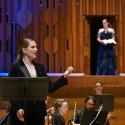
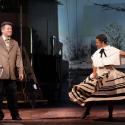
The rest of the cast, more familiar with this staging, moved easily through the piece’s various gears. Aeneas (Frederick Long, pictured above by Sally Anderson) was cocky and self-assured, until undone by Dido’s grief. Rowan Pierce’s Belinda was both Dido’s shoulder to cry on and also her pestering, badgering best friend. Martha McLorinan’s Sorceress was as scary as this camp part allows, and the band – with a rich continuo section of harpsichord, theorbo and chamber organ added to period strings – were supple and reactive throughout. Eligio Quinteiro on theorbo played almost non-stop on his unfeasibly lengthy instrument, giving a winning flexibility to the recitatives, and Robert Hollingworth, directing from the organ, was never happier than when rattling his thundersheet.
The production – which sounds a world away in style, content and aesthetic from the performance at Cutty Sark last week, as covered in theartsdesk – made enterprising use of the Kings Place space: the echo chorus singing from outside, the Sorceress taunting Aeneas from the gallery, and the sailors entering drunkenly from the rear. But the final chorus had no need of any special effects: Dido’s courtiers stand watch and sing over her dead body, the accompaniment first losing the strings then becoming entirely a cappella. It was restrained and simple and utterly captivating, Purcell at his absolute finest.