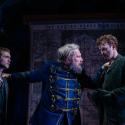
In spite of a text that feels at times like Shakespeare by numbers, Andrew Hilton’s tightly-knit company has once again pulled off an evening of captivating theatre. As in other productions from Shakespeare at the Tobacco Factory, the casting is pitch-perfect and the acting first class, down to the star performance of a hilariously mournful black dog.
Two Gentlemen of Verona is an early piece, and although there are plenty of the touches of the genius that will illuminate the bard’s greatest plays, this tale of love, friendship, inconstancy and betrayal is almost too smoothly constructed. The seams in the narrative are at times a little obvious. The tropes which will recur in later work – the woman dressed up as a page boy, the quartet of young lovers, the forest wilderness in which fate unfolds away from the pomp and pretense of the city - are there in embryonic form but without the dramatic daring that Shakespeare will display in plays like Twelfth Night and A Midsummer Night’s Dream.
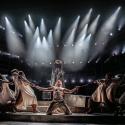
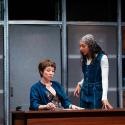
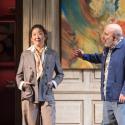
 That this production manages to transcend the limitations of a play that shines with promise but lacks a certain depth says a lot about Andrew Hilton’s mastery and the finely tuned performances of the cast. Dorothea Myer-Bennett brings tangible subtlety and emotional resonance to the role of Julia, moving well between the near-hysteria and indecision she displays in the first act through to the courageous determination that leads her to follow her the inconstant Proteus to Milan. As “false perjured” Proteus, who betrays his best friend Valentine as well as Julia, Piers Wehner navigates the inner psychological flux of his character with sensitivity. This is a man let down by weakness rather than driven by perfidy, buffeted by his emotions and made blind by the “malady” of love. Lisa Kay (pictured above) is a commanding presence as the constant and clear-headed woman, and Jack Bannell portrays the inner turmoil of Valentine’s roller-coaster journey with charisma and assurance.
The comic servants - Speed (Marc Geoffrey) and Launce (Chris Donnelly) - are well played and subtly contrasted. They are both masters of body language, their movements often as telling as their always clearly-delivered repartee. Lance is the more saturnine of the two - as sad a clown as there ever was, though never sentimental - and it is surely no coincidence his canine companion Crab should be played by a black dog redolent of the melancholy mood.
There is one glaring false note in this otherwise excellent production: music and song are present from the start. At times, as when the play’s move to Milan is heralded by a show-stopping routine in which waiters sing as they move gracefully between the café tables around which the action will unfold, this works magnificently well. But whenever the oboe joins the viola and guitar at other times, as in Proteus’s Mozartean serenade to Sylvia on behalf of the foppish Lord Turio (a very funny Paul Currier), the sound is sadly marred and the emotional impact blunted by a grating lack of attunement.
The play’s dénouement is weak, with false Proteus reformed in a totally unconvincing matter of seconds. Hilton has treated this sudden change of character in an almost cartoonish manner, and the final dance routine that follows the close of the show and the first round of applause makes clear the fact that this is just theatre, an inevitably distorted (but entertaining) mirror of humanity’s susceptibility to weakness and the ultimate triumph of love.