If the Hungarian State Opera wanted to demonstrate that it is now back on top form, it could not have chosen a better way than this six-opera celebration of Richard Strauss’s 150th anniversary. Mahler conducted here before moving to Hamburg, Vienna and New York. Filled with new ambition, after a contractual shake-up under General Manager Szilveszter Ókovács, Budapest displays revitalised strength and amazing depth in all departments.
The 2014 Strauss showpiece was a national premiere: Hungary’s belated first staging of Die Frau ohne Schatten, the fairy-tale opera with which Strauss and Hofmannsthal confirmed they could still breathe fire into opera. But there were also Salome, in a surprisingly forceful older production by the same director, János Szikora; a well-tried Rosenkavalier with Alfred Muff as Baron Ochs; Ariadne auf Naxos under wizard house conductor Héja Domonkos; and Elektra in a dramatically stunning Gellert Baths setting from firebrand director Balázs Kovalik, with Béla Perencz and now Gábor Bretz as a shiveringly powerful, sinister Orestes. A stylish recent Arabella to make Vienna envious made up the collection; Ferenc Anger’s Die schweigsame Frau, revived this season, could have made a respectable seventh.
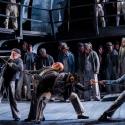
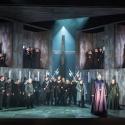
 The production values impacted strongly, including Géza Bereményi’s riveting, stylish Arabella, and Szikora’s more staid Salome with a huge, almost Babylonian set from Attila Czikós that might have doubled for Nabucco. The empty depths of János Szikora and Balázs Horesnyi's Die Frau felt like a glimpse into the human brain, plus there were three richly inspired female costumiers (Rita Velich, Judit Schaffer, and Kati Zoób for Die Frau). But it was the singing which, matched by orchestral playing of the highest order, makes a trip to the Hungarian capital so musically rewarding. The voice coaching, as well as the singers, hit new highs across the board.
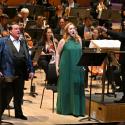
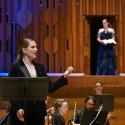
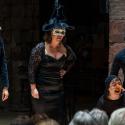
Who were Budapest’s stars here? First up, Mihály Kálmándi’s truly magnificent Jokanaan (main picture), a John the Baptist whose resonances (from offstage too) set the whole house alight, and sent shivers up Jürgen Sacher’s splendidly slimy Herod. I thought the Dance of the Seven Veils the most footling I’d seen (choreography by Lilla Pártay). But Manuela Uhl’s Salome seemed a striking singer-actress, and Andrea Ulbrich made a splendid frump of Herodias, even if Zoltán Nyári’s yearning Narraboth looked underdirected. The experienced Pinchas Steinberg, fresh from Budapest’s Parsifal, and from 2014 Chief Conductor of the Opera Orchestra (Philharmonic) showed patent Straussian credentials in the pit.
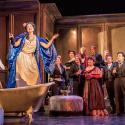
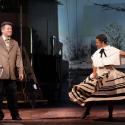
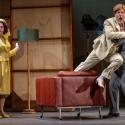
 I adored their Arabella, not primarily for Ildikó Raimondi’s title role, fine though she was, but for Borbála Keszei's fabulously engaging travesti, Zdenko/Zdenka (pictured left with Raimondi). What a stage personality she is, and a winning voice. Throw in some decent suitors, plus bass László Szvétek, huge fun as the buffo, fretful father, and a vocally (more than dramatically) tip-top Mandryka in Béla Perencz, and it made for a scrumptious evening, with Günter Neuhold at the helm.
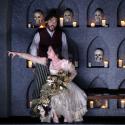
Not all will have felt Szikora got it right with Die Frau ohne Schatten - Az árnyek nélküli asszony (aren’t those Magyar titles superb?) by dispensing with Hofmannsthal’s admittedly elaborate set directions. But the resulting spareness meant one concentrated on the story, its somehow Jungian symbolic content, its poignancy, all the more than if Birgit Nilsson were spluttering in full regalia. Here, the Dyer’s Wife was the slimline Szilvia Rálik, and she was as vocally beautiful and as sexy as her husband (Heiko Trinsinger) was exquisitely expressive and articulate.
The palm for sheer doggedness went to the nurse, Ildikó Komlósi, one of the State Opera’s most celebrated veterans, who in this dotty, faffing and pimping role sounded as breathtakingly powerful as ever. István Kovácsházi impressed as a sympathetic Emperor. Erika Markovics was a pretty Falcon. But the voice to die for is Eszter Sümegi, a quite fabulous soprano with an all but contralto timbre, as the patient young Empress – flatly directed, awkwardly though orientally costumed, but a miracle each time she opened her mouth. Perceptive conductor Péter Halász drove a truly energised, invigorating and even subtle musical reading. Rich rewards.
- The Festival runs until 11 June
- The Budapest Philharmonic Opera, conducted by Pinchas Steinberg, will perform an all-Strauss concert at the Opera House on 9 June