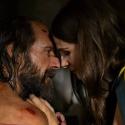
Lance Armstrong's spectacular crash-and-burn makes for gripping stuff in The Program, the story of the sports legend-cum-druggie who cycled too close to the sun and went on to pay the hubris-laden price. And as a star vehicle for Ben Foster, Stephen Frears's latest film not only serves as a reminder of this director's singular way with actors (note the performances that have gone the Oscar route under his watch) but makes one wonder why his young American lead hasn't yet entered Hollywood's inner sanctum when he so clearly has the stuff.
Armstrong's saga of disgrace-on-an-epic-scale isn't new to celluloid: at least two documentaries have already covered the same ground, and one can see the appeal of this golden boy's fall from athletic grace representing narrative catnip across the board, Indeed, there's a particularly meta moment well into the film when the prospect of Jake Gyllenhaal playing an entirely glorifying onscreen Armstrong is posited – until such time as the cancer survivor succumbs to the kind of monomania that is less easily revealed via blood tests.
 The satisfaction here has everything to do with watching Foster seize the brass ring with much the same unshowy elan he brought to his London stage debut last year in A Streetcar Named Desire at the Young Vic. Whereas that production garnered the lion's share of headlines for Gillian Anderson's sympathy-resistant portrayal of Blanche DuBois, Foster's watchful, feral Stanley was at least her equal and more, the actor's ability to land contradictory moods on ample display once again. Coming in an incredulous (to himself, at least) third upon an ill-advised return to the world of the Tour de France that had previously seen Armstrong winning seven races in a row through to 2005, Foster's anti-hero reacts to the results with a mixture of laughter, tears, and disbelief that is astonishing to behold.
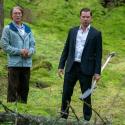
Morality tales of this sort need an adversary and The Program has one in Sunday Times journalist Dave Walsh, upon whose book Seven Deadly Sins this film's screenplay by John Hodge is based. While the odd eyebrow might be raised at the implicit vaingloriousness of the paper's self-exaltation, Chris O'Dowd (pictured above) brings a clear-eyed determination to the fourth estate's quest for truth, not least given that Walsh benefits from Armstrong's own team doing much of the career-shredding for him. On that front, Jesse Plemons brings a gathering self-righteousness to the crucial supporting role of Floyd Landis, Armstrong's teammate and figurative right arm who isn't above severing such limbs as required. (Plemons is pictured below)
 One might question why this screen Armstrong seems so disconnected from any milieu beyond the world of racing – such family ties as he possesses are given minimal shrift – but Frears deserves credit for homing in on a pathology that makes the film positively race by (you'll forgive the choice of verb). Guillaume Canet pops up near the start as the doctor whose dosages set Armstrong off on his self-destructive path, and Elaine Cassidy makes the most of what brief time she has as a fellow cyclist's outspoken wife who relishes her whistleblower status.
But the abiding achievement of the film rests throughout with Foster, who can shift on a dime from the charismatic to the repellent and whose Armstrong is at his most grimly compelling when engaged in an ongoing commentary with himself: "I don't die and I will not be brought down" is his self-expressed mantra. I shan't soon forget the choice moment of gallows humour when a female cyclist passes a gasping, grunting Armstrong and tosses out the remark "you gotta lot of work to do, buddy" before overtaking him. Whatever the fate of the Icarus he has been handed to play, Foster has done the work and then some.
Overleaf: watch the trailer for The Program