How many dead female composers can you name? Tom Green, the composer of this stunning one-woman show, could initially only think of five (I managed thirteen while waiting for the show to start, but then I’ve been around somewhat longer than he has, and knew one or two of them). In any case he soon dug up a few more, and based his score entirely on more or less unrecognisable quotations from their work – or so he claims.
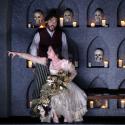
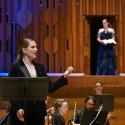
His libretto, on the other hand, he took from a living female writer, the Poet Laureate Carol Ann Duffy’s eponymous collection, which examines assorted famous males through the eyes of their real or imagined wives or lovers. It’s a motley collection, not always as creditable to the wives as may have been the intention. But in Green’s hands, and more particularly those of his soprano, the brilliant Amanda Forbes, it makes excellent theatre – a theatre of sound and words, certainly, rather than action, and all the better for a certain ambiguity of aim, which helps avoid the grinding platitudes of so much feminist polemic.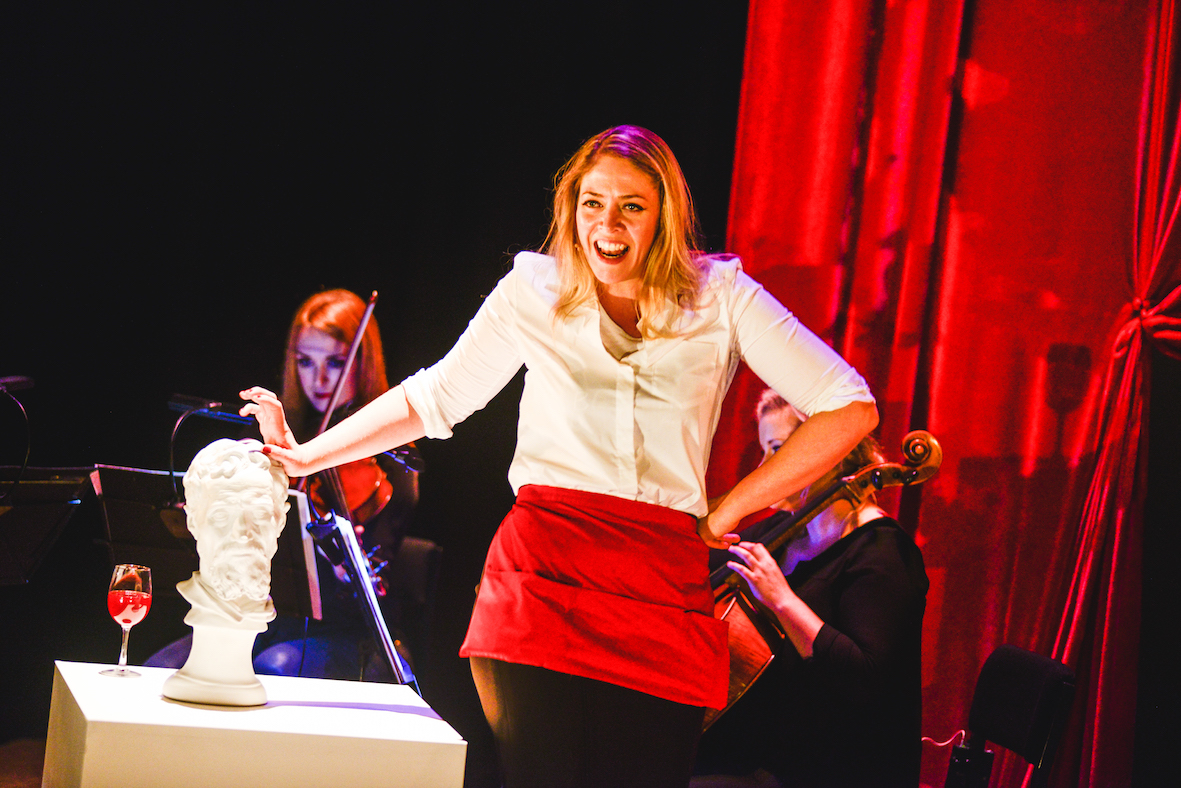 Accompanied only by a string quartet (the admirable Mavron Quartet, two of its members pictured above) and a small museum of busts, Forbes wanders the stage from wife to wife starting, mysteriously, with Red Riding Hood, then proceeding via Mrs Pontius Pilate, Mrs Aesop (a sort of mundane Mrs Haydn: “I could barely keep awake as the story droned on”), Herodias and Salome, Mrs Icarus – condemned, like so many wives, to watch her husband make a prize idiot of himself – Mrs Freud, and on via Anne Hathaway and Mrs Beast (of Beauty fame), to the ultimate abandoned wife, Demeter, the umpteenth Mrs Zeus.
The temptation to joke about these victims of history’s sexism is by no means always resisted, by the music any more than by the poetry. Mrs Aesop chatters gibberish to her husband’s bust; Salome grinds her hips to some very unbiblical boogie-woogie. But the prevailing tone is inward, reflective, an image of the complexity of a world in which male genius (we can talk about the female sort some other time) is often outstripped by subtleties in the female psyche that go unnoticed because they lack obvious product. “Behind each player,” as Duffy puts it, “stood a line of ghosts/Unable to win,” though occasionally they did. After all Demeter produced Persephone, who invented the seasons: not a bad record to put beside The Winter’s Tale.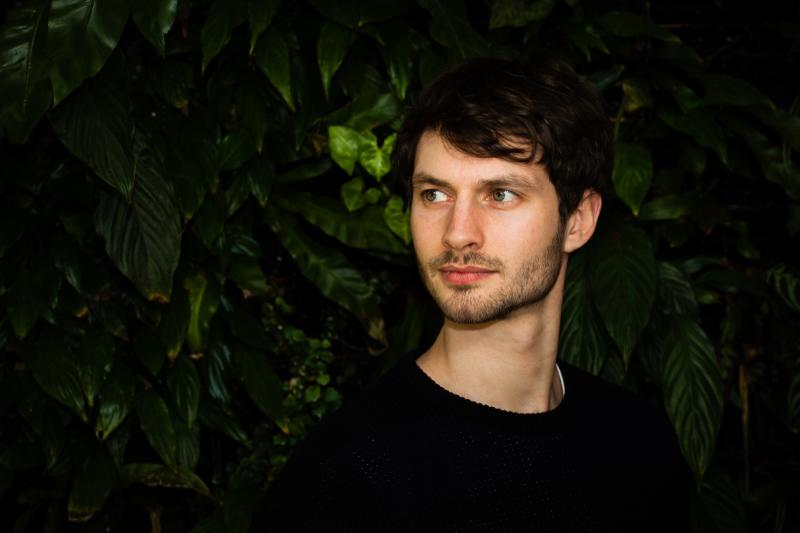 Green’s default style here is a kind of floating arioso, sometimes supported by the quartet, sometimes not, and in the end enriched by an extraordinary polyphony of self-reflective vocalism achieved through the visible use of a hand-held loop pedal – effectively an electronic way of making a tape-loop. The writing for quartet is versatile, sometimes linear (Anne Hathaway is accompanied beautifully by solo cello), sometimes richly contrapuntal, always well-heard. Green (pictured above) understands the needs of a solo voice over a ninety-minute span. But he could hardly function with a performer less talented than Amanda Forbes, less gifted with a vocal range from chest crooning to high soprano, or with a stage presence to match. Her performance was unforgettable.
She was skilfully directed by Ed Madden, everything well paced and well integrated with the music. We could have done with surtitles – these are rich texts that deserve detailed hearing: or at the very least some labelling of the wives. I had read the texts beforehand, but still had to listen hard to identify every case. And I suppose it’s all a bit too long and, at the end, lingering. Mrs Beast and Demeter tape-looped reminded me of Birtwistle’s Orpheus; hauntingly beautiful, but perhaps too much by 10 minutes or so.