Awkwardness is a challenging effect in drama, and one so rewarding when it works. When the movement isn’t easy, when the dialogue doesn't flow; when, with emotional revelations broken and coming with difficulty, the pauses speak more powerfully than the words. David Eldridge’s Beginning is a masterclass in its possibilities, a getting-to-know-you moment that plays out over 100 winning minutes.
It’s also extremely funny, and Eldridge’s two-hander, which premiered at the National’s Dorfman in October, is certainly sure on its feet on the humour front. Which is more than you can say of its characters, Laura and Danny (Justine Mitchell and Sam Troughton, from the original production), who definitely aren’t when it comes to revealing their innermost feelings and fears. In fact, they’re practically treading on eggshells, the pain beneath potentially crushing.
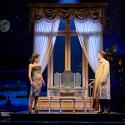
 It’s the end of Laura’s house-warming at her new Crouch End flat: the party’s over, everyone else has headed home, but Danny hasn’t left in the taxi with his friends. Something has kept him back for a last drink, and the feeling’s mutual. But if we’re expecting these strangers in the night to become lovers at first sight, Eldridge confounds us on that one. Just as the moves of seduction that he orchestrates may initially surprise, too, as Troughton’s Danny, for all the blokishness that is such a central part of his character, consciously holds back from the unthinking moves for which his sex has so often been traduced (recently, especially).
The elephant in the room here isn’t who makes the first move, but the motives these two have both for wanting to, and for not following through. They’re certainly no star-struck youngsters: Laura’s 38, smart and successful, the MD of her agency, Danny a few years older, something in recruitment middle-management, but heavy and far from his best (it’s not just the ketchup down his shirt). Eldridge gets the social differences between them just right – she’s kept her Irish accent but has the voice of a confident professional, he’s awkward and far less articulate – and is expert on how postcode and property (prices) define us in London. Laura’s got lucky at every stage to end up in this desirable part of North London (the “pesto triangle”), he’s an Essex boy more at home in Upminster Bridge, and now back living there with his mum (his nan, in her nineties, is another major presence in his life: she sounds a right character).
It’s Eldridge’s scalpel work as Laura and Danny open up about themselves that impresses
The thing they genuinely do share is loneliness. If you thought that the laureate of London loneliness was Simon Stephens, he’s going to be sharing that plaudit with Eldridge from now on. There’s both that special new sort of loneliness that arrived with Facebook and dating apps, and the old-fashioned kind, the dread of solitary Sundays, the aching sadness of past break-ups. The biological clock is ticking for Laura and she knows it, fearful of a life that may be “a shell of activity” but which will be missing the most important thing of all. For Danny it’s the dread of being excluded once again from what is truly precious to him, his life practically defined by its central paternal hole.
What with all the detail of the here and now – Beginning is set clearly at the end of 2015, the prospect of a woman president of the United States mentioned as a few months away – we may wonder whether, over time, it will feel dated, its depiction of the language and priorities of the moment almost anthropological. You could have said the same about Mike Leigh in his time, and there’s a similar deep humanism there in Eldridge’s play: both writers capture lasting feelings that play out against a veneer of the quotidian, one which is caught nicely here in Polly Findlay's production, the design of Fly Davis especially. And Findlay certainly draws out the comedy in the play, aided by movement work from Naomi Said that catches the sheer embarrassing rigmarole, say, of struggling to open a bottle of wine or attempting the right solo dance moves.
 It could rather easily end up a bit pat, and it’s not; the laughter quotient is high – it’s there in the wit of the writing, some surefire comic allusions and fluent mimicry, and generous self-deprecation – but it’s Eldridge’s scalpel work as Laura and Danny open up about themselves that impresses, the depths they reveal. It’s the two elements together that make the whole, of course, but the main thing is that we feel we come close to his two protagonists.
We’re rooting for them, in fact. Laura gets to engage with language more creatively throughout the play, and has a long late speech about how things might go in a hypothetical future – it begins beautifully, “I want a people carrier” – while we fear that what life will bring them will be so much more unpredictable. It might even have you recalling that other impressive relationships two-hander of the decade, Nick Payne’s Constellations, which told us that such possibilities were literally infinite. Beginning takes us in a different direction, discovering its depths in the honesty and detail of experience. Eldridge's writing is absolutely engaging, the performances of Mitchell and Troughton close to perfection.