Striking it lucky with a successful new opera is a rare occurrence, though every company has a duty to keep on trying. The Royal Opera hit the jackpot with 4.48 Psychosis, a highly original approach to Sarah Kane's profound and authentic play by Philip Venables, the first Doctoral Composer-in-Residence on the scheme initiated by Covent Garden in alliance with the Guildhall School of Music and Drama. How could one not wish his successor, Israel-born Na'ama Zisser, all the best? Her credentials are excellent, not least studies with Mark-Anthony Turnage. But Mamzer Bastard makes for a nearly unendurable 90 minutes in which a churning orchestral sludge seems misallied with operatic word-setting of an awkwardness unparalleled even by today's mostly ungainly standards.
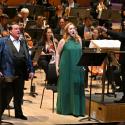
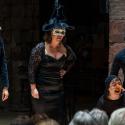
 Relatively bearable is the cantorial music framing the action, mostly by other composers – only the last of the seven numbers is by Zisser, and you can guess without having read the programme beforehand since it's much more awkward for the excellent tenor Netanel Hershtik, cantor of The Hampton Synagogue, New York (pictured right), to negotiate. More surprising to read is that Zisser hoped for homogeneity between the religious numbers and her own music-theatre; the contrasts are extreme, and make what in the context of the synagogue might be fitting seem mostly banal.
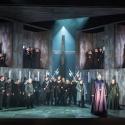
The plot, such as it is, underlines with very little tension the heavily signposted revelation. On the eve of his traditional Hasidic wedding, Joel finds that he is indeed his mother's son, but not by his presumed father; the “Stranger” who dogs him is her first husband, presumed dead in the camps (no spoiler there), after whom he's named. That makes Joel the younger not so much a bastard as a “mamzer,” illegitimate in the eyes of Jewish custom because the mother has been married to another man. The drama supposedly unfolds on the streets of New York during the blackout of 13 July 1977.
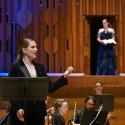
Though this is clearly Joel the younger’s crisis, you'd think it was Apocalypse Now on the streets of New York rather than a matter of personal revelation, the sort of doomy nightmare where you're wading through treacle. The mostly lower-register instruments sink ever downwards in a style which seems at loggerheads with the jerky setting of repetitious text (by Zisser's sister Rachel and Samantha Newton). Whether conductor Jessica Cottis is getting tight results from the Aurora Orchestra ensemble or not is impossible to judge – as is the vocal quality of the five singers actually participating in the drama.  Treble Edward Hyde as young Joel, countertenor Collin Shay as his older self, Gundula Hintz, Robert Burt and Steven Page can't be judged by the same standards that make Hershtik's part in the proceedings more accountable. The ungainly lines are further sabotaged by raspy-edged miking (really necessary against 10 instrumentalists?). The camera held by video designer Pauline Jurzec projecting enlarged images on to a screen – a cliché now in all but the best hands: director Ivo van Hove can still get away with it; Jay Scheib, in charge here, does not – has the further drawback of the lips moving out of synch with the delivery.
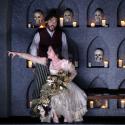
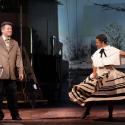
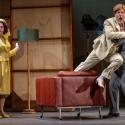
The possibility of grace after all this torment (Hintz and Shay pictured above) could just about be considered moving in itself, but the real balm comes in a final release from the harsh lights and the monotonous sound pictures. A worthy subject, no doubt, but nothing in its handling inspires confidence in the possibility of future work from this team.