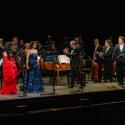
It is a pleasure to report on the continuing success of the Saffron Opera Wagner project. The organisation was formed in 2013, and since then has presented concert performances of the Ring cycle and Meistersinger, and now Parsifal, all with an amateur orchestra and chorus and a cast of mostly lesser-known professionals. As this Parsifal demonstrated, the casting choices have generally been superb, and the amateur forces all well prepared, the results dramatically convincing, even in concert performance.
The orchestra here was committed and well into the style of the music. But there were no miracles – you couldn’t forget for long that this was an amateur ensemble. Tuning in the woodwinds would occasionally wander over the long passages; ensemble between the sections often came unstuck; and balances were often a problem, with the brass often overpowering tuttis. But the orchestra compensated with many elegant details that don’t often come through. Conductor Michael Thorne was clearly intent on making the orchestral part much more than accompaniment, and had the players highlight, for example, the heavy bass pizzicatos and hard-stopped horn interjections in the first act, and the exchanges between the string sections in the second. And sometimes mediocre ensemble passages were often redeemed by the appearance of a transformative solo phrase, from the bass clarinet or bassoon in the first act, and the upper woodwinds in the third. The chorus was made up of around 50 singers, and could have been larger, especially to compete with the orchestra, but they coped well, especially with the challenging climax to the first act.
This opera calls for a group of exceptional baritone and bass voices, and this cast really delivered
The strong cast was lead from the top by Michael Bracegirdle as Parsifal. His voice has the ideal combination of power and flexibility for Wagner. His tone can sometimes turn hollow and nasal at lower dynamics, but always retains a focus. He came into his own in the second act, from “Amfortas! Die Wunde!”, this whole section delivered with searing intensity. The Kundry of Elaine McKrill also proved an asset in this second act, another powerful and controlled reading. McKrill also has a voice of Wagnerian proportions (she sang Brünnhilde in the Saffron Opera Ring), though her delivery sometimes felt too controlled – good diction and excellent clarity of tone, but rarely sounding as unhinged or erratic as Kundry requires.
This opera calls for a group of exceptional baritone and bass voices, and this cast really delivered. Andrew Greenan was suitably authoritative as Gurnemanz, with plenty of power and stamina for the role, and also the variety of tone and delivery to maintain interest across the long monologues. Richard Burkhard sounded like a Lieder singer in his portrayal of Amfortas, his every line delivered with elegant and passionate phrasing, the character’s pain powerfully conveyed. It was a shame to hear so little of him – here’s hoping the company invites him back to sing Wolfram when they reach Tannhäuser. Nicholas Folwell gave a serviceable Klingsor, though didn’t find much characterisation in his short appearances. And Richard Wiegold, who could probably be considered a celebrity cameo here as Titurel, was suitably imposing – excellent interaction, too, between him and Burkhard during the Act I Grail Ritual.
Given the disparate mix of performers and talents, credit must go to conductor Michael Thorne for bringing it all together into coherent and dramatically focused performance. Orchestral ensemble seemed to be his primary concern, and he spent the whole afternoon giving clear beats and emphatic cues. But that never impeded his interpretive approach, with phrases lyrically shaped, and keen communication maintained with the singers, even though most were standing behind him. He never gave any concessions to the orchestra with his tempos, which were often swift, but also carefully paced the act finales for full dramatic effect. Best of all was the ending, a final moment to shine for the chorus, over a string tone now confident, bold and warm – and the whole ensemble perfectly balanced and paced to bring a glorious conclusion to a compelling performance.