This was one of the more strait-laced concert performances, with few concessions to Wagner’s underlying stage drama. The soloists were in formal concert dress, strung out in a line at the front of the stage, with interaction between them limited to looks of anguish and the sparest of gestures. The shepherd boy in Act 1 was banished to the upper reaches of the organ gallery, and there was a substantial off-stage band in Act 2, but otherwise there was nothing to distract us from the music.
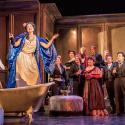
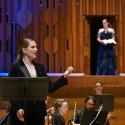
But what music! Wagner's Overture to Tannhäuser is justly seen as a masterpiece in its own right, but under Donald Runnicles the orchestra of Deutsche Oper Berlin pushed the music along with an almost demonic energy – the brass resplendent, the strings throbbing with latent power. I thought it interesting, having not long since heard Messiaen and Shostakovich performed by large orchestras in the same hall, how Wagner’s orchestration is really quite compact, the only extravagance being two harps, but delivers tremendous volume with enviable efficiency. 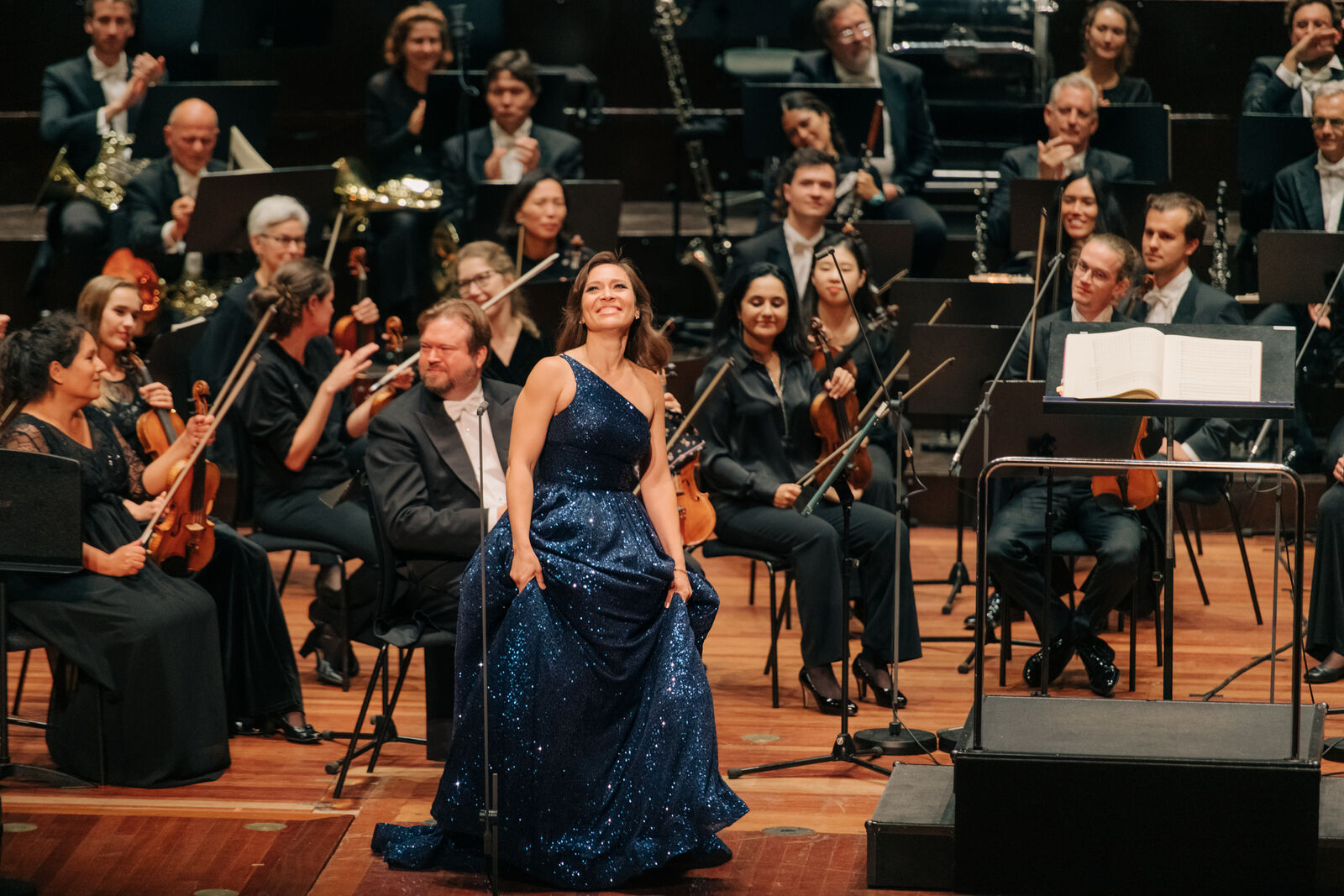 The first sung words in the opera belong to Venus, and from this moment on we could tell that we were in for a vocal treat. The mezzo-soprano Irene Roberts (pictured above), gorgeously attired in shimmering blue, offered the hapless Tannhäuser such a rich, velvety vision of hedonistic pleasure in the Venusburg that I am surprised he didn’t just turn on his heel and capitulate instantly. It would make for a happier ending and a much shorter opera.
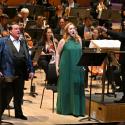
He doesn’t, of course, and the remaining three hours of the opera chronicle his increasing discomfiture as he wrestles with the competing claims of sensuality and spirituality. In the title role, the American heldentenor Clay Hilley (pictured below) both looked and sounded the part. Whether by design or accident he was in fact dressed apart from the others, no white tie and tails but an open-necked shirt and a suit; he was also the only soloist singing from a score. The overall effect was a slightly harassed look that was totally in keeping with the character. Vocally, he was more than a match for the part, with a clear tone and an edge to the high voice that cut through even the loudest orchestral accompaniment. 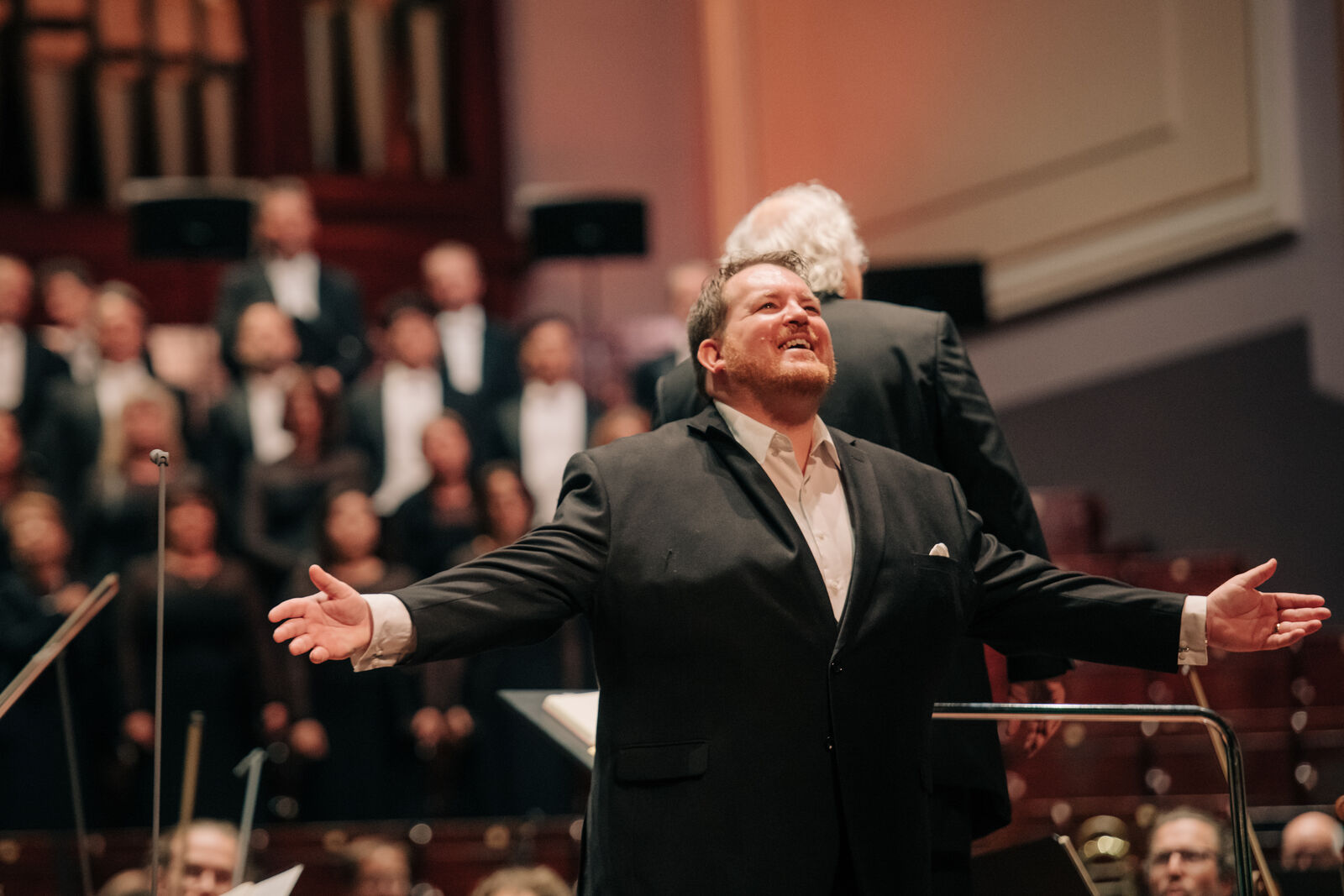 If Venus was a treat, the arrival of the British soprano Emma Bell as Elisabeth reminded us that for a major European opera company only the best will do: here was a voice that opened from a murmur to a full fortissimo with hardly a ruffle, floating with apparent ease on the highest registers. Not that there was anything to complain about with the other principals: Thomas Lehman a sympathetic and gentle Wolfram and Albert Pesendorfer impressive both in stature and gravitas as the solemn Landgrave.
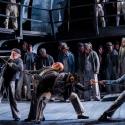
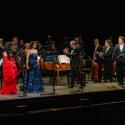
The drama unfolded against an orchestral backcloth that Runnicles kept in firm control, from the carefully sculpted moments of portentousness to an at times almost feather-soft accompaniment to those long Wagnerian moments of intimacy, such as Wolfram’s prayer to the evening star. 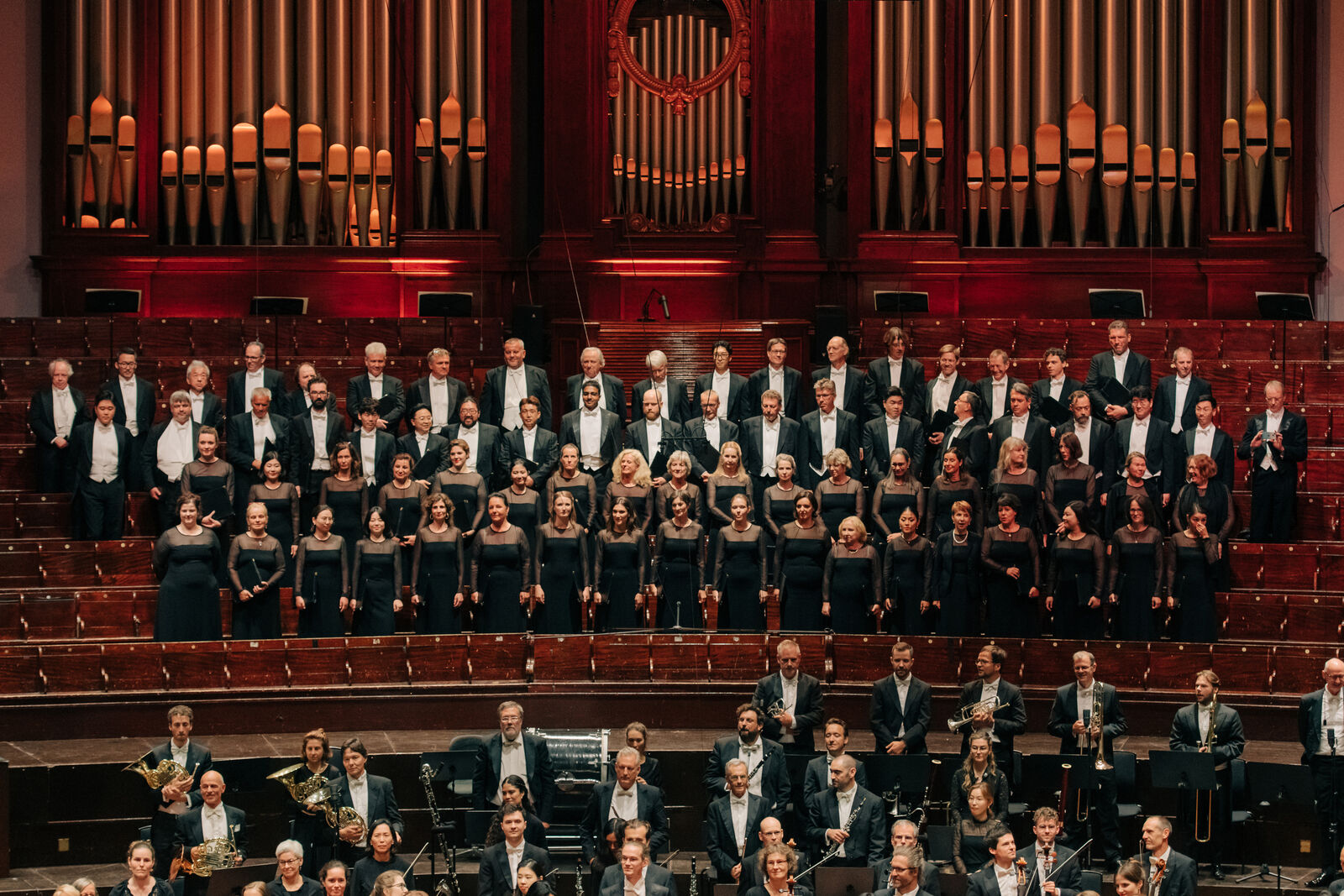 But if there was one thing that really impressed the appreciative audience in the Usher Hall, it was the hitherto unmentioned Deutsche Oper Chorus (pictured above with members of the orchestra), which looked quite petite by contrast with the massed ranks of the Edinburgh Festival Chorus but produced a focussed and sustained sound such as can only be produced when every chorus member is a trained operatic voice. The final peroration, at which Runnicles unleashed for the first time a full fortissimo from orchestra, chorus and soloists was quite magnificent.
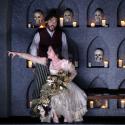
Did we miss the stage paraphernalia of lights, set, costumes and wigs? I think not. The last production I saw of Tannhäuser had the protesting female chorus writhing around the stage in fishnet stockings, and I can’t see how this or any other attributes of the Wagnerian mythical landscape could have added anything to the majesty and completeness of last night’s performance.