How much better can a classic get? Sebastian Scotney more or less asked the same question on theartsdesk the last time Giulio Cesare returned in triumph to Glyndebourne. I never saw David McVicar’s justly famous production of what has to be Handel’s most consistently inspired opera live before, but I wonder if every single number can ever have been applauded, as it was last night.
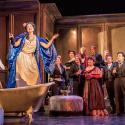
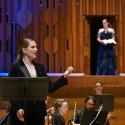
Less than a month ago, Ireland’s Blackwater Valley Opera Festival also flourished a Cesare, a much more heavily cut version but strongly cast and just about as good as it could be on a limited budget and rehearsal time. There have never been such restrictions at Glyndebourne, and you’d need all the preparation this unique house affords to train up a new cast in the astonishing routines Andrew George’s choreography asks them to execute in many of their arias.  Needless to say, the absolute star in this respect is the flawless Louise Alder as Cleopatra, well up to the dances for which Danielle de Niese was so feted (not least by her future husband, Gus Christie), running the full trajectory from hand-jiving seducer to temporarily tragic heroine. With her apparently light and colorature-agile lyric always capable of pulling out flame-toned dramatic stops, she rose to the heights in “Se pietà” and “Piangerò”; neither could possibly be sung, phrased or ornamented better. The celebratory fireworks returned us to the joyous dance again, much enriched by the two handmaidens (Emily Piercy and Sirena Tocco pictured above with Alder centre).
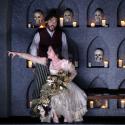
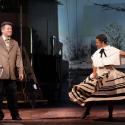
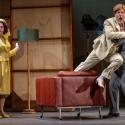
Even so, no performer failed to rise to the big occasions, plangent or pugnacious. One benefit of a male Cesare is (paradoxically, given the voice type) a testosterone-laden contest with his villainous opposite number, sybarite Tolomeo; both were alto castrati in the 1724 premiere, and the two countertenors here proved perfect in contrasting looks and timbres. Aryeh Nussbaum Cohen probably has the most blazing upper trumpet tones on the countertenor scene today, and he can chest-voice it at times too, even if the middle register, perhaps inevitably with this voice type, isn’t quite as strong. He, too, executes a formidable choreographed number, along with the other bellicose males on stage, “Va tacito e nascosto”, with suitably strutting horn obbligato; the offbeat stomps are a joy each time. McVicar’s coup of bringing some orchestral players on stage is exploited to the maximum with veteran violinist Kati Debretzeni dragged up to out-nightingale Cohen in “Se in fiorito ameno prato”. Cesare’s last big flourish. “Quel torrente”, so sorely missed at Lismore Castle, rightly won audience roars.  Athletic, not overdoing the camp and with a profile to die for, Cameron Shahbazi (pictured above) makes a perfect opponent. There's even an extra layer of piquancy in an Iranian Canadian facing off against a Jewish American. Luca Tittoto serves up a fine further level of threat as Tolomeo’s scheming, lustful right hand man Achilla, while his fey opposite number in the Cleopatra camp, Nireno, is spiritedly sung (and danced) by Ray Chenez.
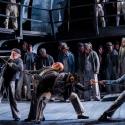
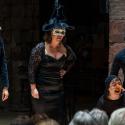
No Cesare can afford a less than lustrous mother and son, Handel usually spends a first act setting up characters at leisure; the brilliance of this masterpiece is that within minutes Cornelia and Sesto are faced with the severed head of their husband and father Pompey. Immediate distinction in lacerating lament is no surprise from the already great Scottish mezzo/contralto Beth Taylor, but Svetlina Stoyanova is the first to move us to the very depths as McVicar allows total stillness around the boy Sesto in “Cara speme”. She/he also gets a brilliant final flare before the denouement. (Taylor and Stoyanova pictured below).  A whole chapter could be written on the collaborative glories from the Orchestra of the Age of Enlightenment under the vintage guidance of Laurence Cummings. Every introduction and rounding-off teem with personality; singing, perfectly phrasing violins are underpinned by a thunderous bass line where needed. This, too, is where proper rehearsal time pays off in the dialogues of instruments and voices.
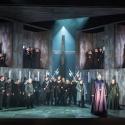
The icing on the richest of cakes lies in the flexible set designs of Robert Jones – longing less than a week ago for the waves at the back of the stage in Český Krumlov’s supernatural baroque theatre to turn, I was utterly seduced by the sea-glitter here – cravable silks and sparkle in the costumes of Brigitte Reiffestuel (Shabazi even gets to play the Golden Slave of Bakst’s designs for Diaghilev’s Sheherazade) and peerlessly lovely lighting changes from Paule Constable.  So the McVicar Cesare more than holds its own against the Hytner Xerxes and Sellars Theodora as the greatest of Handel productions; it seems to have outlived both and will surely return again. A final note of deepest sadness: a special poignancy in the performance last night may well have been due to the shock news of the sudden death of Leah Williams, Deputy Running Wardrobe Manager, who loved the show: a reminder of the extended Glyndebourne family which goes to making such perfect evenings possible.