Later this autumn Richard Eyre’s La Traviata celebrates its 30th birthday. Not bad going for the director’s first ever foray into opera – a genre he admitted holding an “unreasonable prejudice against”.
And perhaps that’s the secret to this Royal Opera stalwart – the reliable banker that hasn’t been out of repertoire since its 1994 premiere, whose tightly-laced corsets have been filled, champagne glasses clinked and lace hankies bloodied by some 40 different sopranos. This is a production where liking opera really isn’t a pre-requisite.
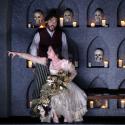
Bob Crowley’s belle époque designs don’t so much leave you humming the scenery as bellowing it: that gilded ceiling! The Sissi-inspired ballgown! The black-and-red casino fantasy! Heading into its third decade the show still looks the business, even if the cost (static choruses trapped by too much furniture; lengthy intervals for set-changes; tailoring stiffer than Germont père’s embrace) seems unfashionably high. Crucially though, especially in a post-Brexit, post-Covid era, this traviata is also a “just add star-power” production: its simple, no-fuss blocking capable of absorbing an unscheduled soprano at minimal notice.
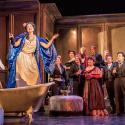
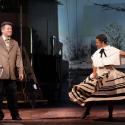
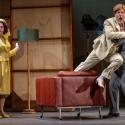
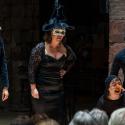
Latest to join the party is Aida Garifullina (pictured above with Grisha Martirosyan as Baron Douphol). Seven or eight years ago, with an Operalia win to her credit, a cameo alongside Meryl Streep and Hugh Grant in the Florence Foster Jenkins biopic, and an exclusive recording contract with Decca, you’d have bet good money on a noisy career ahead. But the Russian soprano has kept a lower profile – certainly in the UK, where we’ve scarcely seen her since.
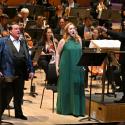
Her Violetta is worth waiting for. Light and flighty in Act I, “Sempre libera” airy to the brink of imprecision, she reveals gratifying depths – vocal and dramatic – through Acts II and III. It’s no fault of Garifullina’s that this revival doesn’t catch fire until Act II. It’s her confrontation with George Petean’s Germont where pretty becomes something more interesting, pivoting on a suddenly-fragile “Dite alla giovine”, in which we hear the game change in real time, and a suddenly-resolute “Imponete”. By the time we arrive at “Addio del passato” the two Violettas – the brittle party-girl of Act I and the courageous woman of Act II – come together in a poised final scene. It's a shame so much around Garifullina feels a bit workaday. Petean (pictured above with Demuro) is a solid presence, generating more heat with the soprano than Francesco Demuro’s arid Alfredo, who seems to have strolled in from a drawing-room comedy, perpetually surprised (and slightly displeased) to find himself in a tragedy. There’s no hint of an ardent youth here: not a lot of juice in his tone, not a lot of intent in his interactions, not a lot of warmth in the love-scenes. After an Act I spent consistently under the note, he warms up in Act II, but later gives “Parigi o cara” a bit of a walloping. It’s frankly hard to see what Violetta sees in this pouting man-child.
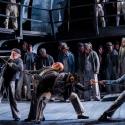
No fewer than five Jette Parker Young Artists fill out the supporting cast. Veena Akama-Makia makes her presence felt with a richly-sung Anina, and Ossian Huskinson’s Marquis d’Obigny promises much for the future. Jingwen Cai seizes her opportunities as Flora. The chorus deliver more energy than the pit, which comes in and out of focus. Some gorgeous woodwind solos emerge out of some rather staid, locked-in tempos. Conductor Alexander Joel is careful and precise to a fault.
There are glints of sparkle here, but it’s hard not to feel that the bubbles in Eyre’s champagne have gone a little flat, the confetti in his party-poppers a little limp. It’s all serviceable enough, but this operatic party needs a serious injection of energy to celebrate its 30th birthday in the style it should.