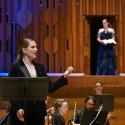
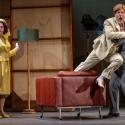
It’s often said that Ariadne auf Naxos is all about The Composer – not only Richard Strauss but an affectionate parody of his younger self – and Katharina Thoma takes this idea seriously in her Glyndebourne production. In the role, Angela Brower plays an important if silent part in the Opera proper, and brings an upbeat flourish to an absorbing if rather pensive reflection on this uncategorisable piece of theatre.
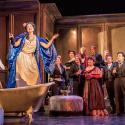
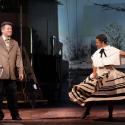
Part spoken play, part tragedy, part commedia dell’arte, Ariadne is 100 percent meta-opera. From the outset, place and time are established so firmly – wartime Glyndebourne – that it takes a few minutes to get over the cast singing and speaking in German, as apparently it did when the production was first staged in 2013. If this indicates a strategy of disconcertion – and why not? – it sits uneasily with the homespun feel of the stagecraft in the Prologue. Sir George Christie would surely raise an eyebrow at the supernumeraries milling around a rather drab recreation of his front room. This part of the evening, at least, should be funny; perhaps the pacing will tighten and the payoff lines will zing during the run.
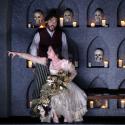
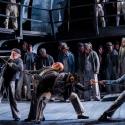
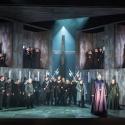
There are some very damaged people on stage when the curtain opens on the Opera proper to reveal the old house become a hospital. The patients make an unlikely jumble of shellshocked squaddies and depressed luvvies recovering from the cataclysm which brought the Prologue to end in flames. This is Glynditz, the (mostly) affectionate trade nickname for the old place, where leaving is more of a challenge than arriving. There is a point well made, of opera as a therapeutic space, not only for its audience but its actors. You don’t have to be mad to work here, the production seems to say, but it helps.
 Directing the revival of her own production, Thoma exploits the gifts and talents of four principals who are also new to Glyndebourne. Brower plays The Composer straight, less neurotic than many predecessors in the role, taking all the few opportunities available to her for warm and not only urgently lyrical flourishes. The stage is held by Lise Davidsen in the title role as a convincingly young woman, dumped and in despair: quite a contrast to the washed-up diva guyed so mercilessly by Christof Loy in his Royal Opera staging.
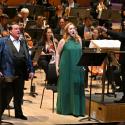
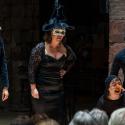
Davidsen (pictured right) plays on her statuesque presence in the Prologue, but she fills the entire house in the Opera with a thrilling if sometimes steel-tipped soprano. Scarcely less impressive are the tenor AJ Glueckert, full of Heldentenor sap as her late-arriving redeemer, Bacchus; and Erin Morley, playing Zerbinetta not as a nemesis but the yang to Ariadne’s yin: it takes real courage to sing her set-piece as a mad scene out of Bellini, and not just for laughs. Supporting roles are well cast: as the Music Master, Sir Thomas Allen does what he can to whip the Prologue into shape, and Hyesang Park (Naiad), Avery Amereau (Dryad) and Ruzan Mantashyan (Echo) make a strong and beguiling trio of companions to Ariadne.
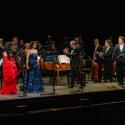
Also making his Glyndebourne debut, Cornelius Meister directs the London Philharmonic in an account of greater clarity than wit, rhythmically a little stiff in the Prologue and beset by a few glitches of coordination in the comic ensembles of the Opera. Once it’s run in, the show will be well worth seeing by anyone who doesn’t think they already know what this elusive piece is really "about" – and for Davidsen, who should not be short of future engagements.