It's not hard to imagine the Bloomsburyites frolicking around the exquisite Garsington grounds in mock-ups of scenes from Tasso's Gerusalemme liberata. Lady Ottoline, chateleine of the enchanted garden, would writhe as eastern sorceress Armida, though Lytton and co would hardly make a very butch bunch of opposing crusaders. To be honest, there wasn't much more testosterone or sex on show in Rossini's dramatically flimsy, musically elaborate operatic nod to Tasso last night, and the gaudy onstage attempt at a garden of delights couldn't compare with the real thing. But it's something at least to field four light Rossini tenors, albeit of varying ability, and with Jessica Pratt's phenomenal final scene, a star was born.
In recent years, the country-house brief of exploring neglected repertoire has been diverted from Glyndebourne to Garsington and Grange Park. Was Garsington upstaged by the Met's live screening of its new production, a showcase for Renée Fleming, only a month or so back? Well, it can't compete in terms of star billing or enough stage resources to present the opera complete; nor would some of the often restless punters be prepared to sit through a full three-hour Armida when their main aim was sipping champagne and discussing hedge funds. Most of the Act Two ballet had to go, which was a relief judging from what we did see of Michael Popper's choreography (and the 24-strong chorus, valiantly as it co-operated and as well as it sang, did make you realise that there's often a case for a lithe movement group to add credibility).
The most important thing is that both stagings, as well as a gorgeous recording made 17 years ago with a younger, lither Fleming, vindicate the wealth of inventiveness in Rossini's 1817 score. The familiar backbone consists of ensembles such as the Act One quartet, apparently based on the singing teacher's favourite aria antica, "Caro mio ben", and the famous tenor trio. You know you're in a different world from the orchestrally indifferent Donizetti when you hear the ingenious orchestration of the Sinfonia's opening martial strut, complete with chirpy piccolo solo to set the birds of Garsington singing (not that they ever need much encouragement). David Parry's conducting drew crisp results throughout, and no longueurs in the pit.
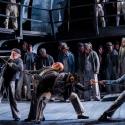
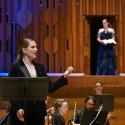
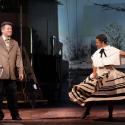
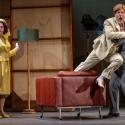
 That it went up and down vocally rather depended on which of the four tenors - six in Rossini's original demands for the strong Naples company, two doubling here - happened to be singing. None was quite a match either for the token bass, the hugely impressive Chrisophoros Stamboglis doubling as Armida's uncle and a personal demon, or for the revelation of Mark Milhofer in the recent Chelsea Opera Guillaume Tell. Perhaps the most authentic in his runs and his ring was Romanian Bogdan Mihai, kicking off in flamboyant style as crusader-commander Goffredo, who doesn't appear after the first act. David Alegret offered little threat as envious Gernando (pictured above in conflict with Victor Ryan Robertson's Rinaldo); the timbre was right, but not the launch into top notes on an anxious wing and a prayer. In Act Three Algret popped up again as a Frankish paladin in a ravishing duet with Mihai, also back as another character, if that's the right word in this cardboard cutout context.
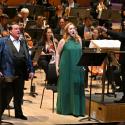
In between, all eyes and ears should be on the real hero, Rinaldo. Top-notch African-American tenor Lawrence Brownlee sang him at the Met; for Garsington, his compatriot Victor Ryan Robertson, made a pleasing if less charismatic impression, with no sensual spark between this Rinaldo and Armida. He gets some wonderful music, crowning the three-tenors showstopper in the third act but more at ease in three equally ravishing duets with his sorceress love (a flute dives around the first - one of the Garsington blackbirds liked this the best - a solo cello leads the second, and a violin carols in the final idyll). Bristol-born soprano Jessica Pratt is even more the real Rossini thing: looks like coloratura of yesteryear June Anderson, with the high cheekbones and the generous figure, and has something of the fullness with which Anderson and before her Sutherland changed the face of the tweety-pie songbird. Neither would have pulled off a more briliant top E flat, licensed or not, at the end of the show.
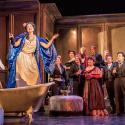
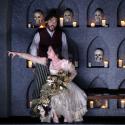
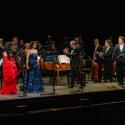
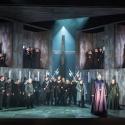
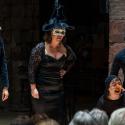
And I suppose we have to mention the staging, though "Why bother?" has to be the bottom line. While Penny Woolcock pulled something meaningful out of Bizet's tawdry drama in the ENO Pearl Fishers, Martin Duncan didn't elicit a smidgen of human interest from the clash between love and valour. Act One pleaded a concert performance: handsome black and grey silks, Japanese style, allied to unison semaphoring, more "Simon Says" than the hallmark of many a Peter Sellars production. Act Two turned into a gaudy, haphazard nightmare, a mix of red-striped demon blue meanies with bathing beauties (Esther Williams meets Lady Gaga). Sounds interesting? Not given the movements and the endless table dragging which signified magic transformations. Only the final tableau, with the lights flaming first red then orange on Armida's decision to avenge herself on the faithless Rinaldo, really came to life as theatre. Musically, at least, it was a token of faith in what Garsington has gradually established over the last 22 seasons. No doubt the standards will be held when the opera moves to the Wormsley Estate next year. But how we'll miss Lady Ottoline's enchanted garden.
- Armida runs at Garsington until 29 June
- Check out what's on in UK summer festivals on theartsdesk