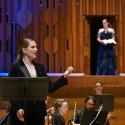
For some reason, the Welsh have revived their Così fan tutte, from last year, with positively unseemly haste – if not quite so unseemly as the haste with which their La Bohème, from this spring, was wheeled back on last month barely three months after its first airing. It looks as if the outgoing intendant John Fisher, never notable for lively repertory planning, was either clearing his desk, or had simply scarpered. His successor, David Pountney, has bravely been much in evidence on company first nights this year, but cannot yet be blamed for what he, and we, are hearing and seeing.
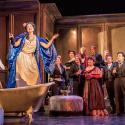
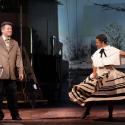
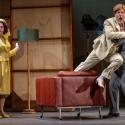
This Così, directed by Benjamin Davis and designer Max Jones with a vulgarity that I prefer not to describe again (suffice it to say that Barry Island pier on August bank holiday seems to have been the model), was at least reasonably well sung when it was new. The revival is to put it mildly substandard, and in some respects utterly unworthy of a company with the international reputation that WNO has enjoyed, and rightly enjoyed, over many, many years.
The orchestra cope, of course, brilliantly; the singers less well
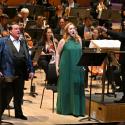
The problem begins, it must be said, in the pit. Mark Wigglesworth, a conductor whose huge talent needs no praise from me, leads the entire performance as if his main aim is to get it over with as soon as possible. Perhaps one shouldn’t blame him. He is the only person down there who can see what is going on on the stage: the ghastly pantomime crocodiles and fat ladies, the trick buttonholes and false noses. But the performance often actually sounds as if he can’t bear to watch, but prefers to scurry on regardless of the difficulties his galloping tempi pose for his singers. The orchestra cope, of course, brilliantly; the singers less well.
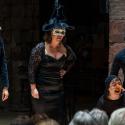
Sometimes one feels sorry for them. Poor Fiordiligi (Elizabeth Watts), forced to sing “Come scoglio”, one of the tricky showpieces of the soprano repertoire, framed by a kaleidoscope of stage business, understandably makes little of it musically, though she projects its ill temper effectively enough. Only with “Per pietà” in the second act, where the director leaves her alone, does she blossom into a vocal actress worthy of this astounding music.
 The other occasional star of the show is the Despina, Joanne Boag, a vocal comedian of huge charm and an agile singer who can even bring off “Una donna a quindici anni” waving a lavatory brush (and showering her supposed employers – though they aren’t that in this production, the many textual references notwithstanding – with its contents). Neal Davies (pictured right) repeats his adequate, pier-entertainer Don Alfonso from last year, though his stage persona (not his fault) reduces the philosopher’s gamble to the illegal passing of a betting slip.
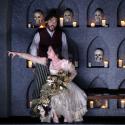
The rest is disappointment or worse. The Dorabella, Cora Burggraaf, waves her arms and willowy form around enthusiastically, but is increasingly troubled by the music, ending with an “È amore un ladroncello” devoid of tone and musical focus, supported, though, by lovely woodwind playing. Andrew Tortise sings Ferrando with level fluency but with a chilly, white tone that one half-suspects he might blame on the plastic nose that passes for disguise on the Glamorgan coast. The Guglielmo, Gary Griffiths, also false-nosed, has his moments in the brilliant “Non siate ritrosi” (“bel naso,” indeed), but elsewhere seems to have difficulty sustaining even the role’s hypocritical ardour in tennis shorts and Butlins blazer.
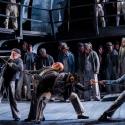
I nourish the hope that the rapid revival of this well-managed but tasteless farrago may be a prelude to its swift demise. The banks of empty seats might suggest I'm not alone in this. But too many great works popped in and out under Fisher’s unsteady hand (I recall the Fidelio with undiminished horror). Roll on the Pountney era.