Singer Ian Bostridge once described The Diary of One who Disappeared as “a song cycle gone wrong”. But this reimagining of it as an opera, by the Belgian director Ivo van Hove at the Royal Opera’s Linbury Theatre, also goes wrong, throwing in various extras which detract from rather than enhance the piece’s impact. I am no stranger to being baffled in an opera house. In fact, I tend to feel that if an opera passes without any confusion there’s something wrong. But here I spent most of the hour of the show unsure what was happening or why.
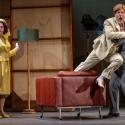
The reframing of a song cycle, originally set in the Moravian countryside, into a chic 1970s bedsit, replete with reel-to-reel tape-player, overhead projector and darkroom makes little sense. The 10 minutes at the beginning where the first characters onstage slowly make coffee merely stretches the running time. The addition of an old man character who observes the action, sometimes intervening, and ends the piece reading from, then setting fire to, letters from Janáček to his muse Kamila Stösslová, complicates things but reveals little. And the bit where he dances in front of a film of a naked woman, her body projected onto his white shirt while he caresses himself, is just silly.
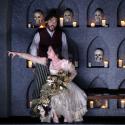
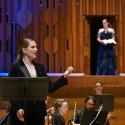
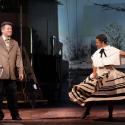
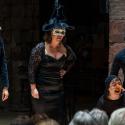
There was some good stuff going on. There is a genuine intensity in the relationship between the leads, an erotic charge that is convincing and brings to life the unlikely passion Janáček felt for Stösslová. The singing is good, the intimate Linbury auditorium allowing the singers to easily fill the space. Tenor Ed Lyons (pictured below by Jan Versweyveld) is impressive, although his top notes felt a bit strained, and Marie Hamard as the temptress Zefka is beguiling both vocally and physically, the edge to her voice compelling.
 Perhaps most winning is the off-stage vocal trio of Annelies van Gramberen, Naomi Beeldens and Raphaële Green, who punctuate the action with a Greek chorus of intertwining voices, swooping and sliding, stark against the piano or, in the best passage, a cappella with Hamard.
There is supplementary music, providing Zefka’s perspective, by Belgian composer Annelies van Parys. These passages are fleeting and blend seamlessly into the Janáček – an impressive feat of ventriloquism – and are only given away by using extended techniques in the piano writing. Pianist Lada Valesová is superb, especially in the interlude in which the lover’s passion overflows. She is excellent as accompanist, but the piano is more than that, becoming a character in the piece, although Valesová herself is understated and untheatrical.
But ultimately there is too much that comes between the audience and Janáček’s brilliant music. The spoken dialogue is in English (juxtaposed unsatisfactorily with the songs in the original Czech) and introduces a sub-plot of the old man having lost his wife, whose ashes are at one point dumped in the sink. (Again, I’m not sure why.) The set is beautiful, and beautifully lit, but works against the grain. The story of the song cycle is of a peasant who abandons his family to pursue the gypsy girl, but here in his comfortable, isolated flat it wasn’t clear who or what the protagonist is breaking free of. There isn’t enough narrative in the songs to sustain an hour-long drama (presumably why Janáček didn’t make it an opera) but there is at the same time too much going on: people come and go, like using a treadmill to give the illusion of going somewhere.
The most effective moment is the very end, and that borrows music from elsewhere. Janáček’s unrequited devotion to Kamila Stösslová continued right to the very brink of his death: he scrawled a few bars of a piece called “I await you” on the back of a legal document as he lay on his deathbed. Used here to finish the show, its optimism, cutting off mid-phrase just as it branches out into a new key, is very moving, and a tribute to the indomitability of Janáček’s spirit.