Those were happy days back in 2014 when, justifiably flushed with the success of the Royal Opera’s Tristan und Isolde revival, director Christof Loy, music director Antonio Pappano and soprano Nina Stemme mooted possibly the toughest role challenge of them all, that of Strauss and Hofmannsthal’s vengeful obsessive Elektra. Yet nearly a decade is a long time in the life of a dramatic soprano, and on last night’s evidence, it's come too late in London.
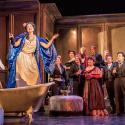
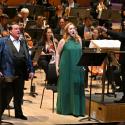
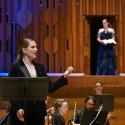
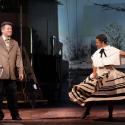
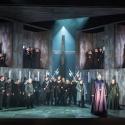
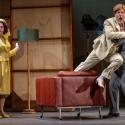
The music drama might have carried it, but oddly, given Loy’s track record, nothing that happens onstage matches the focused intensity and spine-tingling detail of the Royal Opera Orchestra under Pappano. The 20th/21st century setting, with the Mycenaean palace lit by electricity and the upper echelons swanning around in evening dress, adds nothing that couldn’t be rendered in ancient Greek or timeless garb. The stage picture – door, windows, stairway, grubby lower level – looks fine in Johannes Leiacker’s design and Olaf Winter’s lighting – but it’s still essentially business as usual, and what happens within it is mostly generic too. It’s hard to believe in the sacred monsters of Stemme and Karita Mattila as an outwardly glamorous but inwardly racked Klytämnestra (pictured below with Stemme); they go through the usual paces, and seem all the less real as a result.  The vocal wear and tear in Stemme’s voice might still work if one of her most impressive assets, the ability to hit every top note, had survived. She was magnificent in the superlative Patrice Chéreau production at the Met. But on the Royal Opera first night she was in trouble from the scene where brother Orest appears incognito onwards, taking a crucially beautiful line in Elektra’s recognition lullaby down the octave, barely getting to the end of the scene. Always the trouper – reports from the final rehearsal were that she was performing with a broken wrist – she rallied for Elektra’s final outbursts and frenzied dance of triumph over the murders of mother and mother’s lover, and that merited the wild applause. The rest, alas, not so much, though she still colours and takes care with softer dynamics.
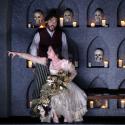
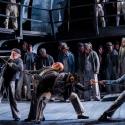
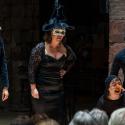
Mattila emotes, but too broadly. Klytämnestra needs an upper-register cut she doesn’t have, and the chest voice was cloudy, too. The indisputable triumph of the evening, Pappano’s conducting apart, was Sara Jakubiak’s as Elektra’s sister Chrysothemis – putatively softer, but here just as strong in her own fantasies, possibly even an Elektra in the making, but one shouldn’t wish that on a lyric soprano, not yet, at any rate. There wasn't a hint of a Chrysothemis-in-waiting among the maids who kick off the action – decently sung, not especially sharply characterized. Charles Workman played Ägisth straight and strong. But the longing for bass-baritone solemnity in Orest’s first proclamations was only increased by some indeterminate pitching in the baritonal timbre of Łukasz Goliński (pictured below with Stemme).  Hair-raising sharpness from the orchestra wasn’t reflected often enough in the action. The vicious sacrificial processional heralding Klytämnestra’s entrance saw only DJd mooching behind the windows, repeated after the murders (was it Loy’s point that the courtiers will go easily with any change of authority?) And the visceral articulation of Elektra’s digging for the buried axe had no such counterpoint on stage. Eventually Stemme produced one quite easily for Ägisth’s murder, having failed to deliver it in time for the matricide. The torch with which she lights his way to death seemed anachronistic, too. So while Pappano delivered, as usual, in the last new production of his tenure, which began so strikingly nearly 22 years ago with the Loy Ariadne auf Naxos, he didn’t this time have direction or, for the most part, singing to match.