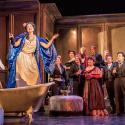
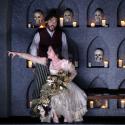
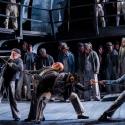
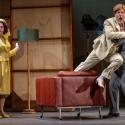
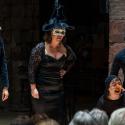
Taking a book and lifting it from the page so that it works on the stage is daunting. When the target audience happens to be children aged between about four and eight, the challenge is magnified. As I write this, a brand new company, Ignite Music, is about to embark on a nationwide tour of an opera I wrote back in 2014 that was composed specifically for this audience - the ones with the very youngest of ears.
So as I attended final rehearsals very recently I was reminded of the creative journey that was taken to bring Borka: The Adventures of A Goose With No Feathers to the stage; and specifically of one particularly special conversation with the late John Burningham, the author of the book upon which the opera is based,
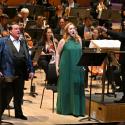
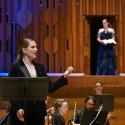
In the Summer of 2013 the then Head of Education at English Touring Opera, Tim Yealland, approached me to say that he had just been granted the rights from John Burningham to create an operatic version of Borka. Whenever I mention the book to anyone, people always tell me that they adored the book as children. I hadn’t actually grown up with it, so I was able to approach it with fresh, albeit adult eyes. (PIctured below: Russell Hepplewhite conducting the ensemble for Borka),  Often when travelling from book to libretto the challenge is about which bits to take out and which scenes or even characters might be omitted from the stage version. The exact opposite applied when the book we had to adapt only has a small number of pages – most of which are filled with larger-than-life illustrations! From my side, it was a bonus not to have to create a work of Wagnerian proportions - we reckoned 45 minutes was the right length - but generating enough musical material was going to take some lateral thinking.
Tim created a vibrant and richly-layered text for me to set, but musically pacing an opera for children is the hardest thing to get right – even a couple of minutes of slow music can result in the wriggle-factor setting in; while on the other hand if the music only ever drives in fifth-gear the children become overwhelmed and either start to chat or even just switch off (I've written too many operas for children not to notice these things!).
 The more I studied the book, the clearer it became that alongside the poetry of the libretto, the musical language for this opera would be found in the illustrations in the book. So much of the story is contained in those glorious images - the East coast marshland, the six newly hatched geese; the featherless Borka herself, the luscious sunrises, and the industrious-looking Estuary boats. Those colours – the misty hues Burningham lovingly worked into every page - were as much an inspiration as the characters and the story itself. This definitely didn’t mean that I could lazily sit back and let the designer do all the heavy-lifting for our production incidentally – the music had to paint the pictures every bit as clearly as the sets and costumes ever would. Instrumentation was also going to be critical and here another challenge appeared.
I was given a band of just three players and I recall contemplating whether to pick three beautifully blended instruments - a string trio perhaps - or whether to choose a quirky and curious collection instead. If the message of Borka is about celebrating being different, then it seemed there was no contest in this respect. So my top choices had to be viola and bassoon, neither being as loved as they should be; so bringing these personal favourites into the fold alongside a group of percussion instruments centred around the vibraphone was the path I took.
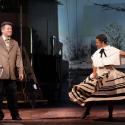
After a short rehearsal period the piece travelled far and wide, but it was at one particular venue that my most vivid memory of the whole production process was made. In the final scene of the book, Borka arrives in Kew Gardens, where she finally finds a place in the world in which she feels she belongs. It was fitting that as part of the ETO tour, Kew Gardens should therefore be chosen as one of the venues to host the production. I conducted the performance that day, and alongside an audience of about a hundred five-year olds, John Burningham was also in attendance.
Once the performance was over, I made my way over to John to gauge his reaction. At that moment I could not have been aware that this would be the first and last time we would ever meet. I was struck by how charming he was, how fiercely intelligent too; but most importantly for me he was brilliantly honest. He said many pleasing things, but I was delighted when he mentioned a couple of reservations he had about the musical pacing of one particular scene. This was properly useful feedback – and I knew at the time that his instincts were spot-on.
 In 2022, when Ignite Music announced they would be launching with the revival of Borka to coincide with the book’s 60th anniversary, not only was I thrilled, but I realized this would give me the chance to make some small revisions to the score. The company started with a research and development weekend at Snape Maltings. The very first thing I was reminded of that weekend was the conversation John and I had had, (Burningham pictured right0 and so on my return home I began to tackle the rhythm of the scene we had discussed. It felt very special indeed to be working through the notes he had given me. There was something almost other-worldly about it, as if time had momentarily stopped still in order for me to recall his voice and his words.
In the grand scheme of the opera the changes I made are relatively minor, but to me they are highly significant and when I hear them in performance I will be thinking of John. Sadly of course he will never see this new production, but we will be performing it not only for the children and their families who attend, but also as a tribute to the author himself. I’ll have to imagine what our next post-show de-brief would have been like – if it was anything like the first one it would have been really quite magical.