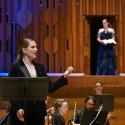
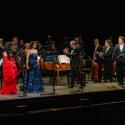
These annual treks to Leeds Town Hall on muggy June evenings have become a bit of a tradition. Going to see Opera North’s Ring feels increasingly like attending a fan convention, though instead of wearing tight lycra and assorted helmets, attendees tend to sport sensible footwear, smart trousers and blue blazers. Would Wagner have approved of this performance of Götterdämmerung? His theatre at Bayreuth was designed so that the musicians would be hidden. The Leeds Grand Theatre pit is too small for a Wagnerian orchestra, so Opera North have upped sticks and moved a few hundred yards west to Leeds Town Hall, placing everyone in full view.
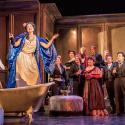
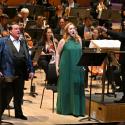
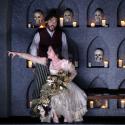
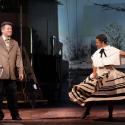
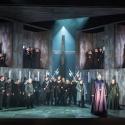
You could argue that this is an austerity-era Ring. It’s semi-staged, with Peter Mumford’s unfussy video projections filling in the gaps. The cast are elegantly but simply costumed, and the stage direction is minimal but effective. Even the orchestra’s set of Wagner tubas were obtained second hand.
Such an approach pays huge dividends – the singers never have to compete with excessive or unsuitable directorial demands, and you get to hear, and see, absolutely everything. I can rarely recall ever having heard orchestral playing as sumptuous as this – the augmented string section performing with warmth and security throughout a long evening, and a vast wind and brass section audibly, and visibly, having the time of their lives. Act 2’s steerhorns were terrifying, and it’s hard to imagine the offstage horn calls being done better than they were here.
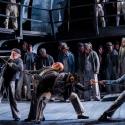
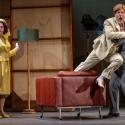
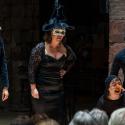
 Several cast members return, though not always in the same roles. Mati Turi’s bluff Siegfried isn’t the most alluring of singers, but he’s an engaging, commanding presence, unafraid to highlight Wagner’s occasional touches of humour, especially when he’s flirting with the Rhinemaidens in Act 3. Mats Almgren sang Fafner in 2013, and returns in fine form to sing Hagen – a glowering, intense presence, compelling even when he’s doing nothing at all. Eric Greene’s Gunther sounds the part but isn’t as charismatic. Jo Pohlheim’s sinister cameo as Alberich (pictured right, with Mats Almgren) is a chilling coup de théâtre. Fiona Kimm, Heather Shipp and Lee Bisset as the Three Norns are nicely choreographed in the opening scene, their twisting movements mirroring their rope spinning. Alwyn Mellor’s Brünnhilde sings with accuracy, control and power. She’s never better than in her long scene with Susan Bickley’s Waltraute.
Richard Farnes’s direction has been one of this cycle’s glories. Wagner’s music defies so many 19th-century operatic conventions, and Farnes understands the need to build the tension slowly and stealthily. Götterdämmerung’s better known orchestral interludes lacked nothing in power – the Act 1 Rhine Journey is thrilling here – but all was rightly held in reserve until the redemptive final minutes, which here carry an unbelievable emotional charge despite one theme’s disconcerting resemblance to West Side Story’s I have a love.
Wagner’s penchant for brassy exuberance isn’t the whole story; the greatest moments in the cycle are the quiet, intimate ones. You’re startled by the sight of a stage full to the brim with musicians making so little noise. There’s a magical moment in the middle of Act 1 when Hagen broods centre stage, the strings’ sound reduced by Farnes to a bleak, grey whisper. If all goes to plan, the complete Ring will be performed here over four evenings in 2016. Until then, this production visits Newcastle, Manchester and Birmingham. Fight for a ticket.
Opera North's Götterdämmerung at Leeds Town Hall on 18 June and 12 July. The production also tours to Birmingham, Salford and Gateshead