A mere 10 minutes in to this concert performance of an 18th century delight by Neapolitan Niccolò Jommelli, you knew the form to expect for the rest of the evening. Ian Page's Classical Orchestra kicked off with bracing rhythmic vitality from the start, and sounded super-bright in Cadogan acoustics so ideal for their forces.
No question about the worthiness in reviving the 48th of Jommelli's 59 operas (if I've counted correctly, not including second to fourth versions): it has a great deal more originality and inventiveness, especially in the string writing, than early Mozart or most of Haydn's operas. Though hardly profound, Jommelli seems to care about psychology: much of his recitativo accompagnato (in other words, with full orchestra rather than harpsichord, cello and bass) offers some startling harmonic progressions and painstaking nuance for each emotion, especially before the two main arias of Berenice where the violins weep for her predicament. You sometimes feel that Jommelli is less interested in the vocal writing, but intelligence from all concerned here made that less of a liability.
 Berenice's second-act set piece, in which she's caught in the awful situation of giving her very unwilling hand to Lucio to save Vologeso's life, fully reflects the wavering in musical contrasts and pauses. The Emperor's semi-mad scenes, on the other hand, and the macabre dumb-show he sets up to break her, possibly dragging out the last act without visual spectacle to match, sound original but oddly pastoral and lacking a real heart of darkness.
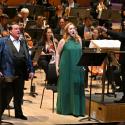
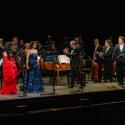
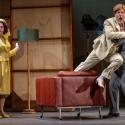
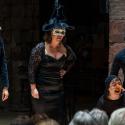
They were superbly handled, all the same by the magnificent players – the oboe duo, especially - and by tenor Stuart Jackson (pictured above). Relaxied in his delineation of the bully's casual cruelty, finger-snapping and all, limpid in love and dazzling in coloratura rage, this young singer can do it all. But then so can Gemma Summerfield, clearly a worthy winner of the 2015 Kathleen Ferrier Award (pictured below left at the final): her Berenice was regal, vivid and possessed of a whole range of tone-colour, suggesting not just an ideal Mozart Countess but also a possible Strauss soprano in the making. It's early days yet, though – she's still studying at the Royal College of Music – but Summerfield already seems to be the complete artist.
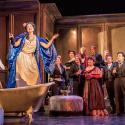
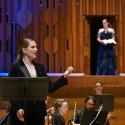
Even more so, if possible, is Rachel Kelly (main picture), a total natural with a vibrant mezzo voice seemingly flawless throughout the range. You wanted her Vologeso to have a solo of the calibre of Sesto's "Parto, parto" from Mozart's La clemenza di Tito. Jommelli didn't quite provide that, and yet Kelly still made her urgency felt, persuading us with natural body language as well as focused urgency that the recitatives are as crucial a part of the drama as the arias and finales.
 As if that weren't enough we also had a second mezzo of sensual quality in Angela Simkin, joining the Royal Opera's Jette Parker Young Artists Programme at the start of next season and plangent as Lucio's rejected fiancee whose magnanimity produces an unlikely volte face at the end. Fourth in a superbly contrasted line up of women's voices was Jennifer France, a lighter soprano than Summerfield but brilliant in her flights all the same; the orchestral support for her one number is one of the major delights of the score. Only counter-tenor Tom Verney as Lucio's attendant Aniceto didn't really get a chance to shine.
All praise to Page, then, for knowing exactly the right voices to cast: this is the second time this season – Rossi's Orpheus at the Sam Wanamaker Playhouse being the first – that I've reeled at the young talent coming straight out of our music colleges. The Italian coaching would seem to have been excellent; everyone knew exactly what they were supposed to be doing at any given point, and no-one was bound to the score (the line-up of the musically fine Jenůfa in concert the other week was put to shame). Every aspect of this totally pleasurable evening, a bracing halfway house between Handel and Mozart, confirmed that everything Classical Opera puts on will be worth seeking out. Microphones suggested a recording in the offing; if so, I'd snap it up straight away.