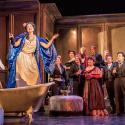
Verdi's La Traviata has become one of the best-loved and most-performed works in the operatic repertoire, but this is no thanks to sections of the English press. In this entertaining romp through the opera's history, presenters Tom Service and Amanda Vickery drooled over the juiciest bits from some of the reviews from La Traviata's London debut in 1856 – for instance The Times of London deplored "an exhibition of harlotry upon the public stage", adding that this was "the poetry of the brothel" – before splitting up to examine the musical and historical background of the piece.
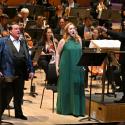
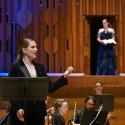
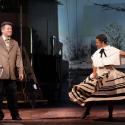
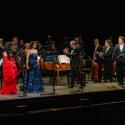
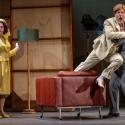
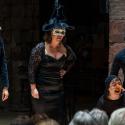
Once you'd got past the interminable potted preview of the film's contents, which included Service's comment that the opera "caused a very British scandal" – I wish Microsoft would hurry up and develop that platitude-checker – this opened out into an amusingly discursive adventure. Key excerpts from the score were performed with great intensity by soprano Gabriela Istoc as the consumptive courtesan-heroine Violetta, with tenor Edgaras Montvidas as Alfredo and Stephen Gadd, a very British baritone, as his disapproving father (pictured below). These were used to punctuate Vickery's investigations into how La Traviata clashed with Victorian attitudes to prostitution, and Service's exploration of Verdi's career and how he came to write the piece.
 Among the latter's key points were the way Verdi was able to avoid the suffocating embrace of the Catholic church to pursue a career in secular music, thanks to funding from the "free thinkers" in his hometown orchestra in Busseto, and the way his unmarried relationship with the soprano Giuseppina Strepponi was not only mildly scandalous, but fuelled his determination to create powerful drama about believable characters. "Poetry with big, big balls" as he apparently put it (in Italian, obviously).
Vickery cheerfully confessed her ignorance about opera in general and La Traviata in particular, but having been to see it deemed herself amazed by its frank depiction of the courtesan trade and by its "forensic examination of the female predicament". However, she stopped short of echoing Julia Roberts's fantasy hooker in Pretty Woman, who declared that Traviata "was so good I almost peed my pants".
Vickery illustrated her examination of the Victorians' obsession with prostitution, and their fear that it represented a terrifying moral contagion that would somehow bring down the British Empire, by showing us piteous contemporary paintings depicting the moral downfall inevitably caused by female infidelity. Her researches into the lifestyles of courtesans (they were "the lionesses of the demi-monde", of which Paris was the licentious epicentre) revealed oligarch-like opulence, funded by wealthy men who treated them as mere supplements to their varied portfolios. Marie Duplessis, the real-life model for Violetta, was so irresistible that she was enjoyed on a timeshare basis by a seven-man syndicate from the Paris Jockey Club. (Tom Service and Amanda Vickery, pictured below)
 Colourful as all this was, I still couldn't quite buy the notion of La Traviata rocking 1850s London to its foundations, despite guff from the presenters about the way it exposed rampant hypocrisy and misogyny in 19th-century Europe blah blah. As The Spectator put it in August 1856, in a piece not quoted in the programme, "as far as the sympathies excited by the opera act at all upon practical life, this representation would give an entirely false notion of the actual character and condition of the class to which Violetta belongs, but of which she is not a representative." In other words, while it may embody certain harsh or poignant truths, they're wrapped in scintillating melodies and bravura orchestration and enacted within the conventions of opera performance. It's art but also entertainment, and audiences flocked to see it. And still do.