From the team who gave us a sparkly L’étoile just a year ago, comes a fun-filled production of Prokofiev’s wacky, surreal and glorious comedy romp.
The Love for Three Oranges requires a cast line-up that could prove daunting to many a professional company (Opera North triumphed with it in 1988 but haven’t done it since), but this is precisely where the Royal Northern College of Music have all the cards – and this year in particular they’re playing from strength.
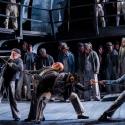
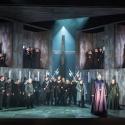
It's not just that they have the numbers in their technical team (I thought 20 names in the credits last year was impressive enough, but this time there are almost 30 of them) and that they can put a large and highly accomplished chorus on stage – which this show certainly demands – but the evidence is that they have some exceptional young tenors in their ranks at present, as well as impressive developing voices in the other registers.
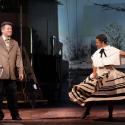
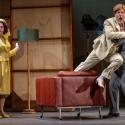
Director Mark Burns and designer Adrian Linford, who did a fine job with the frothy Chabrier just before Christmas 2024, find loads of fun in this other tale of a barmy royal family seeking a solution to their own absurdities. There’s even a bit of British pantomime style in it, which a Christmas audience will always love.
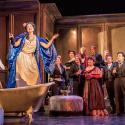
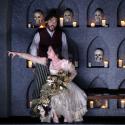
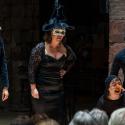
Games of various kinds – cards and others – play a part in this, and the staging provides a whopping backcloth display of such symbolic devices, as well as using projection (very cleverly) to show us a Scrabble board which tells us parts of the story at different times. There are gloriously vivid costumes evoking other sorts of play, from casino to soccer, and the different choruses of “Ridicules”, “Tragiques”, “Comiques”, “Lyriques”, “Médecins”, “Courtisans” each have their crazy uniforms (and, most wonderfully in Dennis the Menace shirts, the “Petits Diables”). There’s a two-in-a-bed piece of construction, with Dali-esque exaggerated perspective as if apparently viewed from above, and the scenes (demanded by the libretto) include a kitchen where the mad cook dwells, straight out of British panto (or was it a distorted Hansel and Gretel cottage?), a desert featuring wriggling snakes (shades of the Manon Lescaut story?), and finally a giant rat whose inflated exterior ultimately unzips to reveal a beautiful princess.
The lighting is by Jake Wiltshire, movement by Bethan Rhys Wiliam, and Kevin Thraves’ chorus training expertise is again to the fore (alongside that of Sheldon Miller). And once again the RNCM head of vocal studies and opera, Lynne Dawson, is included in the credits as one of the French language coaches.
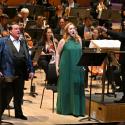
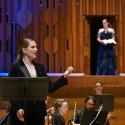
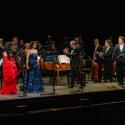
Conductor Lee Reynolds is very much due congratulation for his piloting of the huge cast and large orchestra through the score, in which they undoubtedly enjoyed singing and playing their hearts out (pictured below), and it has the kind of writing that can take all that enthusiasm and sound wonderful.

The story, written by Prokofiev on the basis of a play by Carlo Gozzi, is of a kingdom where the heir to the throne is diagnosed with incurable hypochondria and looks as if he’ll never find a princess to continue the royal lineage. The king’s niece, Clarisse, is scheming with Léandre the prime minister to take the throne herself, and Trouffaldino the jester is ordered to make the prince laugh to cure his ailment – he fails. A good magician and a wicked witch called Fata Morgana (who has an equally wicked sidekick, Sméraldine) play cards to determine who will control the realm. In a confrontation with Trouffaldino, Fata Morgana accidentally reveals her knickers, which at last brings guffaws to the prince’s lips – but the witch curses him to have an insatiable love for three oranges. He meets the scary cook, defies a nasty demon and finally discovers three oranges, from which princesses emerge … one of them is to be his bride, but the witch turns her into a rat and substitutes Sméraldine for the wedding day. Will the spell be broken and all live happily ever after? I bet you can hardly guess.
The opera is, as usual with the RNCM, double-cast in the main roles, so I have not seen all those who are taking them, but there is no doubt that (among those I have seen) there are some outstanding young singers. Rafael Rojas (son of the late, great Rafael Rojas, who also trained at the Royal Northern and whose work for Opera North over the years included the biggest Romantic tenor roles) is among them, as Le Prince – a chip off the old block with no doubt. He’s at the RNCM as one of very few on the International Artist Diploma course, and his vocal range is impressive. But equally outstanding was Sam Rose as Trouffaldino – I noted his quality when he sang Lechmere in Owen Wingrave at the RNCM earlier this year – and this time he was able to show off his athletic and comedic skills as well as a strong, mature voice. Edward Wenborn (Léandre) is a baritone of quality but well able to act the baddie, and both Ellie Forrester (Fata Morgana) and Jemima Gray (La Princesse Clarice) bring bags of personality to their evil, scheming parts, in delightful contrast to their Owen Wingrave roles before.
· Further performances on 9, 10 and 13 December