Over 100 years ago, John Christie envisaged Wagner’s Parsifal with limited forces in the Organ Room at Glyndebourne. He would have been amazed to see it arrive on the main stage this year. But émigrés Carl Ebert and Fritz Busch persuaded him that Mozart was the real country-house ideal. Le nozze di Figaro remains Glyndebourne’s perfect opera, and Mariame Clément’s new production, launched last night with the 588th performance here, keeps it real.
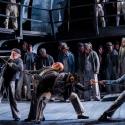
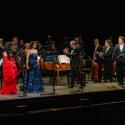
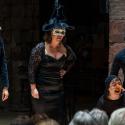
Clément has a near-perfect cast, with Louse Alder and Huw Montague Rendall as the Almavivas sure harbingers of success (pictured below in the final scene), and all the points she makes within an 18th century setting – very different from Michael Grandage’s 1970s delight, a firm favourite here – simply enrich the Beaumarchais/Da Ponte libretto, which already has plenty of laughs in it needing space to breathe; they do just that here. So what could possibly go wrong?
The answer, alas, lies in the pit. Riccardo Minasi, conducting a sometimes dim-sounding Orchestra of the Age of Enlilghtenment, clearly has the technique and flexibility to get what he wants, but it's not always in Mozart's or the singers' interests. Riccardo Muti once told me that the recits in the Mozart/Da Ponte operas with Italian singers flow like a river with no rocks in the middle. Although there's only one Italian in this cast, the recits fly, with superb harpsichord contrinue from Matthew Fletcher.  The rocks are in Minasi's conducting of the musical numbers. The little bends in tempo throughout the opera, starting with a well-articulated Overture that begins with a conspiratorial whisper, become tiresome, and there are two big misfires: the slow languishing for the Countess's Cavatina, "Porgi amor", which taxes even Alder to the limits and seems inappropriate for a spirited young woman giving way momentarily to sadness, and – disastrously – the dragging for the Count's second plea for mercy just before the end, taken Largo rather than Andante. It kills the emotion here.
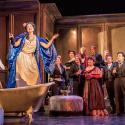
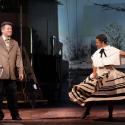
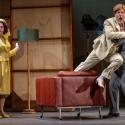
Given these impositions, it's remarkable that the cast do so stunningly well. Montague Rendall dominates as both sex pest and wife beater, or rather near-strangler as she forces out her high flight in the Act Two Trio; but this is paradoxically a musically ravishing ensemble. This Count is human if not likeable; there's real sexual passion between him and the Rosina he once treated kindly. Alder is fun and fury in turn, a lovely stage presence as always, and Minasi doesn't mess too much with "Dove sono", allowing her the triumph to follow Montague Rendall's testosterone-driven "Vedro mentr'io sospiro", straight out of the bath (pictured below, a scene that has the post-interval-merry Glyndebourne audience in fits of laughter).  Johanna Wallroth, whom I first saw shine at Sweden's Birgit Nilsson Days in 2021, is as spirited an actor, and while the fast vibrato may not be to all tastes, she joins it to lovely lines in "Deh' vieni". She would make a perfect Sophie to Alder's Marschallin (the voice now has the generosity for that role) in Strauss's Der Rosenkavalier. Legato is an asset from the start with Michael Nagi's Figaro, a vivid presence throughout.
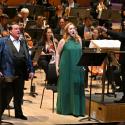
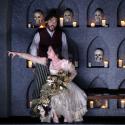
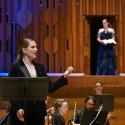
But the revelation is Adèle Charvet's Cherubino (pictured below with Alder and Wallroth). When we first see him at the harpsichord, we think it's the Count – the likeness is valuable, because here's a philanderer already going through his paces – but the velvety voice gives the lie. Of all the embellishments and extra top notes Minasi encourages – and I enjoyed them all – Charvet's high flourish at the end of "Non so piu" is the most exciting. And the little duet as Susanna bundles Cherubino out of the window, all precise chatter in voices and orchestra, slow motion in the staging, is another of the evening's exquisite highlights. Cherubino's playmate, not so innocent Barbarina, is deliciously taken by Elsabeth Boudreault, capitalising on her lusty leap as Frasquita in last year's Carmen. The only disappointment, surprisingly, is the Doctor Bartolo of veteran comedian Alessandro Corbelli. The not very exciting vengeance aria makes little impression, but he's amusing later on. It's good to have full, splendid voices in Madeleine Shaw's Marcellina and Ru Charlesworth's Don Basilio, though Clement could have shed the decrepitude, which doesn't add to the humour. Her wit is at work throughout: while she plays the concealment of Cherubino in Act One straight and clear, there's huge fun to be had, too, from the tug-of-war with the chastity shawl between Susanna and Marcellina, and the game of musical chairs to the Act Three Fandango fits the music (actually adapted from Gluck's Don Juan) to perfection.
The scenes on the revolve, in Julia Hansen's designs, are half-realistic, half fake in a way that occasionally looks a bit tacky (I was reminded of the interior decoration of Dresden's Frauenkirche, which resembles 1970s Italian bathroom decor). The garden scene was held up by a stage malfunction, so it was difficult to pick up threads after a substantial break, and it may have been because of this that the scenery didn't look quite right. Still, I imagine both traditionalists and those looking for new treasures in this greatest of operatic comedies went away happy.