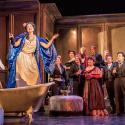
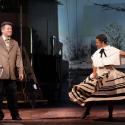
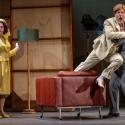
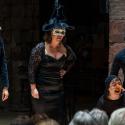
When blithe Susanna and not the expected Cherubino emerges from hiding before the astonished Countess and enraged Count, the latter instantly back-pedals on the fury he has been heaping upon his seemingly faithless wife. She rounds on him: “Crudele, più quella non sono!” (“Traitor, I am no longer her”) and everything suddenly stops. It's a tiny two-beat rest that usually goes for nothing except the signal for a key change, but here the moment is charged with drama. The Count shoots apologetic looks to cover his shame and the Countess painfully registers her lost trust. That vivid attention to musical and dramatic detail is thrillingly typical of this first-rate production.
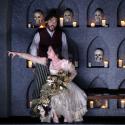
With a score and libretto as precise as this – I’d argue it’s the finest in the entire operatic repertoire – it’s depressing how generalised many Figaros turn out to be. But from its first outing in 2006 (available on DVD), attention to detail was the hallmark of David McVicar’s Royal Opera production. Not all its subsequent outings have been as happy, but this new incarnation, directed by Leah Hausman and conducted by Antonio Pappano, really is a revival in every sense.
The entire company presents a reminder, in the subtlest of ways, of the revolutionary nature of this masterpiece
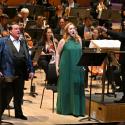
Much of the excitement comes via the new casting. As the Countess, bold-voiced Rachel Willis-Sørensen makes an outstanding debut. The idea that a phrase repeated should grow in meaning is hardly radical, but it’s thrilling nevertheless to hear someone who understands the dramatic potential of “Dove sono”. Instead of delivering a neatly subdued portrait of all-purpose regret, Willis-Sørensen holds on to an ever-deepening ache in the aria that leads her to deliver the da capo section with upsetting intensity.
She’s more than matched by Lucas Meachem’s Count. His voice may not be the largest but it’s truly lustrous. It’s immensely characterful and flexible and he really knows how to use it. At full throttle it's darkly threatening and even when he tosses off an extra trill at the top it’s in service of his character.
Winningly, he’s also physically relaxed on stage which lends him natural authority. With the Count’s nemesis Cherubino cropping up everywhere, baritones usually resort to “furious” acting that, paradoxically, makes them look weak. But Meachem’s bullying is dangerously nasty because rather than blustering, he‘s calm. As a result, his final, exquisitely hushed “perdono” – his climactic plea for forgiveness – is deeply moving.
Among the returnees, Ildebrando d’Arcangelo is a nicely swaggering Figaro who more than stands his ground. In “Non più andrai” he hurls the idea of an end to philandering directly at the Count rather than at Cherubino. And there’s a real sense of a relationship as he cavorts with his Susanna (Aleksandra Kurzak). The latter’s coloratura range means she, too, is vocally relaxed. Yet although her adroit, spirited performance is on the money, it borders on the pert with a faint sense that it’s ever so slightly off-the-peg for her.
There is strength right through the cast, not least in Ann Murray who doesn’t miss a trick as a notably pinched Marcellina who proves that, despite appearances, she’s actually up for a tumble in the sheets with Bartolo. Her performance is enough to make you wish her traditionally cut Act IV aria could be reinstated. Pappano, however, has his eye on the flow.
Faced with Mozart's box of delights, many conductors get sidetracked into wallowing. Not Pappano. Great temptations like blasting the shiver-inducing bottom C in the Act II quartet are resisted in favour of keeping the momentum going and his tempi are as finely judged dramatically as they are musically.
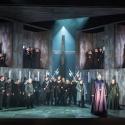
Downton Abbey famously teaches us that all masters are generously understanding of those who serve them. Mercifully, this production’s brilliantly delineated status of every single member of an utterly convincing household corrects such propaganda. Bathed in the intense heat of Paule Constable’s daylight slipping inexorably into night, the entire company presents a reminder, in the subtlest of ways, of the revolutionary nature of this masterpiece.