“No courtier or lady’s champion would dream of fighting a duel anywhere else…” The setting for duels, liaisons, champagne and love, Paris’s Pré aux Clercs gives its name to Ferdinand Herold’s almost-comic 1832 opera – a welcome mood-lightener in this season’s otherwise tragic fare at the Wexford Festival. But though the piece does end in marriages rather than deaths (at least, for those who matter), it’s not quite the uncomplicated piece of silliness we might expect, or hope, from such a staple of the Opéra Comique.
The context – France’s 16th-century Wars of Religion – offers not only echoes of Meyerbeer’s Les Huguenots but also hints of the strife to come in a love-intrigue where religion as well as romance is at issue. Marguerite de Valois and her lady-in-waiting Isabelle are diplomatic prisoners at the French court, high-ranking bargaining counters in the conflict between the Catholic Henri III (Marguerite’s brother) and the Protestant King of Navarre (Marguerite’s husband). Though courted by the swashbuckling Comte de Comminges, Isabelle is in love with her childhood friend the Baron de Mergy. When the latter in conveniently sent as an envoy to Paris they must contrive to marry before Isabelle is forced into an alliance with Comminges against her will.
 It is impossible to overstate the popularity of Hérold’s work in France, not only in its day but right up until the mid-20th century. By 1950 Le Pré aux Clercs had racked up over 1,600 performances at the Opera-Comique – astonishing for a work that has subsequently dropped into obscurity faster than a defenestrated Frenchman. Revived here in partnership with the Palazzetto Bru Zane, the work reveals a handful of charming arias and some attractive ensembles, but fails to raise the pulse as other Wexford rarities have.
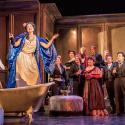
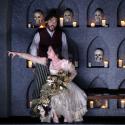
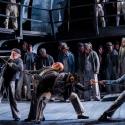
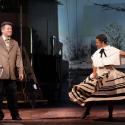
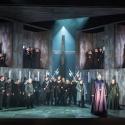
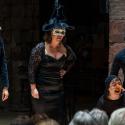
Eric Ruf’s production plays it straight, giving Le Pré the pretty, period treatment. A courtly masquerade comes complete with Harlequins and Columbines, Marguerite sports a succession of impressive velvet farthingales, while a comic sub-plot between country innkeeper Nicette and her fiancé Girot comes embellished with set-piece songs and dances.
It’s all terribly charming, but coupled with Hérold’s sugary score – vividly championed here by conductor Jean-Luc Tingaud and the Wexford Festival Orchestra – I question whether it’s judged correctly for contemporary audiences. Strong performances from a fine, French-speaking cast (there’s a lot of dialogue to get through) help it remain buoyant here, however, and bring essential sincerity to the sillier proceedings.
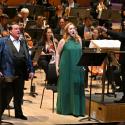
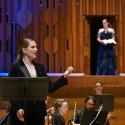
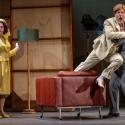
 Act I offers little opportunity for Marie-Eve Munger’s Isabelle (pictured left) to shine, but Act II opens with an elegant cavatina-cabaletta showstopper, showing off the soprano’s effortless upper register and coloratura agility. An appealing presence, Munger carries the emotional weight of the central love story. Nico Darmanin’s Mergy works very hard, but on this second night his vocal performance was under-projected and lacking in heroic heft. It’s hard to believe in his duelling defeat of Dominique Côté’s gloriously overwrought, tightly-wound Comte de Comminges – all vocal muscularity and hot temper.
The role of Marguerite is more spoken than sung, but mezzo Marie Lenormand makes tremendous impact, warmly imperious as the political fairy-godmother of the piece, and adding personality to Hérold’s many trios and ensembles. Her acid interplay with Eric Huchet’s Cantarelli – the court’s bibulous Italian master of ceremonies – helps temper the opera’s more pastel-coloured pastoral moments.
Strong support from Magali Simard-Galdes’s perky, soubrette Nicette (her wedding song is a highlight) and her tetchy Girot (Tomislav Lavoie) round out the operatic picture – a Watteau or Fragonard, decorative, elegant, but ultimately unmemorable.
- Le Pré aux Clercs at Wexford Festival until 1 November 2015