The first thing to say about Lucy Worsley’s Nights at the Opera (BBC Two) is that it is laser-aimed at those who have not enjoyed many nights at the opera. Enjoyed in the sense of attended; also, probably, in the sense of enjoyed. Anyone who is a regular at the Garden, or keeps a plaid rug permanently pegged out by the Glyndebourne ha-ha, or is a life member of the Netrebko claque, approach if you dare, but with smelling salts to hand.
Television occasionally feels it must demystify opera for the masses who subsidise it, strip away that elitist veneer and lay bare an elemental core. Harry Enfield did one such series for Channel 4. No doubt there’ll be more.
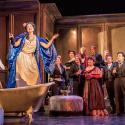
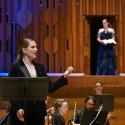
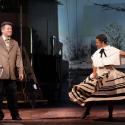
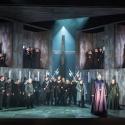
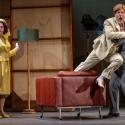
Worsley was the obvious presenter for this gig, having demonstrated on her TV CV a yen for prancing around grand houses, a talent for crunching history into tabloid bites, and an incurable mania for dressing up. As usual she comes at things proprietorially. Her argument here is that the great operas grew out of the fertile soil of the society around them. The four works submitted for exegesis (“my operas”) were The Coronation of Poppea (which, she said, is all about sex), The Marriage of Figaro (class), Fidelio (politics) and Nabucco (national identity).
She began, as any introduction to opera contractually must, with Pavarotti whopping out that football song. The travel budget took her to Venice, Vienna and Milan. Italophile snobs (guilty) had to suffer the consequences of her decision to bypass a session with the possibly chimerical BBC Pronunciation Unit: thus Montiverdi, incoggniti (though she got that one right the second time).
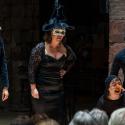
Worsley's unblushing commitment to total immersion found her duetting with Danielle de Niese – “Ooh that was sexy,” she purred, as if star-rating her own contribution – and singing along, with flagrant disregard for tuning, with a couple of Mozart nerds on a Viennese street. A Viennese cake with a map for icing was co-opted to explain European geopolitics and the strata of Hapsburg society. To unpack the plots, she dived into either the dressing-up box or the toy box. She got herself up as all the main players in Figaro for a split-screen sequence which yielded the indelible sight of Worsley blowing kisses at herself, perhaps even ironically. The characters of Beethoven and Verdi’s operas were presented as cardboard figurines. “Here is Nabucco himself, wearing rather a fetching apron. He’s a baddie.” Napoleon’s adventures across Europe were similarly explained with toy cavaliers manoeuvred around a map by Worsley accessing, without much difficulty, her inner tot.
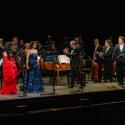
This mode of presentation is cheap, and it’s cheerful. But however much perfectly good sense is smuggled in among the fun and games, there comes a point when a surfeit of infantilisation mocks the intelligence of even Worsley’s most purblind fanbase. Antonio Pappano’s exegesis of key musical moments, which he seemed not to have prepared very far in advance, poshed things up a bit, but didn’t quite belong in the same programme. He was particularly passionate about Nabucco’s final plea for forgiveness. “Of course it take a great performer to pull this off,” he added. Happily there was a clip of Placido Domingo doing just that, though no caption to tell viewers who he was.
The most moving moment was reserved for the finale when a chorus of Italian singers, now retired to an old people’s home in Milan, sang “Va pensiero” and intoxicating music was blessedly able to speak for itself. The rest is bathos.