The advertising for La Nuova Musica’s Orlando billed it as “Handel’s most psychologically complex opera”. Whether or not you agree (and there are plenty of heavyweight rivals – Alcina, Giulio Cesare and Agrippina just for starters) there’s also the issue that it’s only half the story. Orlando may be a complicated portrait of mental instability and madness, but it’s also a magical pastoral comedy peopled with lovelorn shepherdesses and wizards, featuring quite the silliest ending of all Handel (although this too, admittedly, is a much-contested category). This performance did little to reconcile the work’s warring instincts, but some fine music-making along the way meant that it didn’t matter – too much.
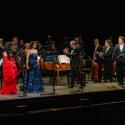
There’s a flamboyance and excess to period band La Nuova Musica’s style that’s all their own. Director David Bates favours broad dynamic contrasts, extrovert musical drama and lashings of ornamentation. Subtle it isn’t, but in a concert setting there’s much to be said for the resulting clarity, even if some of the emotional detail gets lost under all the frills and furbelows.
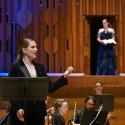
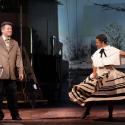
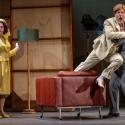
Rowan Pierce’s pouting, pantomime Dorinda didn’t belong in the same performance as Lucy Crowe’s measured, thoughtful Angelica
The main problem was a dramatic arc whose two ends simply didn’t join up. To play Act I and most of Act II so broadly for comedy – transforming the heartbreakingly lovely trio “Consolati o bella” into a piece of musical slapstick, and allowing no space for contemplative beauty and stillness, dispatching Medoro’s exquisite “Verdi Allori” with brisk matter-of-factness – made for a juddering gear-shift into Lawrence Zazzo’s virtuoso mad scene with its real emotional heft, transforming the opera’s serious core into a brief interlude between sillinesses.
The same conflict extended not only to an awkward translation (whose try-hard vernacular updatings – exclamations of “OMG” and exhortations to “Butch up!” – struggled to co-exist with the usual limpid brooks and weary brows) but also the cast. Rowan Pierce’s pouting, pantomime Dorinda was thoroughly charming (if vocally rather unanchored), but didn’t belong in the same performance as Lucy Crowe’s measured, thoughtful Angelica. Mediating between the two were countertenors Christopher Lowrey (Medoro) and Zazzo’s Orlando, and William Berger's beautifully sung Zoroastro, who did what they could to reconcile the dramatic differences.
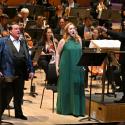
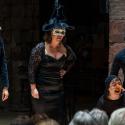
 Musically things were stronger. Act III gave Crowe the opportunity to use the many colours and shades in her lovely lyric soprano, while Lowrey gilded the stuffed-shirt that is Medoro with his agile, fluting purity that set off the flesh-tones of Zazzo’s (pictured right) craggier, more expansive countertenor. Zazzo’s tendency to distort both pitch and pulse for effect added to the sense of caricature in Act I, but all came into focus in Act III, and the control of his “Gia l’ebro” was absolute (though in the absence of a theorbo the lovely instrumental texture, with its two crooning violas, felt unnecessarily cluttered by the harpsichord).
By the end of this much-cut performance I’m still not sure we cared terribly much about anyone, nor had we plumbed any particularly striking psychological depths, but we had heard plenty of nice music, including some particularly elegant contributions from La Nuova Musica’s woodwind and horns. With Orlando just the first in a sequence of Handel operas in concert at St John’s over the next few months, it will be interesting to see how this compares. Next up is Laurence Cummings’s Acis & Galatea on 22 March.