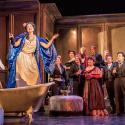
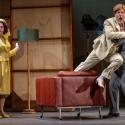
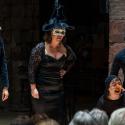
That spirit of delight which hovered over Christopher Alden’s stylish/surreal Handel bagatelle when I first saw it in the 2017 revival soars on eagle wings here. It’s hard to imagine a better or more charismatic cast, led by national treasures Nardus Williams and Hugh Cutting, or a more striking contrast to Dead Man Walking: with that and its slyly subversive Albert Herring, ENO is on a roll.
Partenope one of Handel’s best Italian operas? Probably not, though as in all good comedies there are moments of depth, mostly in the last act; we even begin to care about the fraught relationship between Partenope’s most favoured suitor, Arsace (Hugh Cutting), and the love he jilted, Rosmira (Katie Bray), disguised for two-thirds of the opera as a fifth man. Of all the splendid singers, Cutting goes further as usual than one thought possible; I knew the supreme expressive plangency of his Bach, extended for Handel in ineffable long phrases as Arsace suffers genuine distress, but not the capacity for flawless virtuosity; needless to say the “tempest” aria at the end of Act Two, baritonal low notes included, is the wowiest wow of the evening.
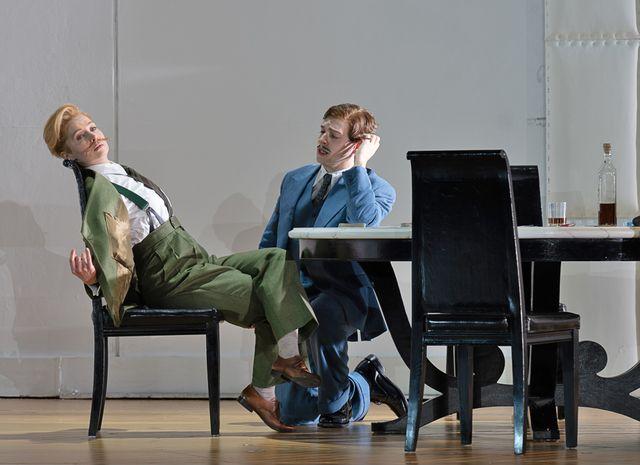
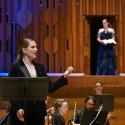
Bray (pictured above with Cutting) makes a perfect contrast with mezzo chest voice and ringing upper register. She takes every opportunity to underline Rosmira as the strongest character in the opera. Nardus Williams is perfect in every way as a beauty with whom all the men are in love (or are they?) We see how, to slightly misquote Shakespeare, “Cupid is a knavish lad, thus to make poor mortals mad” as she succumbs to doubt and distress in the second act after posing as the deliciously photogenic fashion plate of Act One.
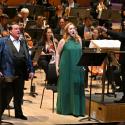
The control is also superbly dismembered in the top hat sequence and the "hate/love" 11 o'clock number. I noted in 2018 that Partenope’s fire-lighting aria didn’t quite work, wonderful though Sarah Tynan was; here, it’s perfect, rounded off by a wistful quiet coda in which Christian Curnyn’s replacement after he was taken ill at the first interval, William Cole, got the best results as throughout from the ENO Orchestra.
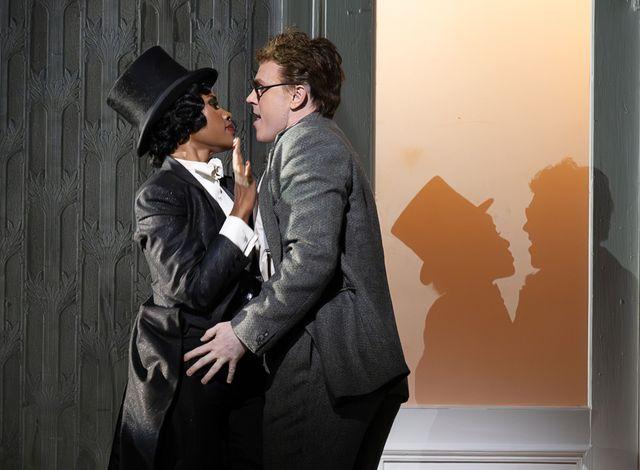
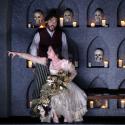
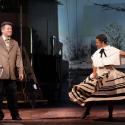
Ru Charlesworth (pictured above with Williams) is back as invader Emilio as (partly) Man Ray, the runs as brilliant as Cutting’s, the toilet humour in Act Two hilariously executed, though I wish Fielding hadn’t asked him to camp up his last aria, a last-minute foot wrong; the Indian guru aspect would have been enough.
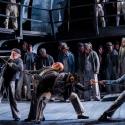
American countertenor Jake Ingbar doesn’t have to compete with superstar Cutting since his numbers are informed with superb physical theatre – the Keatonesque staircase falls at first, later a routine which I noted in 2017 as a bit of spotlight-chasing, without mentioning any tap, which may be a special addition (pictured below). William Thomas only gets one aria as right-hand man Ormonte, but his belated campery briefly steals the show.
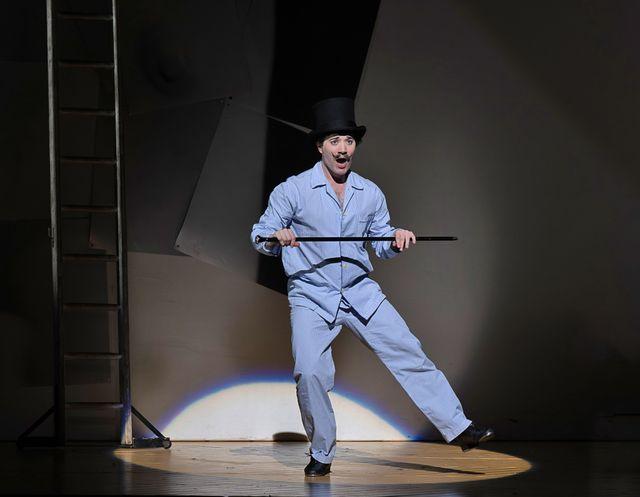
In fact the business is spot on, with no overworked repeats of gags, and characters on stage while others get their moment in the spotlight only pull focus briefly. The white spiral staircase in Act One dazzles against cream walls in Andrew Lieberman’s perfect sets, and Jon Morrell’s suits are colour-co-ordinated. We’ve lost far too soon two crucial participants since the production opened, witty and judiciously libertarian translator Amanda Holden and choreographer Claire Glaskin, but their work lives on in a timeless show that stands alongside the Hytner Xerxes and Carsen Semele as the company's best Handel. You may hear better operas by him (Giulio Cesare, Ariodante) but you won’t find him better sung across the board. Help out ENO, which isn’t selling despite huge successes, and go – possibly twice.
- Partenope at the London Coliseum until 6 December
- All images by Bill Knight for theartsdesk
- More opera reviews on theartsdesk