"Vary the song, O London, change!" sings Tom Rakewell as he tires of the great metropolis. WH Auden and Chester Kallman's libretto for Stravinsky's The Rake's Progress strikes a chord with me too. London has magnificent opera but, at the top end, it comes at a price. Not just for the audience but for the singers. Lavish sets and costumes force historical productions into revivals. Singers fly in, rehearse for a few days, and slot themselves into the existing blueprint. Mood over content can prevail.
There is a case now for change.
With the current trend for broadcasting productions in cinemas (often live), singers must act better than ever before. Now the label "elitist", which has dogged the art form, has a chance to re-invent itself. Because music is not elitist. It speaks to something way beyond the brain, and, hence, must be offered freely without constraint. ''Disband your notes, and let them range," continues Tom Rakewell.
Yes. This is why my co-producer, Eliza Thompson, and myself have set up a production company, OperaGlass Works, to try and initiate a different model. Singers are offered the chance to collaborate from the start. Rob Murray (playing Tom) and I germinated the seeds of this particular project several years ago. We rehearse for five weeks, allowing singers to work as thoroughly as actors do on the text.
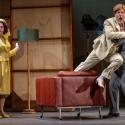
Auden's dense text echoes those of the 18th century (when the opera is set) where word was the sole currency of communication, and character existed only in the language. No back story. No offstage world. Only the words. Everything linked to what has been said before. Specificity is essential. (Pictured below: Robert Murray and Jonathan Lemalu) Here, Tom is paralysed by Shadow's request for him to guess the cards:
"I cannot think. I dare not wish."
Tom's character, hitherto in the opera, has been led by wishes. Thinking is not his strong point. Shadow picks up the word "wish" (musically too) and offers him a chance to think on who he would wish for now:
"Let wish be thought and think on one to name / You wish in all your fear could rule the game / Instead of Shadow."
The Devil (Shadow)'s arch enemy is Love, and his encouragement to Tom to name his rival is more dangerous than he realises. Shadow's use of the word "one" here, perhaps inadvertently, also prompts Tom to remember his earlier line: "One, only one, and of her, I dare not think." This is similar to "I dare not wish" too. "Her" refers to his love Anne. Thus he finds the answer to the first clue: "the Queen of Hearts".
When singers are not encouraged to listen and inhabit the words truthfully here, the overall effect is a generalised sense of villainy, paying into our low expectation of understanding the words of an opera. I have discovered that when a singer understands and believes what they are singing, as if it is happening to them, they take a bigger breath. When this happens they hit the centre of the note, and the tone changes. Nothing is filtered then. No excess energy, just synergy. The second obvious result from authentic ownership of language is that the feeling, whatever it is, appears to be more "present".
OperaGlass Works will empower singers to integrate acting and singing, producing delightful storytelling in intimate spaces. We will bring excellent opera to new audiences, at lower prices. Acting is simply the art of believing what you say, or sing, at the time that you are saying, or singing it. Maria Callas said, 'If the thought is right, the notes will follow." They do.
- The Rake's Progress is at Wilton's Music Hall from 17 to 25 November
- Read more First Person articles on theartsdesk