Appearing at Buxton for the first time, Northern Ireland Opera are ahead of the game in marking next year’s Britten centenary by turning their attention to The Turn of the Screw. It is only their fifth production since the company was formed in 2010, so they are nothing if not adventurous. Being a chamber opera, the Screw suits their modest forces well, as it does the venue of Buxton Opera House. First staged at La Fenice in 1954, the claustrophobic opera benefits from an intimate theatre to make the most of its spookiness.
Henry James loved ghost stories and the 1898 novella on which Britten’s work is based beats them all. Even at the end, we are left wondering whether the apparitions are “real” or just figments of the Governess’s febrile imagination if not extensions of her own personality. This is the opera’s holding power.
 Is the governess, put in charge of the two orphans, Miles and Flora in a big country house, protective or possessive? Is the boy Miles abused or up to no good? What are the sexual secrets hidden within the spooky walls and in the ghost-trodden garden of Bly? Riddles abound and the multi-layered suspense sustains the hypnotic attention.
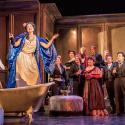
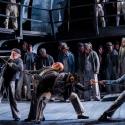
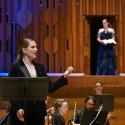
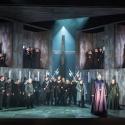
Director Oliver Mears has it gripped in a compelling, thought-through production. He shifts it from the Victorian era to the time it was written, getting rid of the Gothic and the melodrama. He stages it in a cavernous interior set, all in grey, with bare walls and bare floor. Furniture, moved in and out seamlessly by the performers, is minimal. It is dramatically lit by Kevin Treacy, with shafts of bright light creating sharp angles, deep recesses and shadows on the wall. And the apparitions at the rear window are spookily realised.
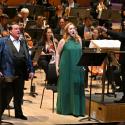
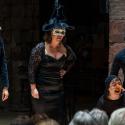
The company’s 13-strong chamber orchestra, conducted by Nicholas Chalmers, embraces all the intricacies of this most atmospheric score. The singing and characerisation are exceptional. As The Governess, Fiona Murphy (pictured above right) is in fine voice, singing with conviction and catching the emotional rollercoaster experienced by being exposed to an alien environment, with two complex children and the apparitions of her predecessor Miss Jessel and former valet Peter Quint. She sings movingly of the condition she fears, being “locked in a labyrinth". She strives for affection, she cares about the children, she fights the demons that have gone before.
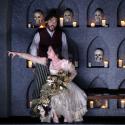
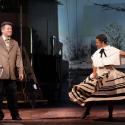
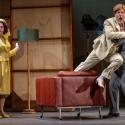
 The remarkable Thomas Copeland (pictured left with Lucia Vernon), aged 13, fills the part of the mysterious Miles superbly and has a lively companion in Lucia Vernon as Flora. Giselle Allen’s Miss Jessel is a feisty apparition, matched by Andrew Tortise’s Quint. Yvonne Howard brings to the homely role of Mrs Grose, the housekeeper who never quite accepts The Governess and eventually takes Flora away form her, quiet authority.
With Mears, the action is a well-paced slow burn. He makes his points dramatically, as in the innovation of having The Governess as a distracted spectator in the pivotal bedroom scene in which the children are visited by the ghosts of Quint and Jessel.
And it builds to a dramatic and touching climax as Miles identifies evil, naming Quint as the devil, before expiring in the arms of The Governess. And she sings out that one dreaded word – “alone”. What Mears does here is to revisit and revivify James’s original ghost story. For all the debate and looked-for undercurrents, old Henry, as was his wont, wrote a good old spooky yarn. I can’t help thinking that he has the last laugh. After all the struggles he had to get his work on the stage, he would surely have relished the fact that this short story, adapted and embellished in such masterly style by Britten, assures him of a theatrical presence today.