

In the 1960s, Cilla Black was rescued from hat check duties at The Cavern and made a star. In the 1980s, Rick Astley was whisked away from tea-making at the Stock-Aitken-Waterman studios to launch, 30 years later. a billion RickRolls. In the 2020s, Frankie Taylor is spirited away from a Milton Keynes cinema popcorn stand to the bright (and I mean bright) lights of Bollywood.
Okay, it’s the least likely of those unlikely routes to stardom, but this is Musical Theatre, a world in which if you just believe hard enough, you too can be the idol of millions, with all the dubious rewards that come with it.
That preface is important for any review of Pravesh Kumar’s shiny show because if you’re looking for anything beyond well worn narrative arcs, cliched dialogue and plucky underdogs coming out on top, you’re in the wrong theatre. This is spectacle not storyline and caricature not character – if Florenz Ziegfeld were born in Chennai, not Chicago, it’s the kind of production he would have mounted.
That said, this touring show feels a little lost on the vast stage of the Queen Elizabeth Hall, even with its multicoloured arch narrowing the space considerably. Often that wouldn’t matter so much, but the absence of sets and an undersized ensemble jars at a big Indian wedding scene and at a Mumbai red carpet premiere – if there’s one thing we do know about such events, it’s the crowds.
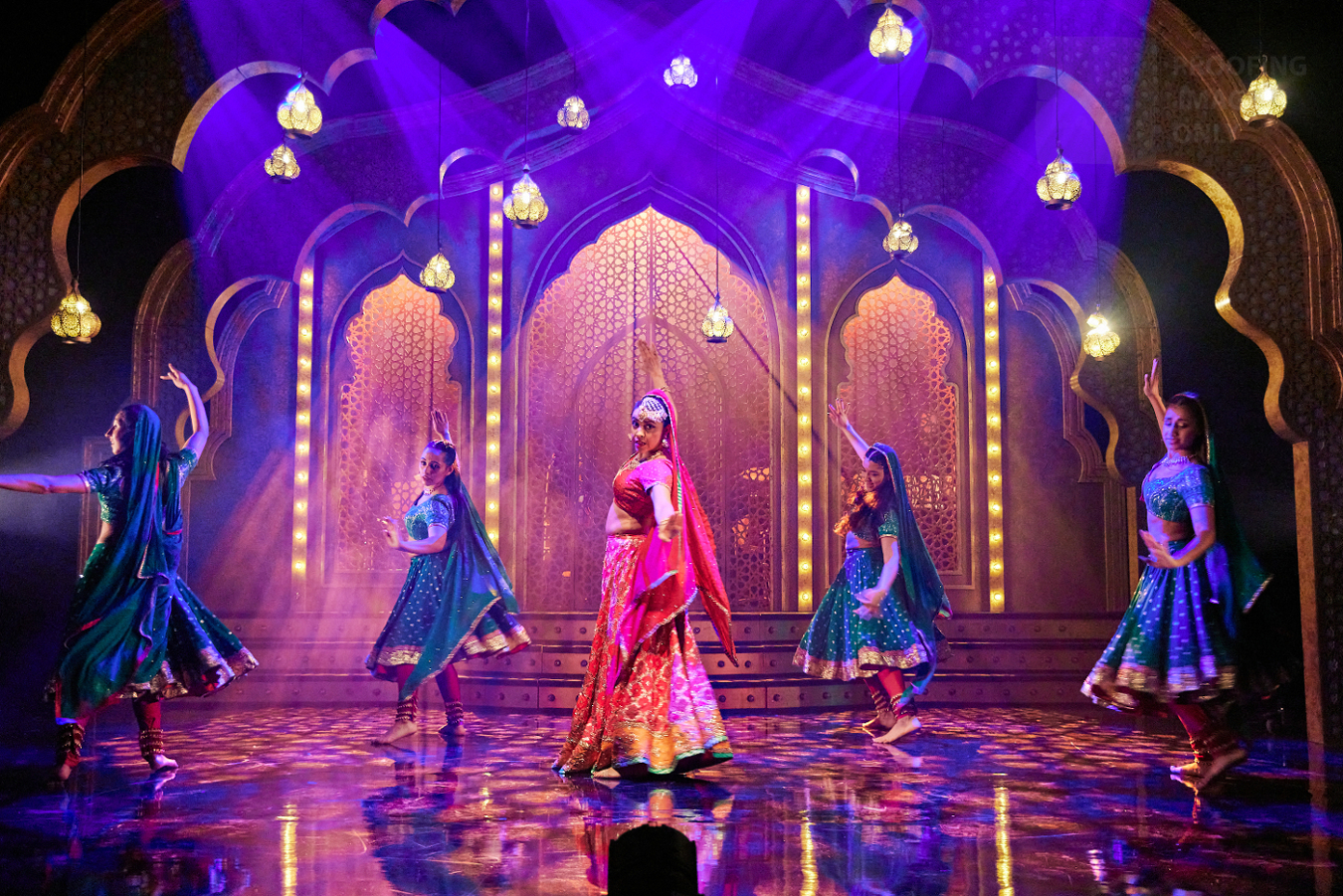 What we lack in bodies, we make up for in costumes, a (literally) dazzling array of saris, sequins and six packs suggesting the lights of Diwali and the colours of Holi. I felt a little sorry for the young audience in the stalls, their fingers itching to take photos of the latest big number’s outfits so they could "circle to search" on Google at home and find their own versions, though some of the men might be advised to find a few more buttons for their shirts. Andy Kumar’s movement direction keeps everything bubbling along with plenty of Bhangra-inspired moves to go with more traditional big musical dance routines. It's diverting if a little one-paced.
So to the music, which seldom appears so far into a review of this kind, but I can’t put it off any longer. Niraj Chag and Tasha Taylor Johnson’s songs are varied and, while there’s not a stone cold showstopper to take things up to vindaloo levels of heat, numbers like B. I. T. C. H. have the requisite sass and sparkle. The problem is that they are not sung well at all. If we can hear the lyrics (not a given), the voices are declaiming them, sometimes wobbling alarmingly when some belt for an emotional punch is required. The fact that musical theatre demands a specific approach to performing a song appears lost and a potentially fine score never reaches its potential.
Laila Zaidi gives Frankie plenty of get-up-and-go on her rise to the ranks of Bollywood royalty. It’s never quite clear why, though she retains a combative attitude to the movie-making machine, she swiftly dumps her best friend back home, Katie Stasi doing all she can with the underwritten role of Goldie. Gigi Zahir runs through the camp actor’s playbook as the designer/fixer on the make, Shona, timing his laugh lines to perfection, if a little hackneyed in his gestures and language. We really need a hero or heroine to root for, but there's so much selfishness on show that it's hard to cheer for anyone.
Geet Sagar has a lot of fun with the ageing star, Raju King, whose towering ego and sense of entitlement is only matched by his Mommy-issues insecurity. Sure enough, his wife (Helen K Wint in another underwritten role) is soon pushed aside in favour of Frankie, all shiny and new, but the women do gang up on him in the end and he gets his comeuppance.
Were it panto, one could shrug off the issues with this plot and its villain, but it’s not, There are comic elements, but there’s also an underlying critique of how women are treated in the entertainment business – indeed, it drives the book. Disappointingly, the knowledge that is now pervasive in the post-#MeToo environment is never assimilated into the storyline. It’s hard simply to push that omission aside with scandals from Strictly Come Dancing filling newspapers even today.
We now know the gravity (then and now) of such workplace abuse but its weight is never brought to the stage. That’s a creative choice to keep the show light, bubbly and commercial, but, nearly seven years after the hashtag brought an explosion of awareness about the damage done to women by powerful predatory men, is that good enough?











