Very well, so ENO's latest Gilbert and Sullivan spectacular was originally to have been The Gondoliers directed by Richard Jones and conducted by Mark Wigglesworth. But that Venetian fantasia has already been seen at the Coliseum in recent years, and Iolanthe - which I can't remember experiencing live with a full orchestra since the declining years of the D'Oyly Carte - ranges wider. Sullivan’s spoof of supernatural Mendelssohn/Weber, as dewily beautiful as its sources, meets Gilbert at his multiple-rhyming sharpest in the mésalliance (that word is French) between fairy ladies and parliamentary gentlemen, with just a dash of the right pathos.
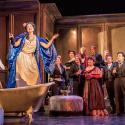
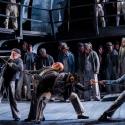
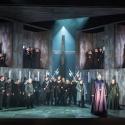
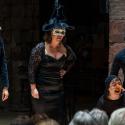
He does, and in a way that should please absolutely everyone, given a cast that responds unanimously to his baroque invention. If you're not crying with laughter midway through the second act, visit your GP. The worry was that where Mike Leigh had respected his material in The Pirates of Penzance at ENO, the One Man, Two Guvnors prankster would over-egg the confection. As it turns out, though, McCrystal never oversteps the line, even if he approaches it in a spun-out gag with sheep manoeuvres during Dresden shepherd Strephon and shepherdess Phyllis’s pretty love-duet (animals regularly steal the scene here). Generally, though, all the extras simply turn the comic screw further. And the instinct for what’s kept the Savoy Operas evergreen is complemented by a bewitching final set-and-costumes fling from the late, lamented Paul Brown, unquestionably a visual genius of the operatic stage. Tim Mitchell's lighting does it incandescent justice. This awe-inspiring visual tour-de-force comes close to the opulence of Brown’s chrysanths-under-glass Pelléas et Mélisande for Graham Vick at Glyndebourne, but the Victorian toy-theatre Palace of Varieties is in earnest, not in its decadence like the Edwardian castle of Debussy and Maeterlinck's Allemonde. Giant blooms and fantastical flower-fairy costumes (Yvonne Howard's Queen and attendant fairies pictured above) wing out and are replaced by a Claude-esque landscape with even lovelier bosky groves painted on flats for Arcadia, temporarily wrecked by a lavish production coup as the Peers tantantarara in to let off Industrial-Revolution steam and rural slaughter; House of Lords in Act Two is just as much of a visual treat. Expensive, surely, and it would sit well in any West End theatre.
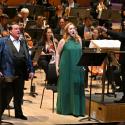
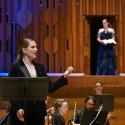
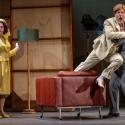
As would the dramatic and vocal teamwork, which deserves an extended run. Under the eagle eye of conductor Timothy Henty, for whom the ENO Orchestra on first night was a little less razor-sharp than the singers, at least in the most bewitching of all Sullivan overtures, they deliver the goods with unstinting energy. For the chorus there’s too much to do to ever lose focus. Lizzie Gee’s resourceful dance routines are familiar from her work on Sasha Regan’s all-male HMS Pinafore and The Pirates of Penzance; they somehow trip the fine line between chorus-number show-offiness and the real magic needed for these sometimes heavy-footed fairies – gags built in to the music. McCrystal’s layering gives us multiple variations on the chorene out of step and a raunchy part for the usually overshadowed third fairy Fleta, Flick Ferdinando delivering Toby Davies’s judiciously timed extra material with gusto.  Of the two other extras, Clive Mantle’s Captain Shaw doubles as warm-up artist and explanation for the Fairy Queen’s wish that “thy brigade, with cold cascade, quench my great love” for Private Willis (the original head of the Metropolitan Fire Brigade was in the first-night audience). Mantle gets his laughs, but the star in that department is funny face and flexible body Richard Leeming as the Lord Chancellor’s Page. To enrich the tradition whereby a G&S Act Two trio gets its encores, McCrystal turns it into a quartet with Leeming as fall guy (pictured above with Andrew Shore and Ben McAteer).
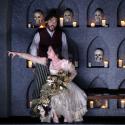
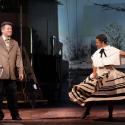
Not that the singers are overshadowed. Marcus Farnsworth’s energetic but focused Strephon and Ellie Laugharne’s feisty Phyllis follow that with a brilliant tap number (pictured below); the rival Earls Tolloller and Mountararat, tenor Ben Johnson and baritone Ben McAteer, sing just as beautifully and act out their more-than-bromance, public-school style, deliciously. Let's just say it doesn't need a plot device to bring out their inner fairies. Barnaby Rea has the right poise, too, on belated sentry duty. Yvonne Howard is a commanding, impressively chest-voiced but unusually attractive Fairy Queen, and though Andrew Shore's Lord Chancellor began last night wrong-footed by the text, his usual comic authority shone in a Nightmare Song all the better for being taken at a steady pace, not just showily pattered, the more to underline the brilliant lyrics and Sullivan’s sly touches in the orchestration.  The scene with his long-lost, eponymous fairy wife (Samantha Price) was perhaps not quite as moving as it had been in the all-male Iolanthe at Wilton’s Music Hall. But there’s no disguising the fact that the instrumentation adds layers of beauty and sophistication you can never get with mere piano accompaniment, however inventive a fringe show. Both quaint and timeless, the essential innocence is respected despite the earthy trimmings, and topical references for a Parliament which was, of course, only Tories and Whigs at the time of composition are kept to a minimum (though a flaxen mophead does bumble through on a bicycle and one of his partners in crime is also among the Lords). This is a production that equals in its visual pleasures what you hear. Unmodified rapture, then, and one to see two or three times; take a child of seven upwards and an aged relative, they ought to love it equally.