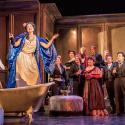
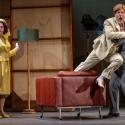
There was no synopsis in the programme for the Royal Opera’s concert performance of Handel’s Solomon. Maybe that was an oversight, but perhaps it’s simply because there really is no plot to summarise. Handel’s oratorio, set to an anonymous libretto (who would willingly claim such doggerel?), takes a handful of Biblical books as the basis for a work that’s more cantata or masque than anything else – a splendid, tuneful meditation on love, faith, kingship – oh, and interior design. More time is spent contemplating the spec of Solomon’s palace (cedar coated with gold, FYI) than most Handelian sub-plots.
None of which really matters, because it’s one of the composer’s most toothsome scores. The splendour of King Solomon’s court offers every excuse for musical excess, and the magnificent, often eight-part, choruses come coated in brass just as the palace is in gold. The work’s episodic structure – Part I celebrating Solomon’s happy marriage, Part II a potted account of Solomon’s famous judgement, Part III a sequence of entertainments for the visiting Queen of Sheba – frees the composer from any real narrative constraints, and arias emerge on the flimsiest of excuses.
Even scaled up to the building the period band felt at an unnecessary disadvantage
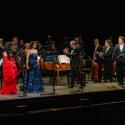
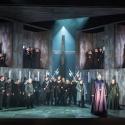
Framed in the giant mirrored screens of the Gibichung palace from Keith Warner’s Ring (providing an interesting, if incidental, commentary on the fleeting illusion of human power), the Royal Opera Chorus delivered exactly the kind of plush, richly upholstered account of the score you’d expect. Long on tone colour and short on vertical clarity, the sheer weight of the ensemble was further exaggerated by the placement of Christian Curnyn and the Orchestra of the Early Opera Company in the pit. Even scaled up to the building (18 violins set the balance) the period band felt at an unnecessary disadvantage, and while in the Stalls we got the benefit of lots of instrumental detail (including an ecstatically lovely obbligato oboe) I do wonder how much made up it to the Balcony, let alone the Amphitheatre.
Sightlines must also have been an issue, with the small team of soloists placed wilfully at the extreme sides of the stage, tucked right into the corners, so as to be obscured from huge swathes of seats. Leaving aside the bigger question of whether the Royal Opera House is an viable venue for this repertoire, surely this basic housekeeping issue could have been foreseen and addressed?
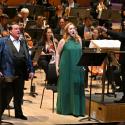
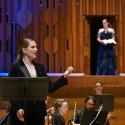
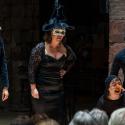
 A strong cast on paper was more mixed in performance. Ed Lyon’s Zadok (a thankless role – part special-advisor, part spiritual cheerleader) was impeccable from start to finish, his coloratura machine-gun swift and much more accurate, phrasing wonderfully malleable and reactive. Sophie Bevan (pictured right, Solomon’s Queen and First Harlot) was all rapturous bloom and sensual legato – more than a match for Lawrence Zazzo’s intermittently impressive Solomon. At its best the countertenor’s tone is clean and resonant as ever, but a number of odd little ticks and quirks have crept into delivery that is right on the brink of being distractingly mannered. As it was, there was more of the fussy despot than the wise elder statesman about his king.
Susan Bickley felt miscast as Second Harlot/Queen of Sheba, her dramatic skill wasted and her brittle tone struggling to swell and bend to accommodate the curves of Handel’s melodies in this space, but Richard Burkhard’s Levite was full of character, just occasionally in tension with Curnyn’s tempi.
Stylish to a fault, perhaps a little too precise, too carefully phrased, too emphatically articulated, this wasn’t a vintage night for Curnyn and his fine baroque band. Relocate the action to Kings Place or the Queen Elizabeth Hall and this could have been a different concert with fewer compromises and more opportunity for period specialists to do what they do best.