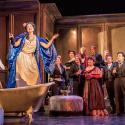
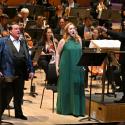
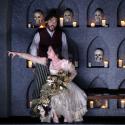
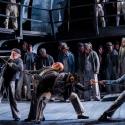
It’s well-known that Wagner shelved The Ring two thirds of the way through in favour of Tristan with the aim of producing something that could be put on quickly in a conventional theatre. Of course, it didn’t quite work out that way. Yet Tristan, for all its technical difficulties, does lend itself to a relatively small stage. Its ensemble scenes are few and manageable, and for the rest it’s basically a conversation piece. For the barn theatre at Longborough it presents no insuperable problems, and it’s no surprise that the summer festival there has come up with a wonderful performance to add to its successful Ring of two years ago.
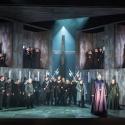
To get the best out of it, admittedly, one has to shut one’s eyes to one or two of Carmen Jakobi’s brighter production ideas. The rudimentary sets by Kimie Nakano, cleverly lit in chiaroscuro by Ben Ormerod, reflect well in their cool abstraction the essential stillness of the work’s exterior narrative. When left to themselves, the characters move and interact perfectly well in their standard issue Wagner tunics.
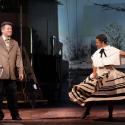
Unfortunately Jakobi imposes on them a Jungian reading that requires Tristan and Isolde’s animus and anima to be embodied in a pair of dancers who sashay on and off, waving their arms and legs and occasionally fondling their alter egos, like spoilt children home from ballet class. What this adds to our understanding of Wagner’s fairly simple yarn I’ve no idea. But it does distract horribly from the music drama, often at its profoundest moments, like the A flat Act 2 duet or the later stages of Tristan’s delirium in Act 3.
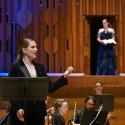
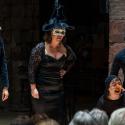
A certain hesitancy in Rachel Nicholls’s Isolde - this is no Hoffnungesque Wagner sopranoI was also baffled by the presence of the bass clarinettist onstage during King Mark’s Act 2 monologue. Another schoolkid showing off? For an instant, the king glared at her as if she were to blame for the entire mess-up; or perhaps he was merely wondering, like me, why she was there at all.
While the kids are at school, though, all is fine. The small Longborough stage encourages a degree of intimacy in the direction, which turns out to suit Wagner surprisingly well. One feels close to the characters and senses refinements in the way they’re drawn: for instance, a certain hesitancy in Rachel Nicholls’s Isolde, a lingering reproach at Tristan’s initial unresponsiveness, and a youthfulness emphasised by her rather small stature and close-cropped hair. This is no Hoffnungesque Wagner soprano. Musically, too, she profits from the smallness of the space, has no need to over-sing, so can colour her voice to the changing moods. All in all hers is a beautiful, touching performance, faltering only momentarily in the Liebestod, though whether from weariness or failing concentration I’d hesitate to say.
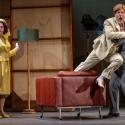
 Peter Wedd’s Tristan (pictured right) is in almost every way superb: statuesque and chilly in the early scenes, pulsatingly emotional to the point of disintegration thereafter, but never losing control of his fine, slightly dry tenor. I’m largely immune to the rantings of the final act (and find its music, after the prelude, not much better than expert), but was riveted by Wedd’s musical portrait of deranged passion.
The remaining cast are uniformly excellent: Frode Olsen an intense, vivid King Mark, wavering between bitter reproach and thwarted affection, Catherine Carby a strong, sisterly Brangaene, spinning a marvellous line from her watchtower, and Stuart Pendred a solid, dependable Kurwenal.
But the biggest hero of the production is Anthony Negus, who shows yet again what a genuinely great Wagnerian he is. What kind of a system is it that can have consistently bypassed a conductor of this quality? Not only does he have a complete grasp of the broad Wagner rhetoric, but he has a wonderful ear for detail, something that comes out particularly in this small house, with – I guess – fewer strings, so that the woodwind and brass speak without blasting, and the voices come across without bellowing. The sheer sound of this performance – so far as I can tell uncut – is not the least of its many pleasures.