Grange Park Opera has been setting a high standard in French opera ever since the company's first proper season in 1999. This Werther is the company's third by Jules Massenet. The first two were rarities, pioneering efforts: a fascinating tussle between lubriciousness and piety in Thais in 2006, and then a poignant and deeply felt portrayal of old age in a splendid Don Quichotte in 2014.
Unlike these two rarities. Werther – although initially rejected by the director of the Opera Comique in Paris as too sad - has claimed its rightful place in mainstream operatic repertoire. It is powerful portrayal of the intensity of doomed passion. In this new production directed and designed by John Doyle - I saw the second performance in the current run - it comes across very well.
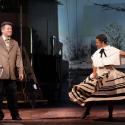
It is strongly cast. and that is particularly the case with the pair of Italian-Americans in the principal roles. Leonardo Capalbo as Werther and Ginger Costa-Jackson as Charlotte both project the big emotions well, and have voices of focus and immediacy which carry easily in this relatively intimate theatre. The chemistry between them works well, and by the end of the run I hope it will have earned them the fully ecstatic response which I think they deserve, rather than the sllightly subdued post-dinner Surrey ripple we heard last night.
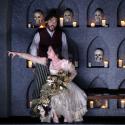
 The inner tension of Werther is about how emotion is curtailed and kept under wraps, as opposed to giving free rein to passion and intensity. Musically that works as the contrast between playing and singing buttoned-up short phrases versus allowing soloists and orchestra to give us a resplendent flow. The turning point is Act 3, in which the reading of letters by Charlotte makes it plain that she is in love with the intense, obsessive Werther. There was clever play with the imagery of their hands always reaching but not quite ever touching over a small round table. That definitely stays in the mind.
The Gascoigne Orchestra, conducted by Christopher Hopkins, excelled both in the careful and neat parts of the score, mostly at the beginning, and the episodes of unleashed passion where more really is more. I was particularly taken by the clear and decisive sounds coming from the bass section giving us a deep and strong, unified thrum as the foundation and the punctuation for Act 3 (the printed programme names both Markus van Horn and Caroline Harding as principal, so it could be either?) and in this theatre one could hear that purposeful sound with wonderful immediacy and clarity.
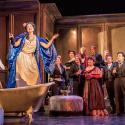
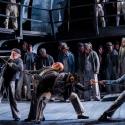
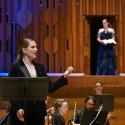
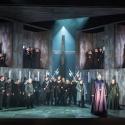
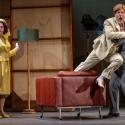
Whereas Charlotte is a mezzo soprano – and Costa-Jackson’s lower register really is quite glorious - the character of the younger sister Sophie is a light soprano, and Iria Perestrelo (pictured above by Mark Brenner) brought not just great vocal craft but also superb French diction to it. Dominic Sedgwick as the Charlotte’s dull husband Albert mostly gets crisp, perfunctory, in-denial vocal material to sing; he did well. Alan Ewing brought all his experience to the part of the bailliff. The children’s chorus were vocally strong and flawless with movment, even if it was odd to see them assembled as a highly visible - and, for me at least, distracting - backdrop to the final scene in which Werther and Charlotte have real existence as the doomed couple. A strong show, warmly recommended.