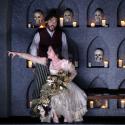
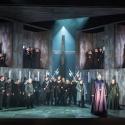
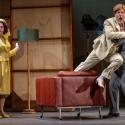
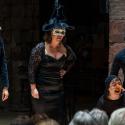
By the end of Act One of The Yeomen of the Guard there's been a jailbreak, a clandestine marriage, a swapped identity and a cancelled beheading. The chorus sings, halberds are brandished, and a jester jests. Even by Gilbert and Sullivan standards, it’s one heck of a tangle. And then, in John Savournin’s touring production, the stage clears and, true to Gilbert’s directions, Elsie faints in Fairfax’s arms while silhouetted behind them, masked and motionless, stands the grim figure of the executioner. At which point you start to realise that the only way Gilbert’s going to be able to solve his own dramatic puzzle is by taking one of his own cheerful, colourfully drawn characters - and destroying them.
The Yeomen of the Guard is the problem play of the Savoy Operas: the one that opera snobs carefully avoid mentioning when dismissing G&S in a flurry of unexamined prejudices and throwaway references to topsy-turvydom. With its Tudor setting and majestic overture, it’s occasionally been called the “English Meistersinger", which even a hardcore Savoyard would probably concede is going a bit far. Undeniably, though, it’s aiming for the same tragicomic kick in the stomach you might get from, say, Twelfth Night, and it’s a tribute to its creators that, however literal the production, it simply can’t be played as straight comedy. The death-haunted logic of the plot, the flashes of self-knowledge that illuminate Gilbert’s libretto and the aching poignancy of one of Sullivan’s most consistently inspired scores all prevent that.
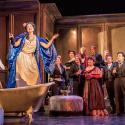
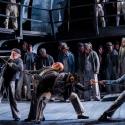
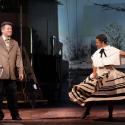
As director, Savournin gets it. Which is why, in this production, he can get away with presenting something that looks at first sight like the hoariest load of old-school G&S clichés. The Yeomen wear picture postcard uniforms, the women have spotlessly laundered period frocks, and there’s a flat, painted set that looks like something left over from a village hall panto. The principal characters, too, seem at first to be playing it straight and not particularly deep, with a mixture of light and more conventionally operatic voices. Fiona Mackay’s Phoebe is a perky soubrette with Martin Lamb bluff and amiable as her father Sergeant Meryll. Nicholas Sales sings Colonel Fairfax with leading-man charm and an elegant tenor, and Bruce Graham (pictured below, with Richard Gauntlett) lurches and gurns cheerfully as the jailer Shadbolt (he's got some wonderfully sepulchral low notes too). It’s all a set-up, though, for the entrance of Richard Gauntlett as the jester Jack Point and Jane Harrington as his beloved Elsie: and when they’re on stage, it’s hard to look at anyone else.
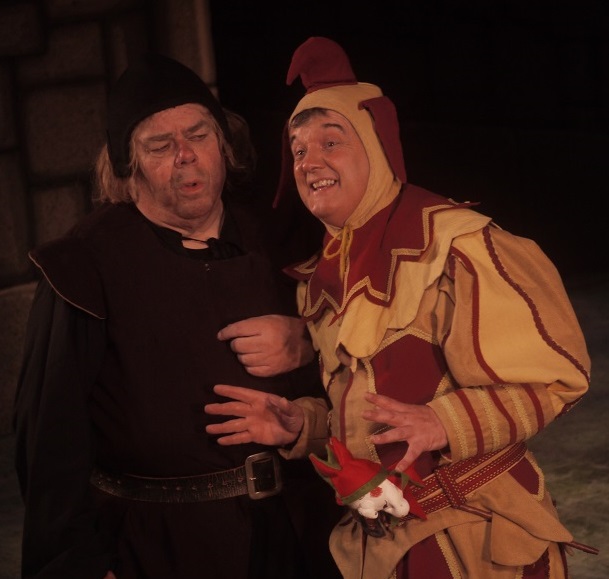 Gauntlett’s physical grace and verbal dexterity make him a natural comedian. As the crowd jostles him, we see fear erase his smile, and then watch him spring back, eyes pleading: a man for whom humour really is a defence. Harrington’s rich, tightly focussed soprano soars over the big choral scenes. Rarely smiling, she becomes the focus of the unfolding emotional tragedy as Gilbert flips operetta convention on its head and turns the comic pair into the leading players, making the grand passions and life-or-death schemes of the loftier characters feel like the trivial diversion. “It is easier to die well than to live well,” comments Colonel Fairfax in Act One; in Sales’s caddish portrayal he spends much of Act Two (having cheated death) seemingly proving that point. Gauntlett’s patter songs, meanwhile, are in the Richard Suart class, and his scenes with Graham were both witty in themselves, and a fascinating study in the nature of comedy. There’s something touching and intensely troubling about Gauntlett’s portrayal: of a piece with Gilbert’s whole, Petrushka-like notion of taking a stock comic character and giving them a human heart. His final collapse was wrenching.
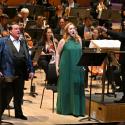
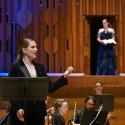
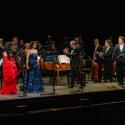
Musical values are high, on stage at least: Pauline Birchall brings dignity and a velvet-and-steel voice to Dame Carruthers (one of Gilbert’s less cruel mezzo roles), the choral singing is crisp and powerful, and David Steadman, conducting a decent-sized orchestra, keeps the pace brisk while letting Sullivan’s lyricism breathe. Scrappy orchestral entries were compensated for by characterful woodwind playing and some extremely fine ensemble singing from the principals; the Act Two quartet Strange Adventure was a moment of radiant stillness.
In other words, there’s a complex and moving opera here (Gilbert and Sullivan never considered it an operetta); there’s also an entertaining, very traditional-looking and clearly low-budget touring G&S production. No doubt there are many who won’t be able to see past that – just as for many audience members, that in itself would be enjoyable enough. It came across handsomely in the mini-Coliseum that is Buxton Opera House, and will doubtless do so elsewhere too. The truth is that it really shouldn’t be left to a privately-funded touring company, operating under severe financial constraints, to stage this repertoire. If it had been composed in a country with a less philistine operatic culture, The Yeomen of the Guard would be a staple of the national companies (one or two of our own could do a lot worse than look at it again). For now, though, Savournin and the National Gilbert and Sullivan Opera Company present it with commitment, insight and considerable style. They deserve to succeed.
- The Yeoman of the Guard is on tour until 6th September
- Read more opera reviews on theartsdesk