The flayed corpse of a dead seal hangs red and grotesque at the back of the stage. It’s a placeholder; we know that by the end of Anthropocene – Scottish composer Stuart McRae’s latest collaboration with librettist Louise Welsh – something more familiar, and far more horrifying, will take its place.
It’s the same trick we hear in McRae’s skilfully crafted score, which opens in teeming musical activity. The orchestra scuttles and ticks with nervous animation. But while the sense is of motion, the harmony remains resolutely rooted, unmoving – a musical block of ice trapping life, confrontation and action within it. It’s only a matter of time before all that pent-up energy finds violent release, musical and otherwise
There’s vocal talent to burn here
McRae and Welsh’s fourth collaboration (following on from 2016’s excellent The Devil Inside) plays out on a scientific expedition to the Arctic. When their ship becomes trapped in the ice and an alarming discovery is made beneath it, the various members are forced to measure the price of survival.
An operatic thriller should be a contradiction in terms. How can a form whose currency is agility, swiftness, the unexpected, survive in a genre rooted in slow-forming song? And yet from Tosca to The Turn of the Screw we’ve seen it work – the friction between tension and controlled release only raising the stakes, the thrills all the keener for being hard-won. In a reliably challenging climate for new opera in which survival means poaching or at least sharing film and television audiences, it’s interesting to see the growing popularity of the form: Nico Muhly’s Two Boys and Marnie, Donnacha Dennehy’s The Second Violinist, Paul Moravec’s hit The Shining just some of the many recent examples.
 McRae plays a long game. Careful pacing gives us an opening Act of vivid atmospherics – the orchestra flickering with its own Northern Lights, jagged-bright in high woodwind, edges blurred in smudgy quarter-tones, the ice roaring in muffled brass bellows. But as the action moves inwards and the focus turns psychological there’s a slackening. The quick scene cutaways (curtain descending; orchestral interlude) work brilliantly to keep things moving forwards, but a denouement that want to embrace not just suspense-thriller but also moral and ecological drama feels over-weighted – an uneasy marriage of Heart of Darkness and recent Sky drama Fortitude.
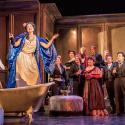
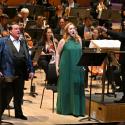
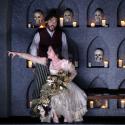
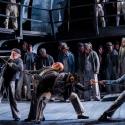
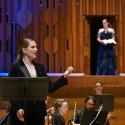
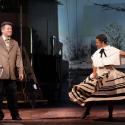
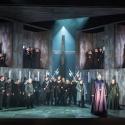
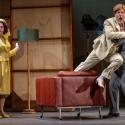
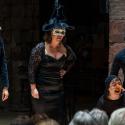
 Matthew Richardson’s production feels similarly caught between stools, its yearning towards a kind of expressionist abstraction at odds with the emphatic literals of Samal Blak’s design. But the cast, incisively conducted by Stuart Stratford, are exemplary. There’s talent to burn here, whether it’s Jennifer France’s Ice (pictured above with LeBrocq, Gadd and Bern) – urgent and alien, making McRae’s demanding, high-lying writing sound almost too easy – or Anthony Gregory’s engineer Vasco, crooned as gently as Mark Le Brocq’s deliciously brash and ebullient Harry King is trumpeted, or Paul Whelan’s ominous Captain Ross, the earthy bass anchor to France’s shooting-star soprano.
The musical language in uncompromising, but plenty of set pieces – an unexpectedly lovely, almost Monteverdian duet for France and Jeni Bern’s Professor, a poignant aria for Stephen Gadd’s scientist and an ravishing trio for the three women – give the ear supportive scaffolding. Anthropocene is a piece that grows out of a tradition. Its form but also its content invite comparisons with Maxwell Davies’s The Lighthouse, Tarik O’Regan’s Heart of Darkness and of course Britten’s two great watery operas Peter Grimes and Billy Budd. It’s not yet perhaps quite the taut finished product of The Devil Inside, but its greater ambition and scope leaves you hungry to hear whatever McRae and Welsh choose to tackle next.